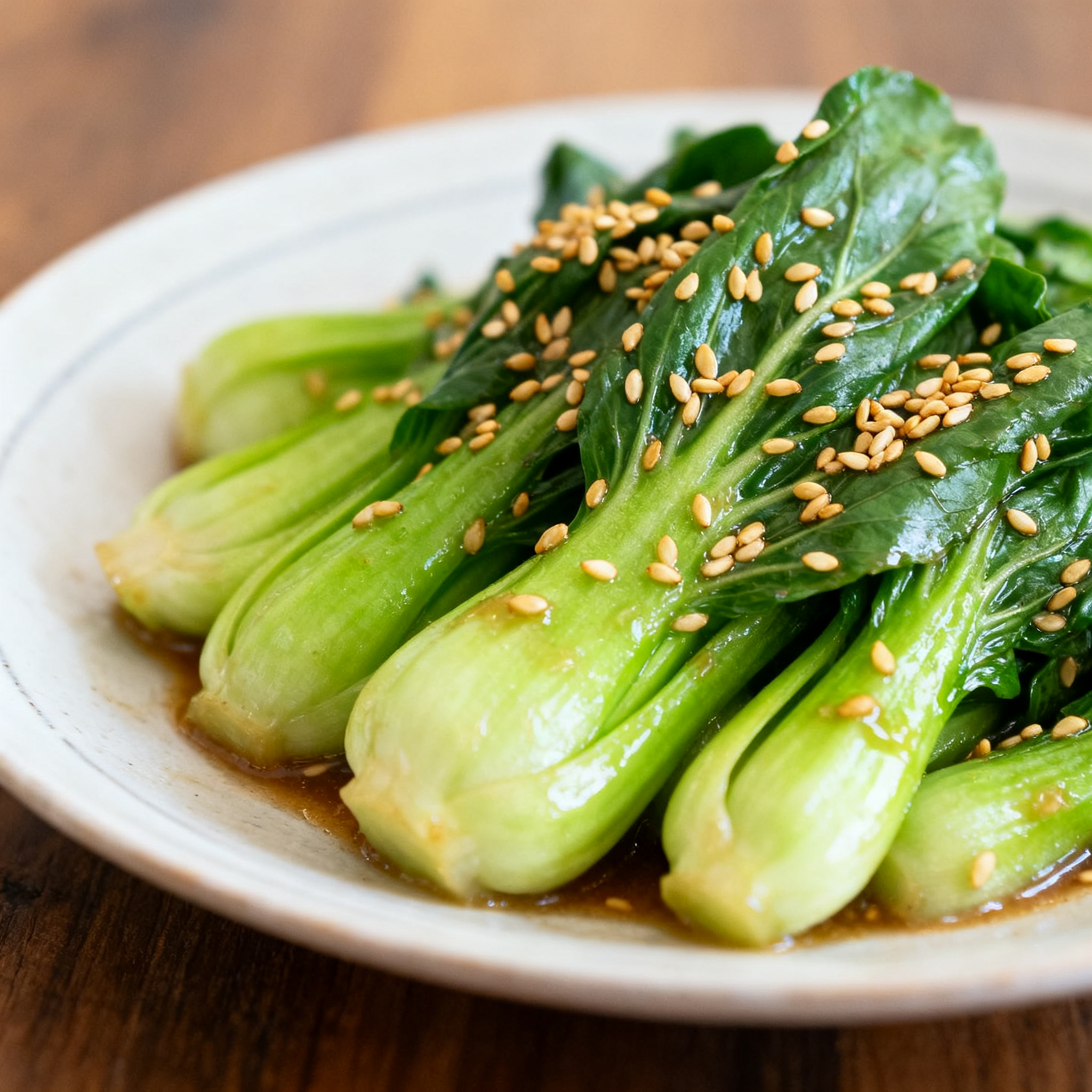
Sesame Bok Choy Stir-Fry (Stalks-First Method for Real Wok Char)
Tested & Approved
by Sophie Lane
Most bok choy stir fry recipes turn out watery and one-note because everyone cooks the stalks and leaves together and finishes with a lazy drizzle of sesame oil. This version sears the stalks separately for actual wok char, builds a toasted sesame paste from scratch instead of bottled sauce, and finishes with a splash of black vinegar that cuts through the richness so every bite tastes bright, not just oily.
Published: August 12, 2026
Simple, everyday ingredients and clear, step-by-step instructions — every recipe made in Dorothy"s kitchen before it reaches yours. Jump to the full recipe card below.
PrintSesame Bok Choy Stir-Fry (Stalks-First Method for Real Wok Char)
A bok choy stir fry recipe with stalks seared first for real char, finished with a homemade toasted sesame paste and a splash of black vinegar for brightness.
- Prep Time: 15 minutes
- Cook Time: 10 minutes
- Total Time: 25 minutes
- Yield: 4 1x
- Method: Stir-frying
- Cuisine: Chinese-inspired
Ingredients
- 1.5 lbs baby bok choy, stalks and leaves separated, stalks sliced diagonally
- 3 tablespoons raw sesame seeds, divided
- 3 cloves garlic, minced
- 1 tablespoon fresh ginger, minced
- 2 tablespoons neutral oil (avocado or grapeseed)
- 1 tablespoon toasted sesame oil
- 2 tablespoons soy sauce
- 1 tablespoon Chinkiang black vinegar (or rice vinegar)
- 1 teaspoon sugar
- 1/2 teaspoon white pepper
- 1 red chili, thinly sliced (optional)
- 2 scallions, sliced, for garnish
Instructions
- Toast the sesame seeds in a dry skillet over medium heat, 2-3 minutes, until fragrant and starting to pop. Set aside; reserve one-third for garnish.
- Grind two-thirds of the toasted seeds with the garlic and ginger into a rough paste using a mortar and pestle or the flat of a knife.
- Whisk together soy sauce, black vinegar, sugar, and white pepper in a small bowl; set aside.
- Heat the neutral oil in a wok or wide skillet over high heat until just smoking. Add the bok choy stalks in a single layer and let them sear undisturbed for 1-2 minutes to get real char, then toss and cook 1 more minute.
- Push the stalks to one side, add the sesame-garlic-ginger paste to the cleared space, and bloom it for 20 seconds until fragrant.
- Add the bok choy leaves and toss everything together over high heat for 60-90 seconds, just until the leaves wilt and turn glossy.
- Pour in the sauce, add the sesame oil, and toss for 30 seconds to coat evenly.
- Remove from heat immediately, stir in the reserved sesame seeds, and top with sliced scallions and chili if using. Serve right away.
Notes
Work in batches if your wok is under 12 inches wide — crowding is the #1 cause of soggy bok choy. Keep the heat high throughout; a cooled-down pan steams instead of sears. Swap black vinegar for rice vinegar or a squeeze of lime if that"s what you have. Leftovers keep 2 days refrigerated but the stalks lose their char, so this is best eaten fresh.
The biggest flaw in almost every bok choy stir fry recipe is timing: the pale, watery stalks and the delicate leaves go into the pan at the same moment. By the time the stalks lose their raw crunch, the leaves have collapsed into a slick, chlorophyll-green puddle sitting in released water, and the whole dish tastes diluted no matter how much sauce you add. The fix is a two-stage sear. Cook the sliced stalks alone in a screaming-hot, mostly dry wok for a full two minutes without touching them, so the sugars caramelize and you get actual browned edges and char, not just steam. Only then do the leaves go in, off the direct heat blast, for a fast 60-90 second wilt.
The second problem is the sauce itself. A bottled sesame dressing or a last-second glug of sesame oil gives you a flat, one-dimensional nuttiness that sits on top of the vegetable instead of clinging to it. Toast raw sesame seeds in a dry pan until they"re fragrant and just starting to pop, then grind about two-thirds of them with garlic, ginger, and a spoon of the toasting oil into a rough paste using a mortar and pestle or the flat of a knife. Bloom that paste in the hot wok for 20 seconds before the stalks go back in — it perfumes the whole dish from the inside instead of coating it from the outside, and it"s the difference between a stir fry that tastes like sesame oil and one that tastes like toasted sesame.
The last move, and the one people skip, is acid. A splash of Chinkiang black vinegar (rice vinegar works too) stirred in right at the very end, off the heat, cuts through the richness of the sesame and soy and keeps the dish from tasting greasy or heavy. Without it, sesame stir fries read as one-note and slightly cloying; with it, the dish tastes sharp, savory, and alive. Reserve the remaining toasted sesame seeds to scatter on top raw for crunch, since the ground ones lose their bite once they hit the pan.
Common mistake to watch for: overcrowding the wok. Bok choy releases a lot of water fast, and a crowded pan steams instead of sears, which is exactly the soggy outcome this method is designed to avoid. Work in two batches if your pan is smaller than 12 inches, and keep the heat high the entire time — a wok that cools down is the number one reason home versions of this dish turn out gray and limp instead of glossy and bright green.
Frequently Asked Questions
Why does my bok choy stir fry turn out watery?
Bok choy releases a lot of liquid fast, especially if the stalks and leaves cook together or the pan is overcrowded. Sear the stalks alone first over high heat, add the leaves only at the end, and cook in batches if your pan is small.
Can I use regular bok choy instead of baby bok choy?
Yes. Slice the stalks thinner and give them an extra minute in the sear stage since they're thicker and take longer to lose their raw bite.
What can I substitute for black vinegar?
Rice vinegar is the closest substitute and works well. A squeeze of fresh lime juice added at the very end also gives the same brightening effect.
Can I make the sesame paste ahead of time?
Yes, the toasted sesame-garlic-ginger paste keeps in an airtight container in the fridge for up to 3 days. Bring it to room temperature before blooming it in the hot wok.
Get our 10 best recipes — free
Join the Rapid Recipes newsletter and we’ll email you our 10 most-loved recipes as a free PDF.
Free PDF + new recipes every week. Unsubscribe anytime.