Cookies, bars and brownies are the same three ingredients in different ratios. Push the butter up and the flour down and you get a cookie that spreads; reverse it and you get something cakey. Bake the same batter in a tray instead of in rounds and you get a bar, which is why so much of this section is interchangeable once you understand what each change does.
What follows is the collection sorted by type, then the three things that actually go wrong, then the questions that come up most.
Scooping, chilling and the baking sheet
Three mechanical details change the result more than any ingredient substitution. Dough temperature controls spread: cold dough holds its shape, room-temperature dough flattens. Scoop size controls the ratio of crisp edge to soft middle, so a bigger scoop is not just a bigger cookie. And a dark or thin baking sheet runs hotter at the base than a pale heavy one, which is where burnt bottoms come from.
Chocolate chip cookies
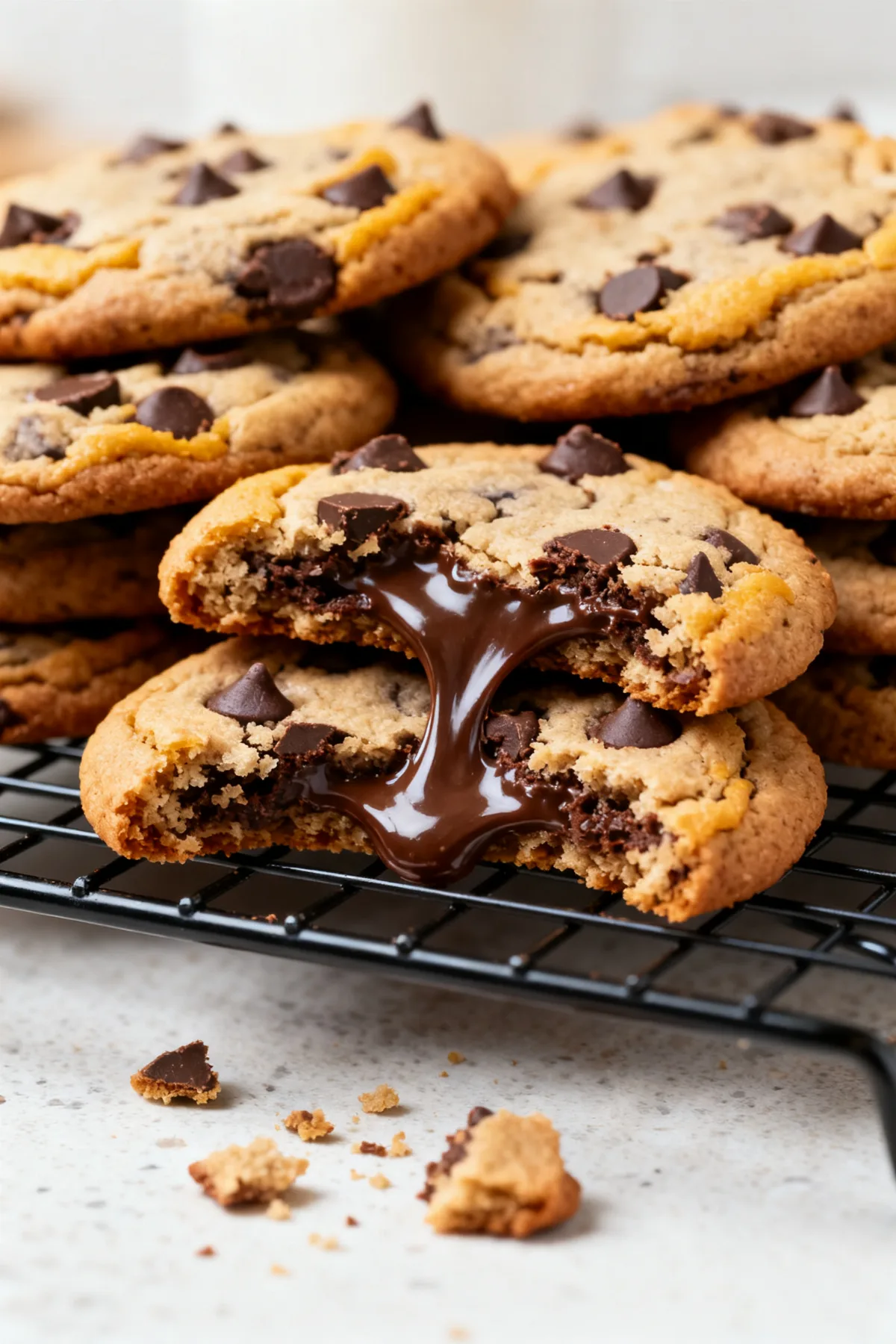
The reference point. Everything about texture – spread, chew, crisp edges, soft middles – is visible in this group, because there is nothing else in the dough to hide behind.
- Best Maraschino Cherry Chocolate Chip Cookies Ready in 30 Minutes
- Brown Butter Skillet Chocolate Chip Cookie
- Easy Winter Wonderland Chocolate Chip Cookies Ready in 30 Minutes
- High-Fiber Chocolate Chip Cookies – A Better-For-You Treat That Doesn"t Skimp
- Levain Bakery Chocolate Chip Cookies Recipe
Brownies and blondies
Dense bakes cut from the pan. Brownies get their texture from the ratio of chocolate and fat to flour; blondies are the same idea built on brown sugar and butter instead of chocolate.
- Apple Blondies Recipe
- Baileys Brownies Recipe
- Best Sweet Potato Brownies Ready in 30 Minutes
- Cookie Dough Brownie Cake Recipe
- Easy Maple Frosted Apple Blondies Recipe
- Fiber-Boosted Fudgy Brownies – A Better-For-You Treat That Still Tastes Indulgent
- Mint Brownies Recipe
- Pumpkin Brownies
- Red Velvet Cheesecake Swirl Brownies Recipe
Dessert bars and squares
A base, a filling, sometimes a topping, baked in a tray and cut. These scale to a crowd better than cookies, and they travel far better.
- Apple Bars Recipe
- Best Creamy Rhubarb Cream Cheese Bars Ready in 30 Minutes
- Best Mouthwatering Lemon Bar Cookie Cups Ready in 30 Minutes
- Best Refreshing Lemon Blueberry Cheesecake Bars Ready in 30 Minutes
- Carrot Cake Bars with Cream Cheese Frosting Recipe
- Chocolate Raspberry Crumb Bars Recipe
- Easy Blackberry Pistachio Dream Bars – Ready in 30 Minutes
- Easy Caramel Chocolate Crunch Bars Ready in 30 Minutes
- Easy Cherry Cobbler Bars Ready in 30 Minutes
Seasonal and holiday cookies
Cookies and bars built around a season or a holiday – pumpkin, peppermint, gingerbread, green sprinkles. Some are rolled and cut, which needs a firmer dough; others are no-bake.
- Christmas Cookie Lasagna Recipe
- Grinch Cookies with Cake Mix Recipe
- Pumpkin Snickerdoodles
- Easy Pumpkin Pie Crumble Bars Recipe
Peanut butter and nutty cookies
Nut butters and ground nuts replace some of the flour and add fat, which makes these shorter and more crumbly than a flour-only dough.
- Best Raspberry-Filled Almond Snow Cookies Ready in 30 Minutes
- Easy Homemade Lazy Girl Pecan Pie Bars Ready in 30 Minutes
- Easy No Bake Pecan Coconut Praline Cookies – Ready in 30 Minutes
- Peanut Butter Skillet Cookie with Ice Cream
Soft, chewy and filled cookies
Thumbprints, stuffed cookies and the deliberately underbaked kind. Filled cookies need a dough stiff enough not to leak, which is why they are usually chilled before baking.
- Best Hawaiian Pineapple Coconut Thumbprint Cookies Ready in 30 Minutes
- Classic Thumbprint Cookies Recipe
- Easy Blueberry Swirl Sugar Cookies Ready in 30 Minutes
- Easy Elegant Strawberry Sugar Cookie Cups Ready in 30 Minutes
- Iced Strawberry Sugar Cookies Recipe
- S"mores Stuffed Cookies
- Soft and Chewy Pistachio Pudding Cookies Recipe
- Ultimate Cheesecake Stuffed Chocolate Chip Cookies Ready in 30 Minutes
- Ultimate Soft Levain Bakery NYC Cookies – Ready in 30 Minutes
Spread, cakiness and raw middles
- They spread into one sheet. The butter was too soft, the dough was too warm, or there is not enough flour. Chill the scooped dough and leave more space between portions.
- They came out cakey. Too much flour, too much egg, or too much leavening. Cakey is not a baking fault – it is a ratio, and it is built into the recipe rather than into your oven.
- Raw in the middle, dark at the edge. The oven is running hot, or the cookies are too thick for the time given. Drop the temperature and extend the bake rather than the reverse.
Baking questions
Why do my cookies go flat?
Warm dough and soft butter. Chilling the dough before baking is the single most effective fix, and it costs nothing.
Do I have to chill cookie dough?
Not always, but it helps every dough that contains a lot of butter, and it is required for anything that has to hold a shape.
Can I turn a cookie recipe into bars?
Often, yes – press the dough into a lined tray and bake longer at a lower temperature. The texture changes: you lose the crisp edge and gain a chewier middle.
How do I keep cookies soft?
Store them airtight and slightly underbake them. Bars and brownies keep soft for longer than cookies because there is less surface area exposed to air.
Can cookie dough be frozen?
Scooped dough freezes well and can usually be baked from frozen with a little extra time. Check the note on the recipe you are using.
Why are my brownies dry?
Over-baking, almost always. Brownies continue to set in the pan after they come out, so a skewer that comes out completely clean means they are already past fudgy.
What size pan should I use?
The one the recipe names. A smaller pan makes a thicker bake that needs longer and risks a raw center; a larger one makes a thin, dry bake.