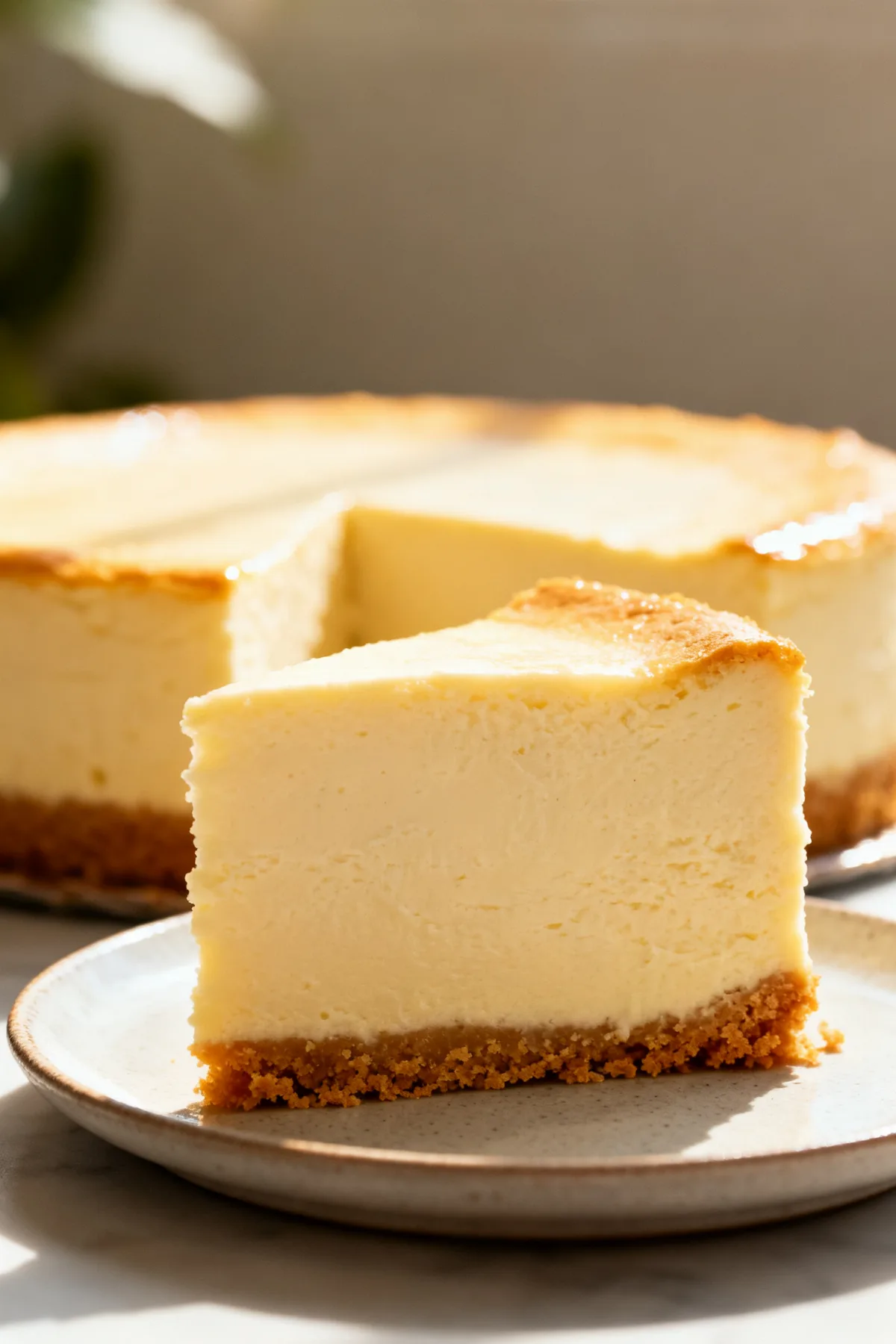
Cheesecake splits into two almost unrelated desserts. A baked cheesecake is a custard: eggs set it, and everything that can go wrong goes wrong because of heat. A no-bake cheesecake is an emulsion held by fat and gelatine or whipped cream: nothing sets it but cold, and everything that goes wrong goes wrong because of liquid.
Knowing which of the two you are making tells you what to worry about. It is also the fastest way to choose a recipe: if you have an hour and a fridge, you want the first group below. If you have an afternoon and want the dense, sliceable kind, you want the second.
The recipes themselves hold the quantities, the tin size and the timings. This page sorts them and explains the failure modes that the individual recipe cards do not have room for.
No-bake cheesecakes
Set in the fridge, no oven involved. The filling is stabilised by cream cheese, whipped cream and sometimes gelatine, which is why the ratio of liquid to fat matters more here than anywhere else.
- Best Cherry Cheesecake Fluff Recipe (No-Bake Delight)
- Easy Irresistible Lemon Blueberry Cheesecake – No-Bake Delight
- Easy No Bake Pineapple Heaven Cheesecake Ready in 30 Minutes
- Easy No-Bake Berry Cheesecake Ready in 30 Minutes
- Easy No-Bake Lemon Raspberry Cheesecake Ready in 30 Minutes
- Easy Pineapple Cream Cheesecake Recipe – No-Bake Delight
- Easy Pineapple Heaven Cheesecake – No-Bake Delight Ready in 30 Minutes
Classic baked cheesecakes
The dense, custard-style cheesecake. These are the ones that crack, and the reason is almost always heat moving too fast rather than anything in the batter.
- Pumpkin Cheesecake
- Pumpkin Cheesecake Trifle Recipe
- Ultimate Blackberry Lime Cheesecake Cupcakes Ready in 30 Minutes
- Ultimate Decadent Cinnamon Roll Cheesecake Ready in 30 Minutes
- Ultimate Heavenly Black Forest Cheesecake Ready in 30 Minutes
- Ultimate Loaded Brownie Cheesecake Cups Ready in 30 Minutes
- Best Creamy Coconut Cheesecake – Easy Homemade Recipe
Cheesecake bars and bites
Cheesecake baked in a tray and cut into squares, or in a muffin tin. The shallow depth makes them far more forgiving than a tall round cheesecake: they cook evenly and they do not need a water bath.
- Apple Crisp Mini Cheesecakes Recipe
- Best Heavenly Cherry Pistachio Cheesecake Bars Ready in 30 Minutes
- Best Refreshing Lemon Blueberry Cheesecake Bars Ready in 30 Minutes
- Best Sugar Cookie Cheesecake Bars – Easy Dessert Recipe
- Creamy Lemon Cheesecake Crumb Bars Recipe
- Easy Creamy Rhubarb Cheesecake Crumble Bars Ready in 30 Minutes
- Easy Lemon Blueberry Cheesecake Bars Ready in 30 Minutes
Fruit cheesecakes
Fruit brings acid and water. Acid is helpful – it sharpens the dairy. Water is not, which is why these recipes cook fruit down, or keep it as a topping rather than folding it in.
- Apple Cider Cheesecake Recipe
- Best Apple Crumble Cheesecake Recipe
- Best White Chocolate Blueberry Cheesecake Cupcakes Ready in 30 Minutes
- Cheesecake Stuffed Apples Recipe
- Chocolate Raspberry Cheesecake Crumb Cake Recipe
- Chocolate Strawberry Swirl Cheesecake Recipe
- Christmas Cranberry Cheesecake Cupcakes Recipe
Chocolate and candy cheesecakes
Melted chocolate and caramel add fat and sugar, so these set firmer and slice more cleanly than a plain filling. They also mute acidity, which is why they often want a tangier base.
- Chocolate Chip Cheesecake Recipe
- Easy Caramel Pecan Cheesecake Recipe
- Easy caramel apple cheesecake dip recipe
- No Bake Twix Cheesecake Recipe
- Peanut Butter Cheesecake Recipe
- Red Velvet Cheesecake Swirl Brownies Recipe
- Ultimate Cheesecake Stuffed Chocolate Chip Cookies Ready in 30 Minutes
Cheesecake cupcakes and cakes
Cheesecake crossed with something else – a cupcake, a bundt, a layer cake, a pie. Useful when you want portions rather than a centrepiece.
- Best Sweet Potato Cheesecake Pie Recipe – Ready in 30 Minutes
- Boston Cream Pie Cheesecake Recipe
- Easy Blueberry Cheesecake Swirl Cookies Ready in 30 Minutes
- Easy Cheesecake Stuffed Baked Apples Ready in 30 Minutes
- Easy Churro Cheesecake Recipe – Ready in 30 Minutes
- Easy Creamy Pistachio Cheesecake Truffles (Ready in 30 Minutes)
- Easy Heavenly Lemon Raspberry Meringue Cheesecake Recipe
Four cheesecake failures, and what actually causes them
- A crack across the top. The surface set before the middle did, then the middle shrank as it cooled and pulled the crust apart. The causes are a hot oven, a draught, and over-beaten batter full of air. Air bubbles expand, then collapse.
- It sank in the middle. Usually over-baking. A baked cheesecake should still wobble as a single mass when you take it out; it finishes setting as it cools. If it looks completely firm in the oven, it is already past the point.
- A soggy base. Either the crust was not pressed firmly and pre-set, or water from a bath got in. A crumb base needs compression and, for most baked recipes, a short blind bake.
- A no-bake filling that never sets. Too much liquid relative to fat. Lemon juice, fruit puree, coffee and liqueur all count as liquid. Cream cheese used straight from a tub of spreadable product rather than block cream cheese is the other common cause.
Cheesecake questions
Why does my cheesecake crack?
The top set before the centre did. Bake lower and slower, do not over-beat the batter, and let it cool gradually rather than moving it straight from oven to fridge.
Do I need a water bath?
For a tall baked cheesecake it evens out the heat and is worth the trouble. For bars and bites it is unnecessary – follow the recipe you are using rather than adding one.
Can I use spreadable cream cheese?
No. Tub cream cheese carries more water and will give a loose filling, which is the single most common reason a no-bake cheesecake stays soft.
How do I get clean slices?
A hot, dry knife, wiped between every cut. For a no-bake cheesecake, slice it straight from the fridge rather than after it has warmed up.
Can cheesecake be frozen?
Baked cheesecake freezes well, whole or in slices, and no-bake fillings generally hold too. Check the storage note on the individual recipe, since toppings behave differently from fillings.
What is the difference between cheesecake fluff and cheesecake?
Fluff is the filling without the structure – no crust, no setting agent, served as a dip or in a glass. It is a faster route to the same flavour.