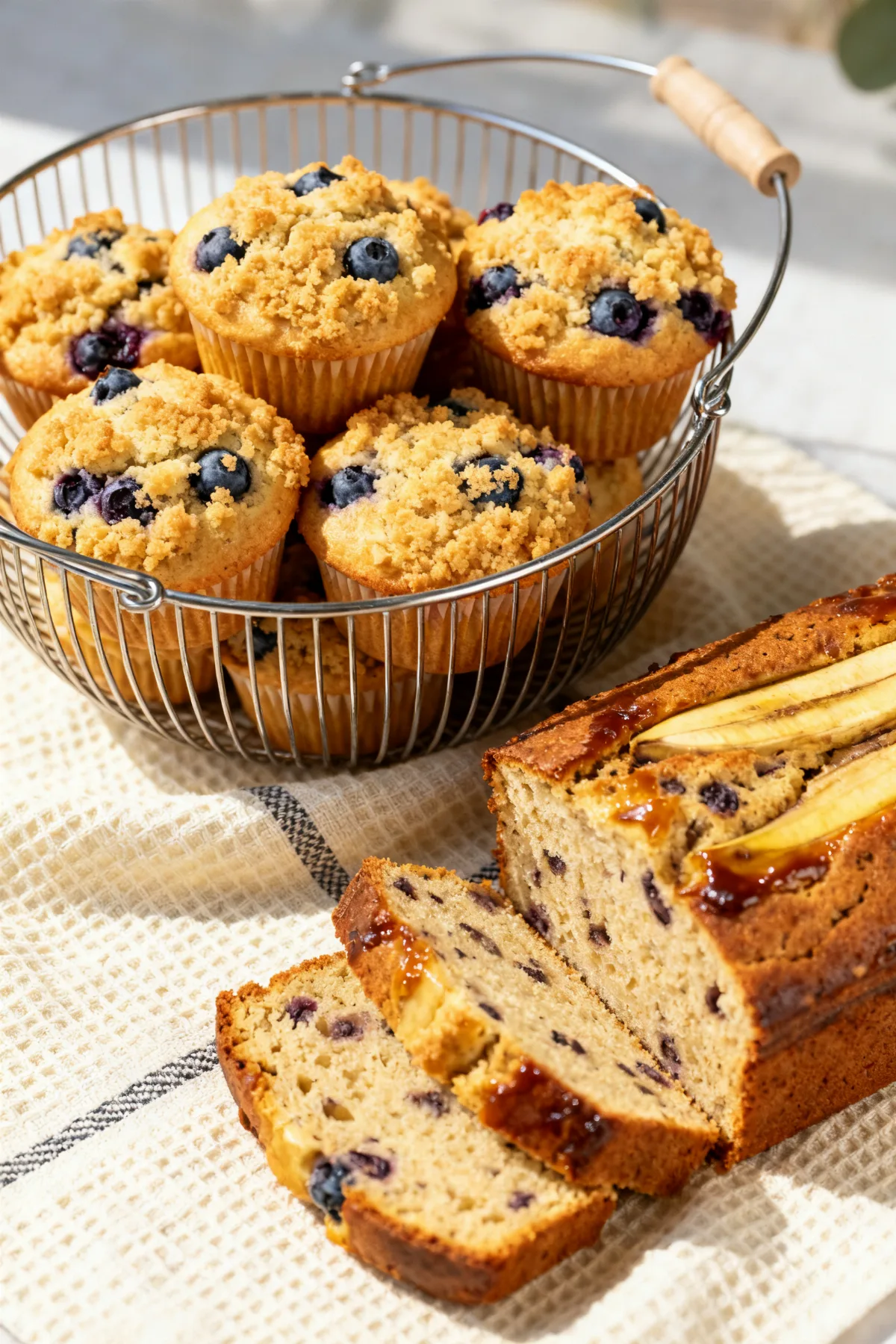
Muffins, scones and quick breads are one technique wearing three shapes. There is no yeast and no proving: baking powder or soda does the lifting, which means the clock starts the moment the wet and dry ingredients meet, and the batter will not wait for you.
That single fact explains almost everything that goes wrong in this section. The groups below sort the collection by shape and then by flavor, and the troubleshooting further down covers the three failures that come up again and again.
Muffins
Thick batter, baked in a muffin pan, mixed as little as possible. Lumps in the bowl are correct; a smooth batter means the gluten has been worked and the muffins will be tough.
- Apple Cider Donut Muffins (The Reduced-Cider Trick That Fixes Gummy Muffins)
- Apple Cinnamon Crumb Muffins Recipe
- Apple Fritter Muffins Recipe
- Bakery Style Blueberry Muffins Recipe
- Best Carrot Zucchini Muffins with Cream Cheese Frosting
- Best Cinnamon Applesauce Muffins Ready in 30 Minutes
Scones
Cold fat rubbed into flour, barely brought together. Scones are closer to pastry than to cake, and warm hands are the main enemy.
- Apple Pie Scones Recipe
- Best Homemade Chai Scones with Maple Glaze
- Best Pumpkin Scones Recipe – Easy and Homemade
- Cranberry Orange Sour Cream Scones Recipe
Banana and zucchini breads
Built on a wet ingredient rather than on added liquid. Overripe banana and grated zucchini both bring water and sugar, which is why these loaves are dense and keep well.
- Best Irresistible Zucchini Banana Bread Ready in 30 Minutes
- Best Lemon Zucchini Heaven Bread Ready in 30 Minutes
- Black Sesame Banana Bread
- Iced Matcha Banana Bread
- Strawberry Banana Bread Recipe Easy
Why the mixing instruction is the recipe
In almost every other kind of baking, mixing thoroughly is good practice. Here it is the mistake. Flour develops gluten when it is stirred in liquid, and gluten in a muffin is what gives you a rubbery crumb and long vertical tunnels running up through the middle.
The instruction to mix until just combined is therefore not a suggestion about effort. Fold until there is no dry flour visible and then stop, lumps and all. The same applies doubly to scones, where the dough should look barely held together when it goes onto the counter.
Apple and applesauce loaves
Built on grated apple, apple butter or applesauce, with cinnamon doing most of the seasoning. The moisture is already in the fruit, so resist adding extra liquid.
- Amish Apple Fritter Bread Recipe
- Apple Bread Recipe
- Apple Butter Pull-Apart Bread Recipe
- Easy Applesauce Bread With Cinnamon Recipe
Citrus and berry bakes
Acid and fruit, in loaves, muffins and rolls. Citrus juice reacts with baking soda, so these recipes balance their leavening deliberately and do not take well to being halved.
- Barefoot Contessa Cranberry Orange Bread Recipe
- Cranberry Orange Bread with Orange Glaze Recipe
- Glazed Cranberry Lemon Loaf Recipe
- Zesty Lemon Loaf Recipe
- Strawberry Cinnamon Rolls Recipe
- Strawberry Muffins Recipe
Cinnamon rolls and sweet buns
The outlier in this group. These are enriched doughs with a proving stage, closer to bread than to a quick bake.
- Apple Cinnamon Rolls With Apple Pie Filling Recipe
- Best Pumpkin Butter Cinnamon Rolls Recipe
- Peach Cobbler Cinnamon Rolls Recipe
- Soft-Baked Apple Cinnamon Rolls Recipe
Gummy, flat, or full of tunnels
- A gummy, heavy streak at the bottom. Under-baked, or too much liquid for the flour. A loaf needs longer than it looks, and a skewer in the center is the only reliable test.
- Flat tops and no rise. Old baking powder, or batter that sat around before it went in the oven. Chemical leaveners start working on contact and are largely spent by the time a delayed batter reaches heat.
- Tunnels and a rubbery crumb. Over-mixing. There is no way back from this one once it is baked, which is why the mixing note above matters more than any ingredient choice.
Questions
Why are my muffins tough?
The batter was over-mixed. Fold until the flour just disappears and accept a lumpy bowl.
Can I make muffin batter the night before?
Not if the recipe uses baking powder or soda alone – the rise will be gone by morning. Mix the dry and wet ingredients separately, keep them apart, and combine in the morning.
Can I bake a muffin recipe as a loaf, or the other way round?
Usually yes, but the time changes considerably. A loaf needs a lower oven and much longer; muffins need a hotter oven and a short bake.
Why did my loaf sink in the middle?
Too much leavening, too much liquid, or the oven door opened before the structure set. All three let the risen center collapse.
How should I store these?
Airtight at room temperature for a couple of days. Scones are the exception: they are at their best the day they are made and are better refreshed in the oven than kept.