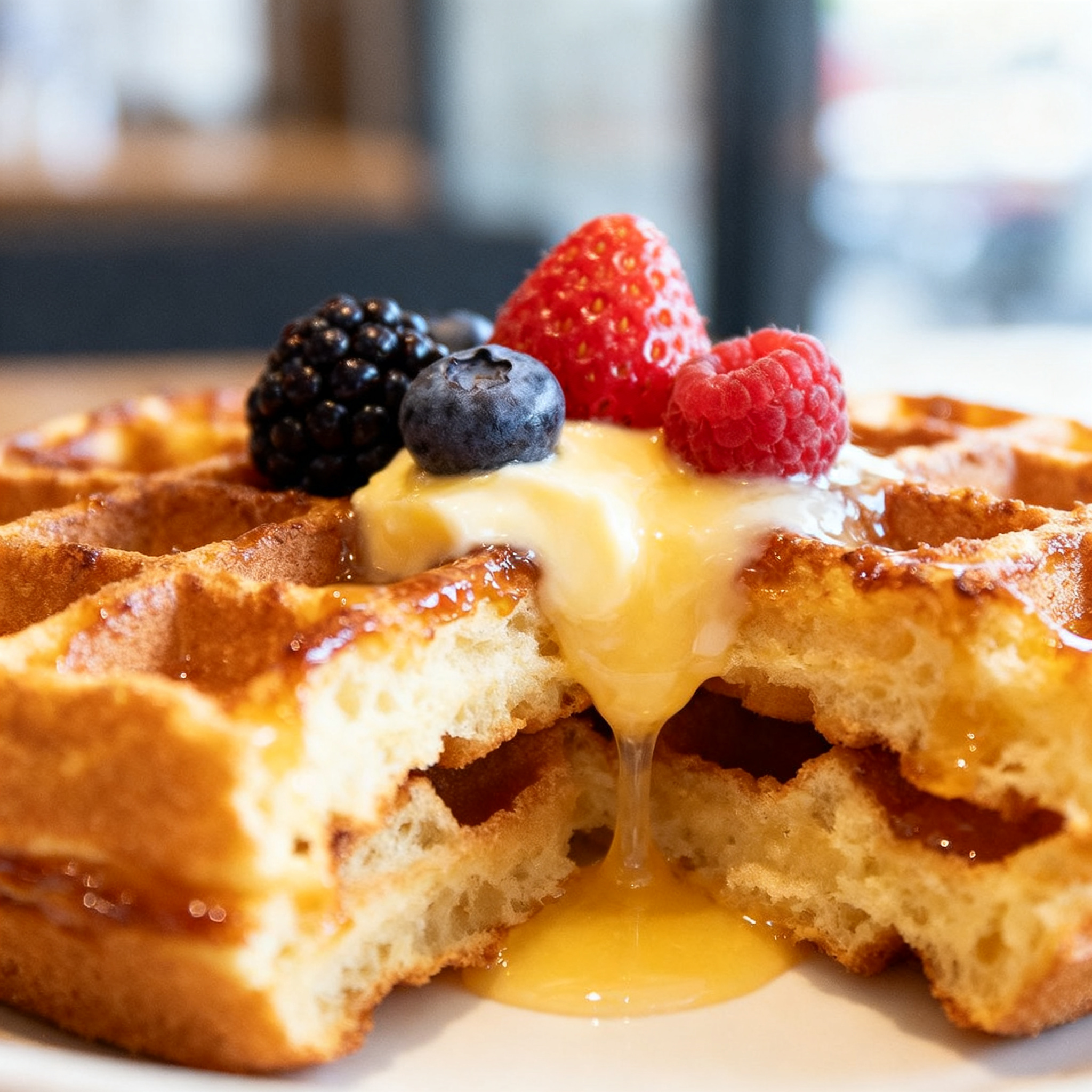
Overnight Yeast-Raised Belgian Waffles (Brown Butter Method)
Tested & Approved
by Sophie Lane
Most yeasted waffle recipes stop at 'let it rise on the counter' — this belgian waffles recipe goes further, browning the butter for nutty depth and fermenting the batter cold overnight for real tang and structure. The result is a waffle with a genuinely craggy, shatter-crisp shell and an airy, custardy interior, no stand mixer or last-minute yeast-blooming required.
Published: August 24, 2026
Simple, everyday ingredients and clear, step-by-step instructions — every recipe made in Dorothy"s kitchen before it reaches yours. Jump to the full recipe card below.
PrintOvernight Yeast-Raised Belgian Waffles (Brown Butter Method)
A brown-butter, overnight-fermented belgian waffles recipe with whipped egg whites folded in for a shatter-crisp shell and custardy center.
- Prep Time: 20 minutes
- Cook Time: 25 minutes
- Total Time: 12 hours (mostly inactive)
- Yield: 6 waffles 1x
- Method: Waffle iron
- Cuisine: Belgian-American
Ingredients
- 2 cups whole milk, warmed to 110°F
- 1 packet (2 1/4 tsp) active dry yeast
- 1 tbsp granulated sugar
- 1/2 cup unsalted butter, browned and slightly cooled
- 2 large eggs, separated
- 1/2 tsp fine sea salt
- 2 1/4 cups all-purpose flour
- 1/2 tsp baking soda
- 1 tsp vanilla extract
- pinch of cream of tartar (optional, for whipping whites)
- neutral oil or melted butter, for greasing the iron
Instructions
- Brown the butter in a light-colored saucepan over medium heat, swirling constantly, until it foams, then turns golden with nutty brown flecks and smells toasted, 5-7 minutes. Pour into a bowl to cool slightly.
- Warm the milk to about 110°F. Whisk in the yeast and sugar and let stand 5-10 minutes, until foamy on top.
- In a large bowl, whisk the flour and salt. Whisk in the yeast-milk mixture, browned butter, egg yolks, and vanilla until you have a smooth, loose batter.
- Cover the bowl and refrigerate overnight, 8-12 hours. The batter will rise, bubble, and smell faintly tangy.
- The next morning, whisk the baking soda into the cold batter — it will fizz and deflate slightly; that"s expected.
- Whip the egg whites (with cream of tartar, if using) to soft peaks. Fold into the batter in two additions, gently, until just combined.
- Preheat and lightly grease a Belgian waffle iron. Ladle in batter (start with 3/4 cup and adjust to your iron"s size), close, and cook until deep golden and steam stops escaping, 4-5 minutes.
- Serve immediately, or hold waffles on a wire rack in a 200°F oven while you finish the batch — never stack them hot, or they"ll steam and go soft.
Notes
Swap in bread flour for a chewier, more structured interior, or replace 1/2 cup of the all-purpose flour with dark rye for an even nuttier match to the brown butter. Batter keeps in the fridge up to 24 hours if you need to push the timeline. Cooked waffles freeze well in a single layer, then bagged — reheat straight from frozen in a toaster or 375°F oven until crisp, never in the microwave, which turns them soft.
The move that changes everything here is browning the butter before it goes into the batter. Regular melted butter just adds fat; browned butter adds toasted, nutty, almost caramel notes that survive the overnight ferment and come through clearly once the waffles hit the hot iron. It costs five extra minutes and it"s the single biggest flavor upgrade you can make to a yeasted waffle batter.
The second departure from the usual belgian waffles recipe playbook is fermenting cold instead of at room temperature. A room-temp rise (the classic Marion Cunningham approach) gets you lift, but a slow 8-to-12-hour cold rise in the fridge develops real acidity and complexity — closer to a sourdough waffle than a pancake batter with yeast stirred in. The batter will look bubbly and slightly separated by morning; that"s exactly right, not a sign anything went wrong.
The mistake almost everyone makes with yeasted waffles is stirring the eggs in whole and calling it done. Separate them instead: yolks go into the overnight batter, whites get whipped to soft peaks and folded in right before cooking. That last-minute fold is what gives these waffles their shattering, deeply ridged crust and a lofty, steam-filled interior — fold too aggressively and you knock the air back out, so cut it in gently in two additions and stop as soon as the streaks disappear.
A couple of testing notes worth knowing before you start: the batter will fizz and deflate slightly when you whisk in the baking soda the next morning — that"s the acid from fermentation reacting, and it"s normal, not a failed rise. And don"t underfill the iron trying to get a ‘clean" waffle; this batter puffs significantly, so err on the side of slightly less batter than you think you need, or it"ll overflow the edges.
Frequently Asked Questions
What makes this belgian waffles recipe different from a standard yeasted version?
Two things: the butter is browned before mixing in for a nutty, caramelized flavor, and the batter ferments cold overnight instead of at room temperature, which builds more tang and structure. Whipped egg whites are also folded in right before cooking for extra lift and crispness.
Can I skip the overnight rise for this belgian waffles recipe?
You can let the batter rise at room temperature for about 1 hour instead, but you'll lose the deeper, tangier flavor and slightly better structure the cold ferment gives. If you're short on time, a room-temp rise still works fine.
Why brown the butter instead of just melting it?
Browning cooks off the water and toasts the milk solids, adding a nutty, almost caramel flavor that plain melted butter can't give you. It's a five-minute step that noticeably upgrades the finished waffle.
Can I freeze yeast-raised Belgian waffles?
Yes. Cool completely, freeze in a single layer until solid, then transfer to a freezer bag. Reheat directly from frozen in a toaster or a 375°F oven until crisp again — avoid the microwave, which makes them soggy.
Get our 10 best recipes — free
Join the Rapid Recipes newsletter and we’ll email you our 10 most-loved recipes as a free PDF.
Free PDF + new recipes every week. Unsubscribe anytime.