Gut-Healthy Buddha Bowl – The Fibermaxxing Lunch to Reset Your Week
Tested & Approved
by Sophie Lane
This isn't just a pile of roasted vegetables on rice — this gut healthy Buddha bowl is built on a cooked-then-cooled starch trick that boosts resistant starch, plus a tangy synbiotic dressing that pairs fermented tang with prebiotic fiber. It's the fibermaxxing lunch that actually does something for your gut, not just looks good on camera.
Published: August 13, 2026
Simple, everyday ingredients and clear, step-by-step instructions — every recipe made in Dorothy"s kitchen before it reaches yours. Jump to the full recipe card below.
PrintGut-Healthy Buddha Bowl – The Fibermaxxing Lunch to Reset Your Week
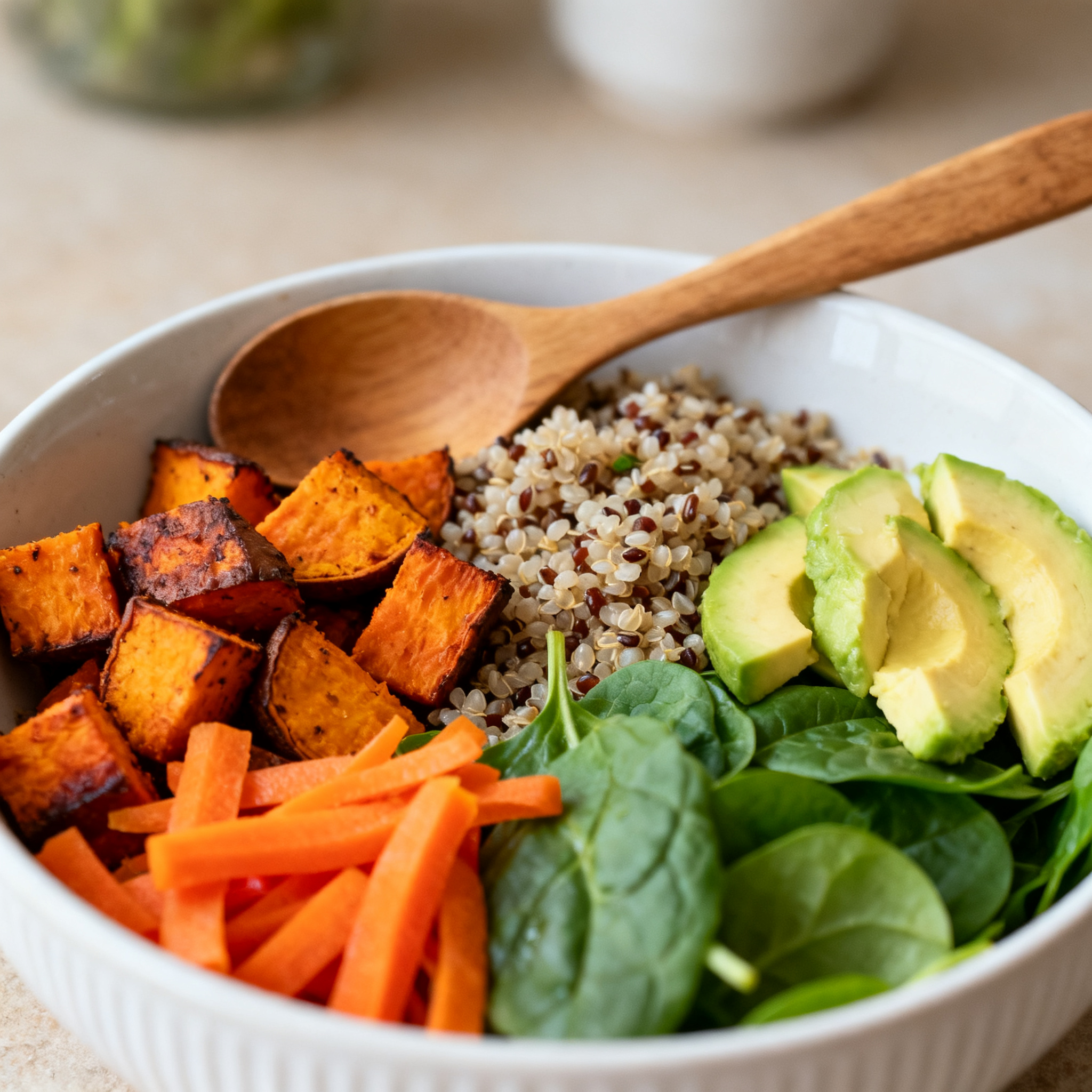
A fiber-layered Buddha bowl with cooled resistant-starch sweet potato and rice, crunchy raw vegetables, and a synbiotic miso-tahini-sauerkraut dressing.
- Prep Time: 15 minutes
- Cook Time: 30 minutes
- Total Time: 1 hour 45 minutes (includes cooling time)
- Yield: 4 1x
- Method: Roasting, boiling, assembling
- Cuisine: Fusion / Bowl food
Ingredients
- 1 cup cooked brown rice or farro, cooled at least 1 hour (or overnight)
- 1 medium sweet potato, cubed and roasted, cooled at least 1 hour
- 1 cup cooked lentils or chickpeas
- 1 cup shredded red cabbage
- 1/2 cup shredded carrot
- 1/2 avocado, sliced
- 1/3 cup sauerkraut, drained (reserve 1 tbsp brine)
- 2 tbsp tahini
- 1 tsp white miso paste
- 1 tbsp reserved sauerkraut brine
- 1 tsp maple syrup
- Warm water, to thin
- Sesame seeds and microgreens, for topping
Instructions
- Roast the sweet potato cubes at 400°F (200°C) for 25 minutes until tender, then let cool completely, ideally in the fridge for at least 1 hour or overnight — this builds resistant starch.
- Cook the rice or farro, then spread it on a tray and cool the same way as the sweet potato.
- Whisk tahini, miso, sauerkraut brine, and maple syrup together, then thin with warm water a teaspoon at a time until pourable and glossy.
- Gently rewarm the cooled sweet potato and rice (microwave 60-90 seconds or a quick skillet toss) — you want them warm, not hot.
- Layer rice, lentils, cabbage, carrot, sweet potato, and avocado in a bowl.
- Top with sauerkraut, drizzle generously with the dressing, and finish with sesame seeds and microgreens.
Notes
The cooling step isn"t optional — it"s what makes this a resistant-starch bowl instead of a regular grain bowl. Meal-prep it: cook the rice and sweet potato up to 3 days ahead and store cold; they"ll build even more resistant starch by the time you eat them. Swap sauerkraut for kimchi for a spicier version, or stir a spoonful of plain yogurt into the dressing if you"re out of brine.
Most Buddha bowls are a fiber gesture, not a fiber strategy: a scoop of rice, some chickpeas, whatever vegetables were in the crisper. This one is deliberate. The trick is temperature — you cook the sweet potato and rice, then let them cool completely (or overnight in the fridge) before reheating gently. That cooling step converts a chunk of the starch into resistant starch, a type your small intestine can"t break down but your colon bacteria absolutely can. You get the comfort of warm starch with the fermentable fiber payoff of a cold grain salad, which is the whole point of fibermaxxing — stacking multiple fiber types in one meal instead of relying on one lonely side salad.
The dressing is doing double duty too. Tahini and miso bring soluble fiber and fermented depth, but the real move is stirring in a spoonful of the sauerkraut brine instead of extra vinegar. You"re feeding live cultures from the kraut with the same fibrous, slightly funky base they thrive on — a synbiotic combo (probiotic plus prebiotic in one bite) that plain lemon-tahini dressings don"t give you. The common mistake here is dressing the bowl straight out of the fridge: cold fat seizes and the tahini goes gluey. Let the dressing sit at room temperature for ten minutes and whisk in warm water a teaspoon at a time until it ribbons off the spoon.
Don"t skip the crunch layer — shredded raw cabbage or jicama isn"t garnish, it"s the insoluble fiber that keeps things moving and gives the bowl textural contrast against the soft sweet potato and creamy dressing. If you want to swap proteins, lentils work better than chicken here because they add their own fiber instead of diluting it; if sauerkraut isn"t your thing, kimchi or a spoon of plain yogurt whisked into the dressing gets you a similar synbiotic effect. Leftovers actually improve overnight, since the starch keeps cooling and resetting — this is a rare bowl that"s better made ahead than fresh.
Frequently Asked Questions
What makes this a gut healthy Buddha bowl instead of a regular one?
It layers three fiber types on purpose: resistant starch from cooled rice and sweet potato, soluble fiber from tahini and lentils, and insoluble fiber from raw cabbage and carrot, plus a synbiotic dressing that pairs sauerkraut brine (probiotic) with fermentable fiber (prebiotic).
Do I really need to cool the rice and sweet potato before eating?
Yes — cooling starchy foods after cooking converts some of the starch into resistant starch, which resists digestion in the small intestine and instead feeds beneficial bacteria in the colon. Reheating gently afterward doesn't undo this effect.
Can I make this vegan or nut-free?
It's already vegan as written. For nut-free, tahini is seed-based so it's naturally nut-free — just double-check your miso brand is soy-based, not made with tree nuts.
How long does this bowl keep in the fridge?
Store components separately for up to 4 days; the dressing keeps up to a week. Assemble just before eating so the cabbage stays crisp and the avocado doesn't brown.
Get our 10 best recipes — free
Join the Rapid Recipes newsletter and we’ll email you our 10 most-loved recipes as a free PDF.
Free PDF + new recipes every week. Unsubscribe anytime.