Brown Butter Malted Skillet Cookie
Tested & Approved
by Sophie Lane
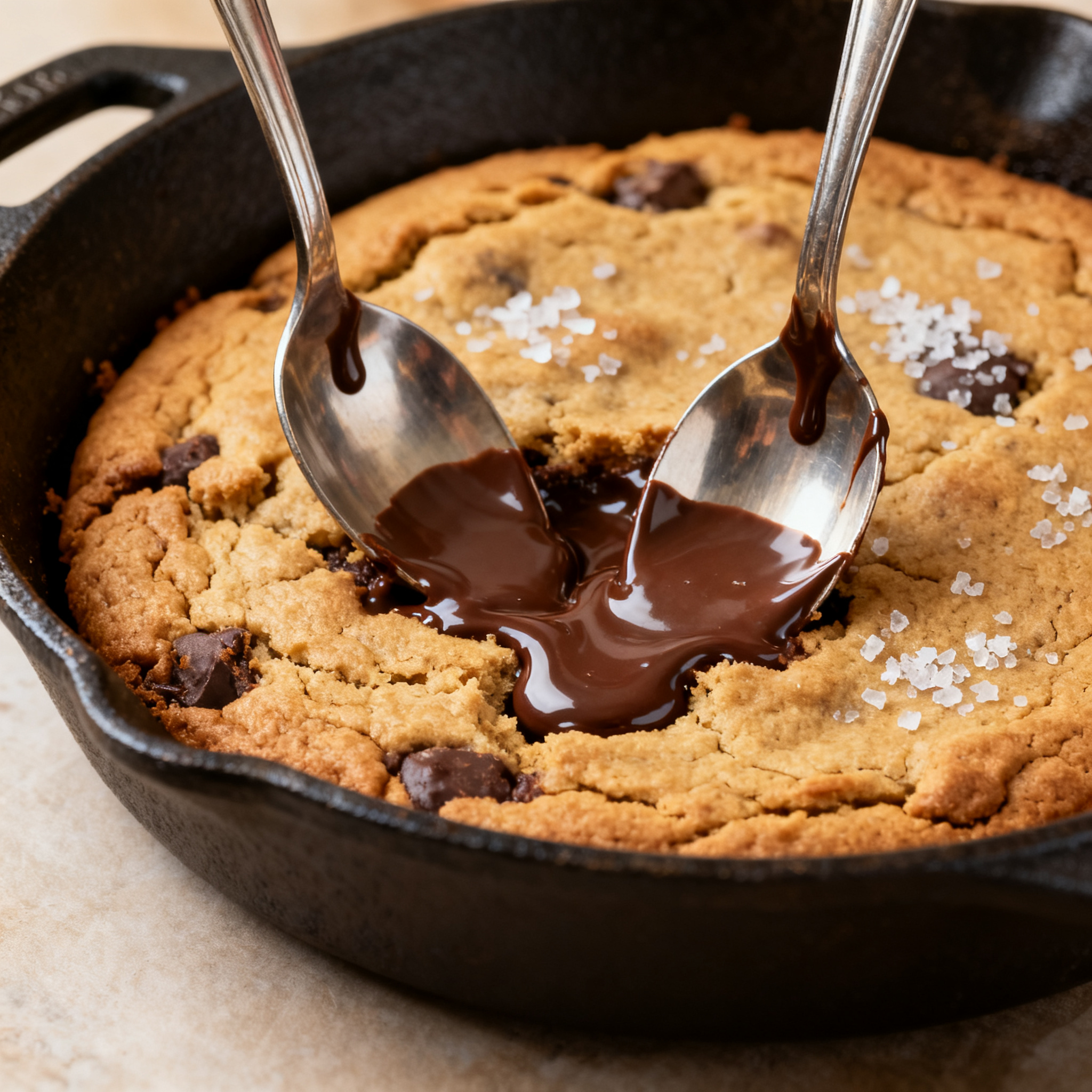
This isn't just a giant chocolate chip cookie baked in a pan — browning the butter and stirring in malted milk powder gives it a deep, almost caramelized flavor most skillet cookies never get near. Torn bar chocolate melts into molten pools instead of holding its shape like chips, and a short bake keeps the center soft enough that everyone really does just grab a spoon and dig in.
Published: August 24, 2026
Simple, everyday ingredients and clear, step-by-step instructions — every recipe made in Dorothy"s kitchen before it reaches yours. Jump to the full recipe card below.
PrintBrown Butter Malted Skillet Cookie
A gooey brown butter skillet cookie with malted milk powder and melty chocolate pools, baked for one big communal spoon-dessert.
- Prep Time: 15 minutes
- Cook Time: 25 minutes
- Total Time: 40 minutes
- Yield: 6-8 1x
- Method: Baked
- Cuisine: American
Ingredients
- 10 tbsp unsalted butter
- 1 cup packed light brown sugar
- 1/4 cup granulated sugar
- 3 tbsp malted milk powder
- 1 large egg, plus 1 egg yolk, room temperature
- 2 tsp vanilla extract
- 1 3/4 cups all-purpose flour
- 1 tsp cornstarch
- 3/4 tsp baking soda
- 1/2 tsp fine sea salt
- 8 oz bar chocolate (mix of dark and milk), torn into chunks
- Flaky sea salt, for finishing
- Vanilla ice cream, for serving (optional)
Instructions
- Brown the butter in a 10-inch cast iron skillet over medium heat, swirling often, until nutty and amber, 5-7 minutes. Scrape into a bowl and cool 10 minutes; wipe out the skillet and butter it lightly.
- Whisk the browned butter with brown sugar, granulated sugar, and malted milk powder until smooth and glossy.
- Whisk in the egg, egg yolk, and vanilla until the mixture is thick and ribbony, about 1 minute.
- Fold in the flour, cornstarch, baking soda, and salt just until a few dry streaks remain.
- Fold in most of the torn chocolate, reserving a handful. Press the dough into the skillet and scatter the reserved chocolate over the top.
- Bake at 375°F (190°C) for 22-26 minutes, until the edges are deep golden and the center still looks slightly underdone and jiggly.
- Rest 10 minutes, finish with flaky salt, and serve straight from the skillet with spoons.
Notes
Pull the cookie when the center still jiggles slightly — cast iron keeps cooking it after the oven, so waiting for a clean toothpick guarantees a dry, cakey result instead of a gooey one. Use a torn chocolate bar, not chips, for real melty pools. No malted milk powder? Skip it or use Ovaltine/Horlicks — the cookie still works, just with less depth.
Most skillet cookie recipes are just a normal cookie dough dumped into cast iron and prayed over. The problem is that regular melted or softened butter gives you a one-note sweetness, and chocolate chips are engineered to hold their shape, so you get a cookie that"s uniformly chewy but never actually gooey in the center. Browning the butter first fixes the flavor problem — those toasted milk solids read as caramel and hazelnut instead of just “buttery” — and a spoonful of malted milk powder pushes that toasty, slightly nostalgic flavor even further without anyone being able to name why it tastes so good.
The other move is swapping chips for a torn-up chocolate bar. Bar chocolate has a different fat structure than chips, so instead of staying put it slumps into these uneven, glossy pools as it bakes — some spots are almost fudgy, others are just melty streaks running through the crumb. That"s the texture contrast that makes a communal skillet cookie worth fighting over with a spoon instead of slicing neatly into wedges.
The mistake almost everyone makes with skillet cookies is baking until the center looks set. Don"t. Cast iron holds so much residual heat that the cookie keeps cooking hard after it leaves the oven — pull it when the edges are deep golden and the middle still looks slightly underdone and jiggly, not dry. If you wait for a clean toothpick, you"ll get a dense, cakey puck instead of the molten center this method is built around. A small pinch of cornstarch in the dry mix helps hold that gooey middle together just enough that it"s spoonable, not soupy.
No malted milk powder on hand? Skip it — the cookie is still good, just less complex, closer to a standard chocolate chip cookie with a caramel edge from the browned butter. For a deeper malt hit, swap half the milk chocolate for dark and use Ovaltine or Horlicks instead of a US malted milk powder blend; both work fine. Let the skillet rest ten minutes off the heat before anyone plunges a spoon in — straight out of the oven it"s too hot to eat and the center hasn"t quite finished setting up.
Frequently Asked Questions
Why add malted milk powder to a skillet cookie?
Malted milk powder deepens the caramel notes from the browned butter and gives the cookie a toasty, nostalgic flavor that plain sugar and butter can't replicate on their own.
Can I use chocolate chips instead of a chocolate bar?
You can, but you'll lose the molten pools — chips are stabilized to hold their shape, while chopped bar chocolate melts unevenly into gooey streaks that make this skillet cookie so spoonable.
What size skillet works best?
A 10-inch cast iron skillet gives the ideal ratio of crisp caramelized edge to gooey center. A 9-inch works too but needs a few extra minutes; anything larger will bake thinner and less gooey.
How do I know when it's done?
The edges should be deep golden brown and pulling slightly from the sides, while the center still looks soft and slightly jiggly. It firms up as it rests in the hot skillet.
Can I make the dough ahead?
Yes, press it into the skillet, cover, and refrigerate up to 2 days. Let it sit at room temperature for 20 minutes before baking so it bakes evenly.
Get our 10 best recipes — free
Join the Rapid Recipes newsletter and we’ll email you our 10 most-loved recipes as a free PDF.
Free PDF + new recipes every week. Unsubscribe anytime.