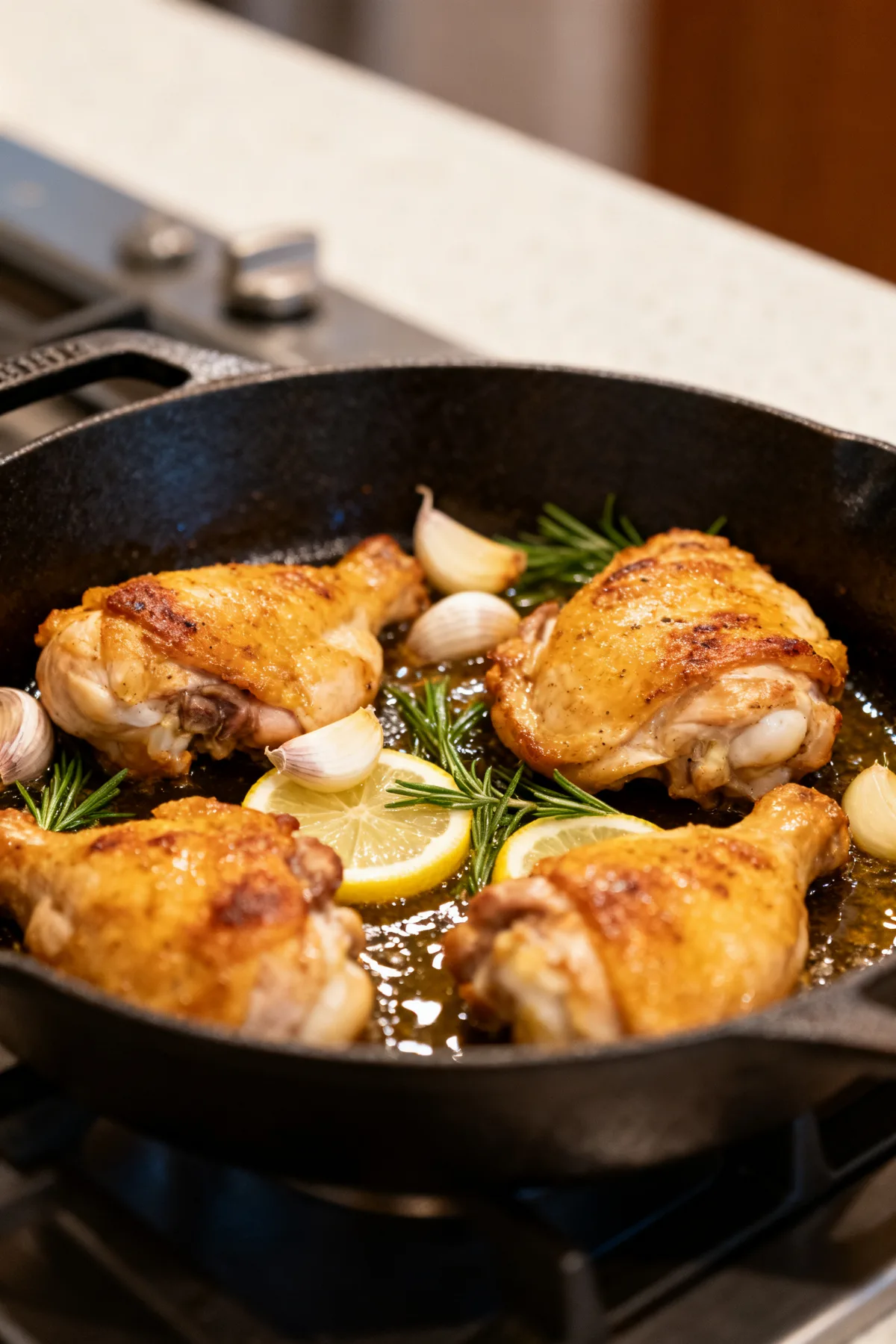
Chicken is the default weeknight protein, which is why there are more chicken recipes here than anything else, and why they are so hard to tell apart from a list of titles. The thing that actually distinguishes them is the method, not the flavor: a skillet dinner, a casserole and a slow cooker dinner ask completely different things of you and of the cut of chicken you buy.
I have sorted the sections below by method for that reason. I pick the method that matches the evening I am having, then I pick the flavor, and I would suggest you do the same.
30-minute chicken skillets
One pan, high heat, nothing covered. These need chicken cut small enough to cook through before the outside overcooks, which is why most of them call for strips, thighs or cubes rather than whole breasts.
- Balsamic Glazed One Pan Chicken Recipe
- Easy Honey Pineapple Chicken Recipe Ready in 30 Minutes
- Easy Scallion Chicken Recipe Ready in 30 Minutes
- Loaded Chicken and Veggie Skillet Recipe
Chicken casseroles and bakes
Assembled, then baked. The sauce protects the chicken from the oven, which makes these the most forgiving group here and the easiest to prepare ahead.
- Balsamic Baked Chicken Breast Recipe
- Cheesy Chicken Noodle Casserole Recipe
- Chicken Bacon Crunch Casserole Recipe
- Chicken Bacon Ranch Tater Tot Casserole Recipe
- Chicken Cordon Bleu Casserole Recipe
- Chicken Dressing Casserole Recipe
- Chicken Fajita Casserole Recipe
Crockpot and slow cooker chicken
Long, wet, low heat. Thighs survive this; breasts shred into dryness if left too long, which is the single most common slow cooker complaint.
- Best Crockpot Angel Chicken – Easy Slow Cooker Recipe
- Crockpot Chicken Fajitas Recipe
- Crockpot Mexican Street Corn Chicken Recipe
- Slow Cooker Honey Garlic Chicken and Veggies Recipe
Creamy and cheesy chicken
Dairy-based sauces. They are rich enough to carry plain chicken, and they are the recipes where splitting is a real risk if the pan gets too hot after the cream goes in.
- Cheesy Garlic Chicken Wraps Recipe
- Chicken Alfredo Zucchini Noodles Recipe
- Chicken Shawarma With Creamy Garlic Sauce Recipe
- Creamy Cajun Chicken and Sausage Pasta Recipe
- Creamy Cajun Chicken Linguine Alfredo Recipe
- Creamy Chicken Lasagna with White Sauce Recipe
- Creamy Chicken Orzo with Spinach and Pesto Recipe
Grilled, air-fried and roasted chicken
Direct heat, on the grill or in the air fryer. Some of these finish with a glaze or a sauce and some go in dry, but they all live or die on the same two things: how the chicken is seasoned before it cooks, and whether it rests before it is cut.
- 10 Minute Air Fryer Chicken Sausage and Veggies Recipe
- 10 Minute Roasted Chicken and Vegetables – Air Fryer Recipe
- Easy 30-Minute Grilled Chicken Sandwich for Quick Meals
- Easy Grilled Asian Chicken Skewers with Honey Garlic Sauce Recipe
- Easy Hawaiian Grilled Chicken with Pineapple Glaze Ready in 30 Minutes
- Grilled Chicken & Broccoli Bowls with Creamy Garlic Sauce Recipe
- Grilled Chicken Skewers with Peach BBQ Sauce
Chicken pasta dinners
Chicken plus a starch in one pot or two. Watch the sauce quantity: pasta keeps absorbing, so a sauce that looks right in the pan is often too dry on the plate.
- Bruschetta Chicken Pasta Recipe
- Chicken and Bacon Pasta with Spinach and Tomatoes Recipe
- Chicken Pot Pie Pasta Recipe
- Chicken Sausages with Zucchini, Tomatoes, and Pasta Recipe
- Easy Balsamic Chicken & Veggie Orzo Recipe
- Easy Marry Me Chicken Pasta – Ready in 30 Minutes
- Easy One Pot Gnocchi Chicken Pot Pie Recipe
Stuffed and wrapped chicken
Chicken with something inside it or around it. The filling insulates the meat, so these take longer than their thickness suggests and benefit from a probe rather than a timer.
- Air Fryer Chicken Ham Wraps Recipe
- Best Savory Stuffed Chicken with Roasted Red Peppers Ready in 30 Minutes
- Crispy Bacon Chicken Ranch Wraps Recipe
- Crispy Chicken Tempura Roll Recipe – Ready in 30 Minutes
- Street Corn Chicken Stuffed Sweet Potatoes Recipe
- Sweet & Spicy Chicken Wrap – Easy Fajita-Style Lunch
- Teriyaki Pineapple Chicken and Rice Stuffed Peppers Recipe
Chicken bowls and stir-fries
Components cooked separately and assembled. The most adaptable group, and the best one for meal prep, because each element keeps on its own terms.
- Bang Bang Chicken Bowl: An Incredible Ultimate Recipe
- BBQ Chicken Sweet Potato Bowl Recipe
- Cajun Chicken & Sweet Potato Bowls Recipe
- Chicken Fajita Bowl Recipe
- Chicken Stir Fry Recipe
- Macro Friendly BBQ Ranch Chicken Bowl Recipe
- Sticky Chicken Rice Bowls Recipe
Dry chicken has three causes, and only one is the recipe
- The wrong cut for the method. Breast is lean and has a narrow window; thigh has fat and connective tissue and forgives a wide one. Long, wet cooking belongs to thighs.
- Cooking to a time rather than to doneness. Chicken breasts vary enormously in thickness. A recipe time assumes a thickness, and if yours is thicker or thinner the time is wrong. Pound unevenly thick breasts flat, or cook to temperature.
- No rest. Cutting into chicken straight off the heat loses the juice onto the board. A few minutes under foil puts it back into the meat.
Questions about cooking chicken
Thighs or breasts?
Thighs for anything slow, wet or reheated; breasts for fast, dry heat where you control the timing. Most recipes here will take the swap, but the cooking time changes.
Can I use frozen chicken?
Thaw it first for anything cooked fast. Cooking from frozen in a slow cooker is not recommended, because the meat spends too long in the temperature range where bacteria grow.
How do I know when chicken is done without a thermometer?
The juices run clear and the meat is opaque to the center with no pink at the bone. A thermometer is still the only reliable answer, and it is the cheapest fix for dry chicken.
Which of these reheat well?
The casseroles, the bowls and the slow cooker dishes. Grilled and air-fried chicken loses its texture on reheating, so cook those to order.
Can I prepare these ahead?
The casseroles can be assembled a day ahead and baked from cold, allowing extra time. For bowls, cook the components and keep them separate. Check the individual recipe for its own make-ahead note.