Gut-Healthy Buddha Bowl with Pickled Onions (Built to Protect the Good Bacteria)
Tested & Approved
by Sophie Lane
Most buddha bowls call themselves 'gut-healthy' because there's a pile of vegetables in a bowl — but if you're pouring hot dressing over live-culture yogurt or piling warm grains straight onto fermented pickles, you're quietly killing the exact bacteria you're trying to feed. This bowl is built in a specific order, cool-side-first, so the fiber and the fermentation actually do their job. The payoff is a bowl that's crunchy, tangy, and creamy in the same bite — not just virtuous.
Published: August 12, 2026
Simple, everyday ingredients and clear, step-by-step instructions — every recipe made in Dorothy"s kitchen before it reaches yours. Jump to the full recipe card below.
PrintGut-Healthy Buddha Bowl with Pickled Onions (Built to Protect the Good Bacteria)
A fiber-packed buddha bowl with quick pickled red onions and a live-culture tahini-yogurt dressing, layered in an order that protects the good bacteria.
- Prep Time: 20 minutes
- Cook Time: 25 minutes
- Total Time: 45 minutes
- Yield: 4 1x
- Method: Roasting, quick-pickling, assembly
- Cuisine: American, Mediterranean-inspired
Ingredients
- 1/2 cup dry quinoa, rinsed
- 1/2 cup dry farro or brown rice
- 1 medium sweet potato, cubed
- 1 tbsp olive oil, plus more for roasting
- 1 (15 oz) can chickpeas, drained and rinsed
- 1/2 tsp cumin, 1/2 tsp smoked paprika, salt and pepper
- 1 small red onion, thinly sliced
- 1/2 cup unfiltered apple cider vinegar (with the mother)
- 1/2 cup water
- 1 tsp honey or maple syrup
- 1 tsp salt, few black peppercorns
- 2 cups baby spinach or arugula
- 1 cup shredded red cabbage
- 1/2 cup kimchi or sauerkraut (optional, for extra ferment)
- 1 avocado, sliced
- 2 tbsp pumpkin seeds
- 1/2 cup plain Greek yogurt (live active cultures)
- 2 tbsp tahini
- 1 tbsp lemon juice
- 1 small garlic clove, grated
- 2–4 tbsp water, to thin
Instructions
- Make the pickled onions first: combine vinegar, water, honey, salt, and peppercorns in a jar, add the sliced onion, and let sit at room temperature for 15-20 minutes only — don"t go longer or they lose their crunch.
- Cook quinoa and farro separately according to package directions; set aside to cool slightly.
- Toss sweet potato cubes and chickpeas with olive oil, cumin, smoked paprika, salt, and pepper. Roast at 425°F for 20-25 minutes, until the sweet potato is caramelized and the chickpeas are lightly crisped.
- Whisk together yogurt, tahini, lemon juice, garlic, and enough water to make a pourable dressing.
- Let the roasted vegetables and grains cool for about 5 minutes so they"re warm, not hot.
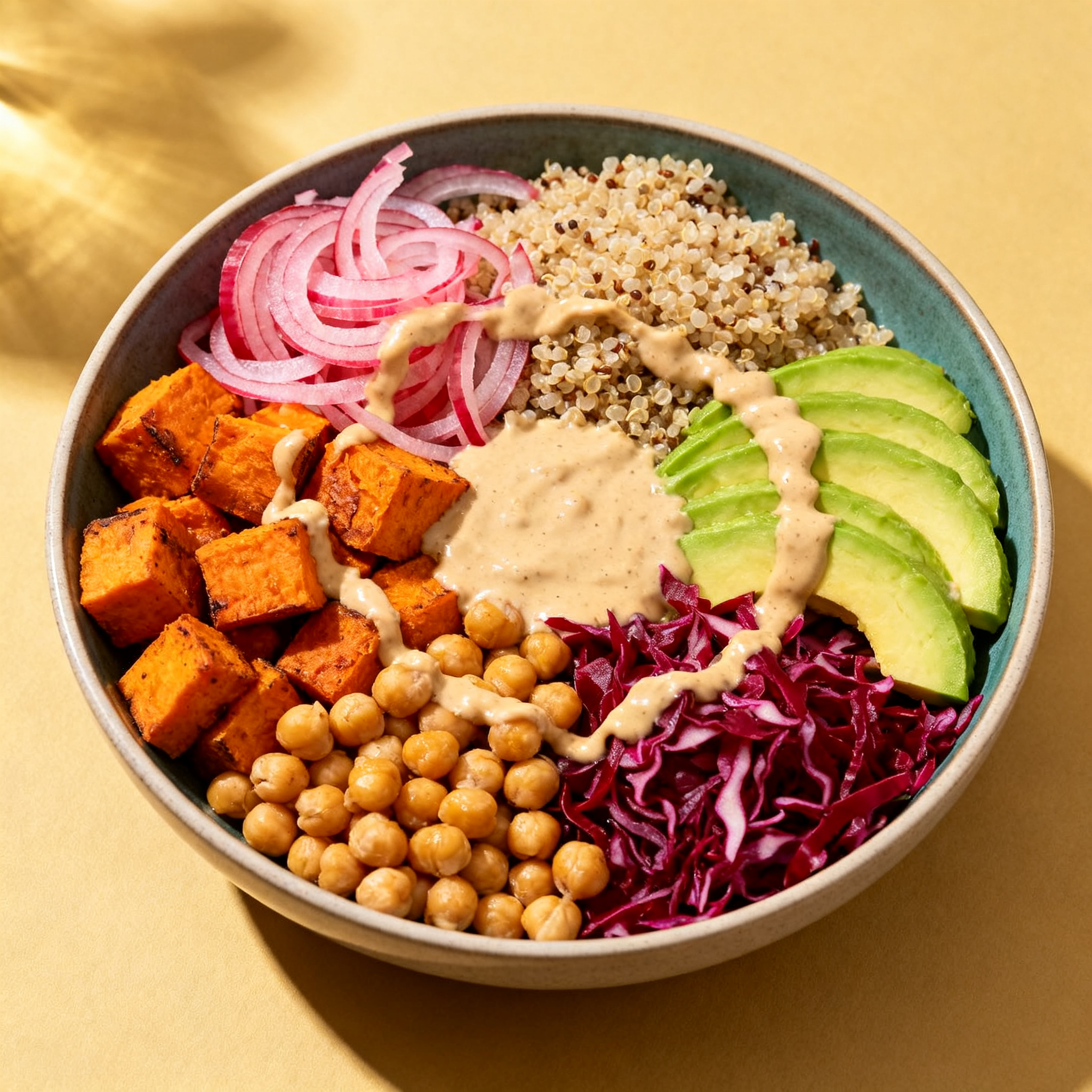
- Build the bowls: base of quinoa and farro, then spinach and cabbage, then roasted sweet potato and chickpeas.
- Top with avocado, pickled onions, kimchi if using, and pumpkin seeds.
- Drizzle with the tahini-yogurt dressing last, right before serving, so the live cultures stay intact.
Notes
The order matters more than any single ingredient: always let hot components cool to warm before adding yogurt dressing or pickled onions, or you"ll kill the live cultures you"re building this bowl around. Swap farro for brown rice or barley to keep it gluten-free. Leftover components keep separately in the fridge for up to 4 days — assemble just before eating and add the dressing last.
The twist here isn"t another ingredient — it"s sequencing. Gut health isn"t just about eating fermented food, it"s about eating a wide diversity of plant fibers (the "30 plants a week" idea from the American Gut Project) alongside live cultures that survive to reach your gut. Most buddha bowl recipes treat pickled onions and yogurt dressing as garnish, dumped on top of a hot bowl fresh off the stove or straight out of the oven. That heat is the problem: live cultures in unfiltered vinegar and yogurt start dying above roughly 115°F, so a ‘gut-healthy" bowl that"s actually warm all the way through is mostly just a nice vegetable bowl.
Two testing notes matter more than any ingredient swap. First, let your roasted sweet potato and grains cool to warm-not-hot before you add the yogurt-tahini dressing or the pickled onions — five minutes of patience is the whole trick. Second, don"t over-pickle the onions. Fifteen to twenty minutes in the brine gets you that snappy, still-crunchy bite that actually delivers texture and fiber diversity; leave them for hours and they go limp and one-note, which is fine for a burger but wastes the point here. Use raw, unfiltered apple cider vinegar with ‘the mother" for the pickle brine instead of plain white vinegar — it"s milder and carries its own beneficial bacteria into the mix, stacking on top of whatever"s in your yogurt.
Why this works beyond the obvious: fiber diversity feeds different strains of gut bacteria than any single fiber source can, which is why this bowl leans on five separate plant families (legume, allium, cruciferous, leafy green, and whole grain) instead of the usual quinoa-and-kale default. The tahini adds a sixth — sesame — plus healthy fat, which actually helps your body absorb the fat-soluble nutrients in the greens. If you"re dairy-free, swap the Greek yogurt for a plain coconut or oat-milk yogurt labeled ‘live active cultures" — skip flavored or heat-treated versions, since pasteurization after culturing strips the very bacteria you"re after. Kimchi or sauerkraut can stand in for or sit alongside the pickled onions if you want an even bigger fermented hit.
Frequently Asked Questions
Why does a gut-healthy buddha bowl need to be assembled in a specific order?
Live cultures in yogurt and unfiltered vinegar start dying above roughly 115°F. If you pour dressing or pickled onions over hot grains or roasted vegetables, you cook off the beneficial bacteria you added the ingredient for in the first place.
Can I use regular white vinegar for the pickled onions?
You can, but you'll lose the extra benefit of unfiltered apple cider vinegar 'with the mother,' which carries its own beneficial bacteria and a milder flavor into the brine.
How long should I pickle the onions?
15-20 minutes at room temperature is the sweet spot — long enough to mellow the bite and turn them pink, short enough to keep real crunch. Hours in the fridge will make them soft and one-note.
Can I make this buddha bowl vegan?
Yes — swap the Greek yogurt for a plain, unsweetened coconut or oat-milk yogurt labeled 'live active cultures,' and use maple syrup instead of honey in the pickle brine.
Can I meal-prep this bowl ahead of time?
Prep the grains, roasted vegetables, and pickled onions up to 4 days ahead and store separately. Assemble the bowl and add the dressing only right before eating to keep textures and live cultures intact.
Get our 10 best recipes — free
Join the Rapid Recipes newsletter and we’ll email you our 10 most-loved recipes as a free PDF.
Free PDF + new recipes every week. Unsubscribe anytime.