Pan-Seared Filet Mignon with Garlic Herb Butter (No Burnt Garlic)
Tested & Approved
by Sophie Lane
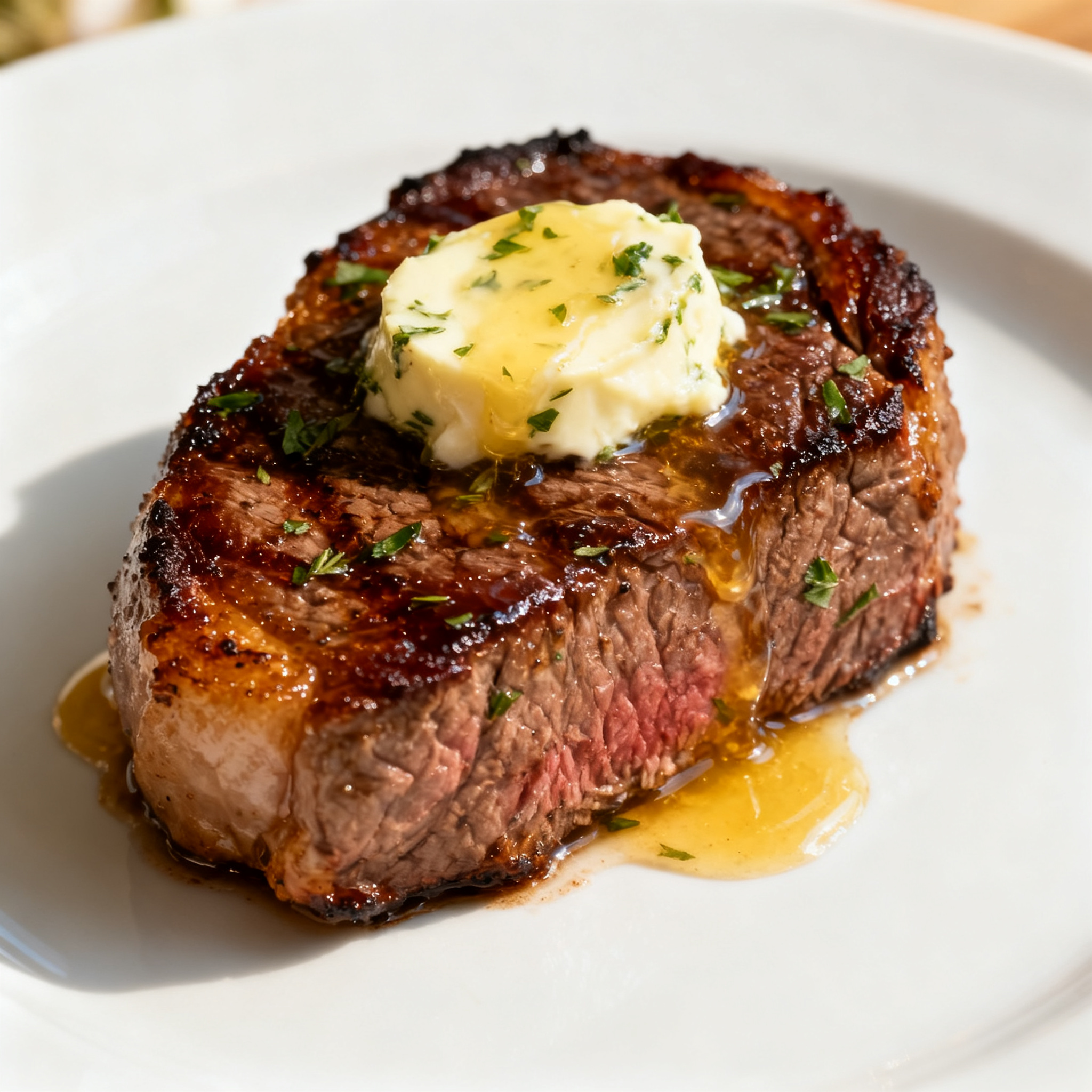
This filet mignon recipe fixes the one thing that ruins almost every pan-seared steak at home: bitter, scorched garlic from butter-basting at 500°F. Instead, a disc of garlic herb butter melts slowly over the steak as it rests, basting it with clean, sweet, garlicky flavor instead of burnt sludge. The crust stays shatter-crisp, the center stays rosy, and the butter actually tastes like butter.
Published: August 12, 2026
Simple, everyday ingredients and clear, step-by-step instructions — every recipe made in Dorothy"s kitchen before it reaches yours. Jump to the full recipe card below.
PrintPan-Seared Filet Mignon with Garlic Herb Butter (No Burnt Garlic)
Steakhouse-crust filet mignon basted by a slowly melting garlic herb butter coin instead of pan-burnt butter.
- Prep Time: 15 minutes (plus 1 hour dry-brine)
- Cook Time: 10 minutes
- Total Time: 1 hour 25 minutes
- Yield: 2 1x
- Method: Pan-Searing
- Cuisine: American
Ingredients
- 2 filet mignon steaks, 1.5-2 inches thick (6–8 oz each)
- 1 1/2 teaspoons kosher salt, divided
- 1/2 teaspoon black pepper
- 2 tablespoons avocado or refined high-smoke-point oil
- 4 tablespoons unsalted butter, softened
- 2 garlic cloves, finely minced
- 1 tablespoon fresh parsley, finely chopped
- 1 teaspoon fresh thyme leaves
- 1/2 teaspoon lemon zest
- Flaky sea salt, for finishing
Instructions
- At least 1 hour (or up to 24 hours) before cooking, pat filets dry and season all over with 1 teaspoon kosher salt. Place uncovered on a rack in the fridge.
- Meanwhile, mix softened butter, garlic, parsley, thyme, lemon zest, and a pinch of salt. Roll into a log in plastic wrap and freeze until firm, at least 45 minutes. Slice into 4 coins when ready to use.
- Remove steaks from the fridge 30-40 minutes before cooking to take the chill off. Pat dry again and season with remaining 1/2 teaspoon salt and the pepper.
- Heat oil in a heavy skillet (cast iron or stainless) over high heat until just shy of smoking.
- Sear steaks undisturbed for 3-4 minutes until a deep brown crust forms, then flip and sear 3-4 minutes more, using tongs to sear the fatty edge for 30 seconds too.
- Check internal temperature: pull at 125°F for medium-rare, 130°F for medium. Do not add butter or garlic to the pan.
- Transfer steaks to a warm plate or board and immediately top each with a frozen herb butter coin. Rest 5-8 minutes, allowing the butter to melt and baste the steak.
- Finish with a pinch of flaky sea salt and spoon any pooled butter over the top before serving.
Notes
A probe thermometer is the single biggest upgrade you can make to this recipe — filets are thick and pricey, and color alone won"t tell you what"s happening in the center. Extra butter coins freeze well for up to 3 months; use on pork chops, roasted vegetables, or baked potatoes. If your steaks are under 1.5 inches thick, sear 2 minutes per side and check temperature earlier since they"ll cook faster than the timing above.
Almost every filet mignon recipe tells you to toss butter, garlic, and thyme into the skillet during the final minute of searing and spoon it over the steak. It looks gorgeous in videos and it"s also a mistake: minced garlic in 450°F fat starts to scorch in under 60 seconds, and scorched garlic doesn"t taste rich, it tastes acrid. You just can"t taste it under all that char and salt, so home cooks assume it"s fine. It isn"t. The fix is to separate the two jobs. The pan"s only job is to build a deep, dry sear in plain high-smoke-point oil, nothing else in it to burn. The garlic herb butter"s job is to melt slowly over the resting steak, off heat, basting it gently for five minutes instead of scorching for one.
Two things make this work. First, dry-brine the filets uncovered in the fridge for at least an hour, ideally overnight — salt pulls moisture out, then the steak reabsorbs a concentrated brine, and the surface dries out enough to sear instead of steam. A wet steak straight from the wrap will never get a real crust, no matter how hot your pan is. Second, pull the steak at a lower internal temperature than you think: filet mignon carries over 5-8°F as it rests because it"s such a thick, insulated cut, so pulling at 125°F for medium-rare instead of 130°F is the difference between a perfect center and a gray, overcooked one. A thermometer is not optional here; filets are too thick and too expensive to eyeball.
The garlic herb butter itself is simple — softened butter, raw garlic, thyme, parsley, a little lemon zest — rolled into a log and frozen into coins. Freezing matters more than it sounds like it should: a cold coin melts gradually over 4-5 minutes of resting, basting continuously, while a room-temp pat just slides off and pools on the plate. Make a double batch; the extra coins keep in the freezer for months and turn any weeknight steak, pork chop, or roasted vegetable into something that tastes considered. If you don"t have fresh thyme, rosemary works, just use half as much since it"s stronger. For a smokier variation, swap half the butter for browned butter, cooled back to soft before rolling.
The other common mistake is crowding a cold pan. Filets need to hit oil that"s already rippling and just short of smoking, in a pan with room to breathe — two steaks max in a 12-inch skillet. Crowd it and the steaks steam in their own released juices instead of searing, and you"ll never get that deep mahogany crust that makes this cut worth the price tag.
Frequently Asked Questions
Why does this filet mignon recipe skip basting butter in the pan?
Minced garlic scorches in under a minute in a 450°F+ pan, turning bitter even if it looks golden. Melting a garlic herb butter coin over the steak after it's off heat gives the same flavor without the burnt taste.
What temperature should I pull filet mignon off the heat?
Pull at 125°F for medium-rare and 130°F for medium. Filet mignon is thick enough that it carries over 5-8°F while resting, so pulling at your target temperature will overcook it.
Can I make the garlic herb butter ahead of time?
Yes, and you should. Roll it into a log, freeze it, and slice off coins as needed. It keeps well for up to 3 months and works on other proteins and vegetables too.
Do I need to dry-brine the steak first?
It's worth the extra hour. Salting ahead of time draws out moisture that the steak reabsorbs, and it dries the surface so it sears instead of steams, which is essential for a real crust.
Get our 10 best recipes — free
Join the Rapid Recipes newsletter and we’ll email you our 10 most-loved recipes as a free PDF.
Free PDF + new recipes every week. Unsubscribe anytime.