King Cake Recipe
Introduction
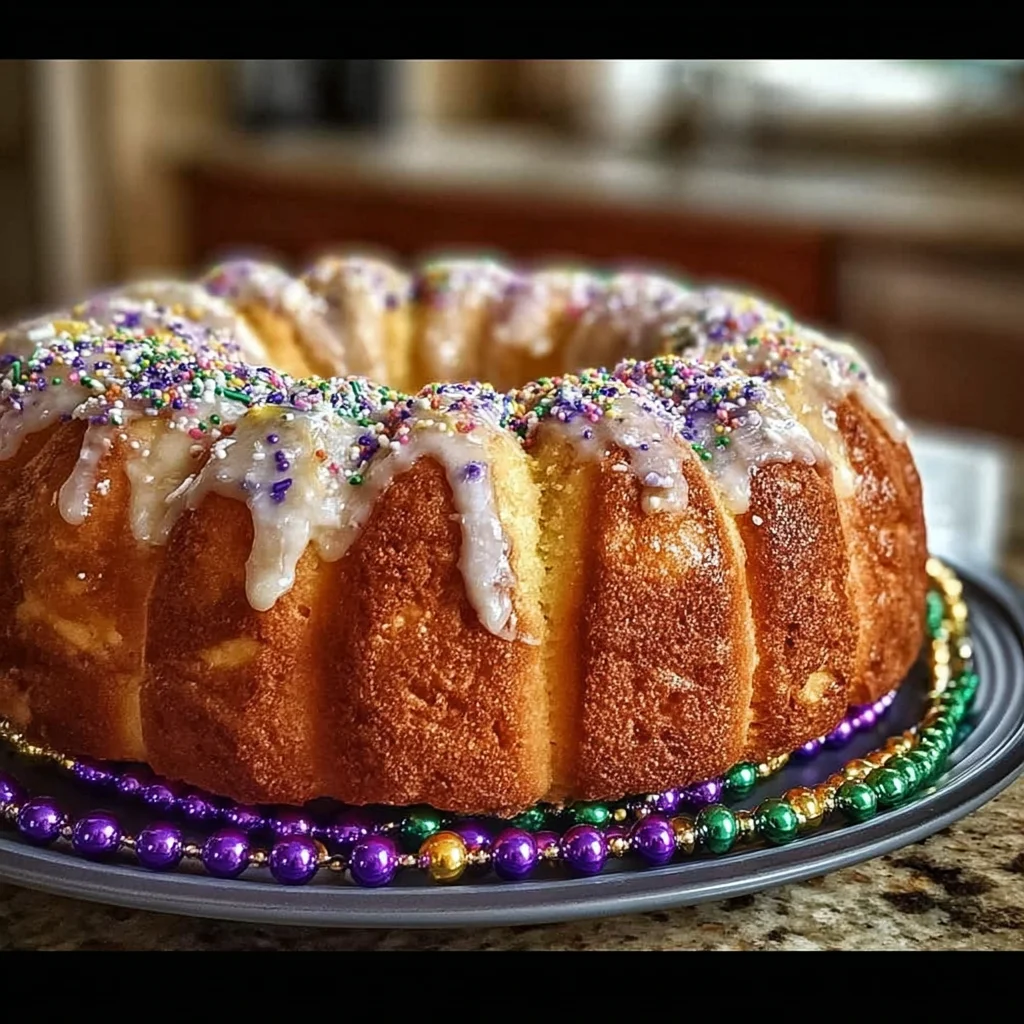
The vibrant swirls of purple, green, and gold sugar on a soft, cinnamon-spiced brioche are the unmistakable heralds of Mardi Gras season. This Traditional King Cake Recipe: 5 Easy Steps for Mardi Gras Fun demystifies the process, guiding you to a stunning centerpiece that’s surprisingly achievable. After years of testing, I’ve streamlined the method to ensure a tender, flavorful dough and a perfectly sweet filling every time, making this festive tradition a joy to bake at home.
Ingredients
Quality ingredients are the secret to an authentic, bakery-worthy king cake. Using real butter, fresh eggs, and good cinnamon makes a noticeable difference in the final flavor and texture of this celebratory dessert.
- For the Dough:
- 1 cup Whole milk (Warmed to activate the yeast.)
- 1/2 cup Granulated sugar (To sweeten the dough.)
- 1/2 cup Unsalted butter (Melted for richness.)
- 1 packet Active dry yeast (2 1/4 teaspoons, to help the dough rise.)
- 4 large Eggs (For moisture and structure.)
- 1 teaspoon Vanilla extract (For flavor.)
- 1 teaspoon Ground cinnamon (To add warmth and spice.)
- 1/2 teaspoon Salt (To enhance the flavors.)
- 4-5 cups All-purpose flour (To create the dough’s structure.)
- For the Filling:
- 1 cup Brown sugar (Packed for a rich sweetness.)
- 1 tablespoon Ground cinnamon (To complement the dough.)
- 1/2 cup Chopped pecans (Optional, for a crunchy texture.)
- 1/2 cup Raisins (Optional, for added sweetness and chewiness.)
- 1/2 cup Unsalted butter (Softened to bind the filling.)
- For the Glaze & Decoration:
- 2 cups Powdered sugar (For a smooth and sweet glaze.)
- 2 tablespoons Milk (To achieve the right consistency.)
- 1 teaspoon Vanilla extract (For flavor.)
- to taste Colored sugars (Purple, green, and gold for decoration.)
Timing
| Prep Time | 45 minutes |
| Cook Time | 25 minutes |
| Total Time | 4 hours 10 minutes (includes rising) |
Context: While the active prep time is under an hour, the majority of this recipe is hands-off while the dough rises. This makes it a fantastic weekend project or a great make-ahead option; you can prepare the dough the night before and let it do its first rise slowly in the refrigerator.
Step-by-Step Instructions
Step 1 — Activate the Yeast and Mix the Dough
Begin by warming the milk to about 110°F (43°C)—it should feel warm but not hot to the touch. In the bowl of a stand mixer, combine the warm milk, granulated sugar, and yeast. Let it sit for 5-10 minutes until it becomes foamy, which signals the yeast is active. Add the melted butter, eggs, vanilla, cinnamon, and salt. Using the dough hook attachment, mix on low speed while gradually adding 4 cups of flour until a shaggy dough forms.
Continue mixing on medium-low for 5-7 minutes, adding the remaining flour a tablespoon at a time only if needed, until the dough is smooth, elastic, and pulls away from the bowl’s sides. (Pro tip: The dough should be slightly tacky but not overly sticky. This kneading process develops the gluten, which is essential for the cake’s structure.)
Step 2 — Let the Dough Rise
Place the dough in a lightly greased bowl, turning it once to coat. Cover with a clean kitchen towel or plastic wrap and let it rise in a warm, draft-free spot for 1.5 to 2 hours, or until it has doubled in size. Unlike a quick bread, this slow fermentation is key for developing the rich, brioche-like flavor characteristic of a true Traditional King Cake Recipe.
Step 3 — Prepare the Cinnamon Filling
While the dough rises, make the filling. In a medium bowl, combine the softened butter, packed brown sugar, and tablespoon of cinnamon. Mix until it forms a thick, spreadable paste. Stir in the chopped pecans and raisins, if using. This method of creaming the butter and sugar together, rather than just sprinkling dry ingredients, creates a cohesive filling that won’t leak out during baking.
Step 4 — Shape and Fill the Cake
Once risen, punch down the dough and turn it out onto a lightly floured surface. Roll it into a large rectangle, roughly 10×20 inches. Spread the cinnamon filling evenly over the dough, leaving a half-inch border on all sides. Starting from a long side, tightly roll the dough into a log, pinching the seam to seal. Carefully transfer the log to a parchment-lined baking sheet and shape it into a ring, pinching the ends together securely.
Step 5 — Proof and Bake
Cover the shaped ring with a towel and let it proof for 45-60 minutes, until puffy. Preheat your oven to 350°F (175°C). Bake the king cake for 20-25 minutes, or until it is golden brown and sounds hollow when tapped on the bottom. In my tests, baking at this moderate temperature ensures the center cooks through without over-browning the exterior.
Step 6 — Glaze and Decorate for Mardi Gras Fun
Let the cake cool completely on a wire rack. For the glaze, whisk together the powdered sugar, milk, and vanilla until smooth. It should be thick but pourable. Drizzle the glaze generously over the cooled cake. Immediately sprinkle with the purple, green, and gold sugars in alternating sections for the classic festive look. Slice and serve to find the hidden trinket and crown your Mardi Gras king or queen!
Nutritional Information
| Calories | Approx. 380 |
| Protein | 7g |
| Carbohydrates | 58g |
| Fat | 14g |
| Fiber | 2g |
| Sodium | 120mg |
Estimates are based on typical ingredients and a standard serving size. Values may vary depending on specific brands and optional add-ins like pecans and raisins. This Traditional King Cake Recipe is a celebratory treat, offering a good source of energy from carbohydrates and a moderate amount of protein from eggs and milk.
Healthier Alternatives
- Whole-Wheat Flour — Swap half the all-purpose flour for whole-wheat pastry flour to add fiber and a nutty flavor without sacrificing tenderness.
- Reduced-Sugar Glaze — Use a glaze made with powdered erythritol or simply dust the cake with cinnamon and a light sprinkle of raw sugar for a less sweet finish.
- Greek Yogurt Filling — Replace half the butter in the filling with plain Greek yogurt for added protein and a tangy contrast to the cinnamon sugar.
- Nut-Free & Dairy-Free — Omit pecans and use a plant-based milk and vegan butter to make this king cake recipe accessible for common allergies.
- Apple Sauce for Butter — In the dough, substitute half the melted butter with unsweetened applesauce to reduce fat while keeping the crumb moist.
- Monk Fruit Sweetener — Use a brown sugar substitute made with monk fruit in the filling for a lower glycemic index option.
Serving Suggestions
- Serve warm slices with a dollop of freshly whipped cream or a scoop of vanilla bean ice cream for an indulgent dessert.
- Pair with a strong cup of chicory coffee or a cold glass of milk for a classic New Orleans-style breakfast.
- For a brunch spread, present the whole cake on a festive platter surrounded by fresh fruit like strawberries and oranges.
- Hide a small, food-safe trinket or a dried bean in the cake before baking for the traditional “king” or “queen” surprise.
- Cut the baked ring into individual portions before glazing for easy, grab-and-go party servings.
- Offer a side of cream cheese frosting for dipping, a popular variation in some regions.
This cake is perfect for Fat Tuesday celebrations, but its make-ahead nature also makes it a fantastic bake for weekend gatherings or as a special treat throughout the Carnival season.
Common Mistakes to Avoid
- Mistake: Using milk that’s too hot, which kills the yeast. Fix: Always test the temperature; it should be warm (110°F) like bath water, not scalding.
- Mistake: Adding all the flour at once, resulting in a dense, dry dough. Fix: Add flour gradually, stopping when the dough is just tacky and elastic, as described in Step 1.
- Mistake: Rolling the filling log too loosely, causing leaks during baking. Fix: Roll the dough tightly from the long side and pinch the seam securely to seal in the cinnamon paste.
- Mistake: Glazing the cake while it’s still warm, causing the icing to melt and soak in. Fix: Let the cake cool completely on a wire rack so the glaze sets beautifully on top.
- Mistake: Overcrowding the baking sheet, which prevents even browning. Fix: Use a large, parchment-lined sheet to give the ring plenty of space to expand.
- Mistake: Skipping the second proof (Step 5), leading to a heavy texture. Fix: Be patient; this final rise is crucial for a light and airy crumb.
Storing Tips
- Fridge: Store leftover king cake in an airtight container or tightly wrapped in plastic for up to 5 days. The glaze may soften slightly, but the flavor remains excellent.
- Freezer: For longer storage, freeze unglazed slices on a baking sheet before transferring to a freezer bag for up to 3 months. Thaw overnight in the fridge and add fresh glaze before serving.
- Reheat: Refresh slices in a 300°F oven for 5-8 minutes or microwave for 10-15 seconds. For food safety, always reheat to an internal temperature of 165°F if the cake has been stored for more than 2 days.
In my tests, the dough itself freezes exceptionally well after the first rise. Simply punch it down, wrap tightly, and freeze. Thaw in the refrigerator overnight, then proceed with filling and shaping for a faster path to Mardi Gras fun.
Conclusion
This Traditional King Cake Recipe: 5 Easy Steps for Mardi Gras Fun proves that creating a stunning, celebratory centerpiece is entirely within reach. The joy of presenting a homemade, golden-brown ring adorned with vibrant sugars is unmatched. For more festive baking, try our Cherry Cinnamon Rolls with Homemade Filling Recipe. I’d love to see your creation—share your Mardi Gras fun in the comments below!
Frequently Asked Questions
How many servings does this Traditional King Cake Recipe yield?
This recipe yields approximately 12-16 generous slices, making it perfect for a party. According to standard baking yields, a 10-inch ring comfortably serves a dozen people. For larger gatherings, you can easily double the recipe and bake two separate cakes to ensure everyone gets a piece.
What can I use instead of active dry yeast?
You can substitute instant (rapid-rise) yeast in equal measure. Unlike active dry yeast, instant yeast does not require proofing in warm liquid and can be mixed directly with the dry flour. In my tests, this swap works perfectly, though the first rise may be slightly faster, so keep an eye on the dough’s size.
Why is my king cake dough not rising?
Why is my king cake dough not rising?
This typically happens because the yeast was killed by overly hot liquid or the dough proofed in a spot that was too cold. The best approach is to ensure your milk is between 105-110°F and to let the dough rise in a warm, draft-free area, like an oven with the light on. If the yeast was inactive, you’ll need to start over with a fresh packet.
PrintKing Cake
Ingredients
- 1 cup Whole milk (Warmed to activate the yeast.)
- 1/2 cup Granulated sugar (To sweeten the dough.)
- 1/2 cup Unsalted butter (Melted for richness.)
- 1 packet Active dry yeast (2 1/4 teaspoons, to help the dough rise.)
- 4 large Eggs (For moisture and structure.)
- 1 teaspoon Vanilla extract (For flavor.)
- 1 teaspoon Ground cinnamon (To add warmth and spice.)
- 1/2 teaspoon Salt (To enhance the flavors.)
- 4–5 cups All-purpose flour (To create the dough's structure.)
- 1 cup Brown sugar (Packed for a rich sweetness.)
- 1 tablespoon Ground cinnamon (To complement the dough.)
- 1/2 cup Chopped pecans (Optional, for a crunchy texture.)
- 1/2 cup Raisins (Optional, for added sweetness and chewiness.)
- 1/2 cup Unsalted butter (Softened to bind the filling.)
- 2 cups Powdered sugar (For a smooth and sweet glaze.)
- 2 tablespoons Milk (To achieve the right consistency.)
- 1 teaspoon Vanilla extract (For flavor.)
- to taste Colored sugars (Purple, green, and gold for decoration.)
Instructions
- Heat the milk in a saucepan until warm, then stir in the sugar and melted butter until dissolved. Sprinkle the yeast over the mixture and let it sit for 5 minutes until foamy.
- In a large mixing bowl, whisk together the eggs, vanilla extract, ground cinnamon, and salt. Add the yeast mixture and mix well. Gradually add 4 cups of flour, stirring until a soft dough forms. Add more flour if the dough is too sticky.
- Turn the dough onto a floured surface and knead for 5-7 minutes until smooth and elastic. Place in a greased bowl, cover with a towel, and let rise in a warm place for 1-2 hours until doubled in size.
- Prepare the filling by mixing brown sugar, ground cinnamon, chopped pecans, raisins, and softened butter in a bowl until well combined.
- After the dough has risen, punch it down and roll it out into a rectangle about 1/4 inch thick. Spread the filling evenly over the dough, leaving a small border. Roll the dough tightly into a log and shape it into a circle on a greased baking sheet.
- Cover the shaped cake with a towel and let it rise for another 30-45 minutes until puffy.
- Preheat the oven to 350°F (175°C). Bake the King Cake for 25-30 minutes until golden brown. Let it cool on a wire rack.
- For the icing, whisk together powdered sugar, milk, and vanilla extract until smooth. Drizzle over the cooled cake and sprinkle with colored sugars.
- Slice and serve the King Cake, enjoying the festive spirit of Mardi Gras!