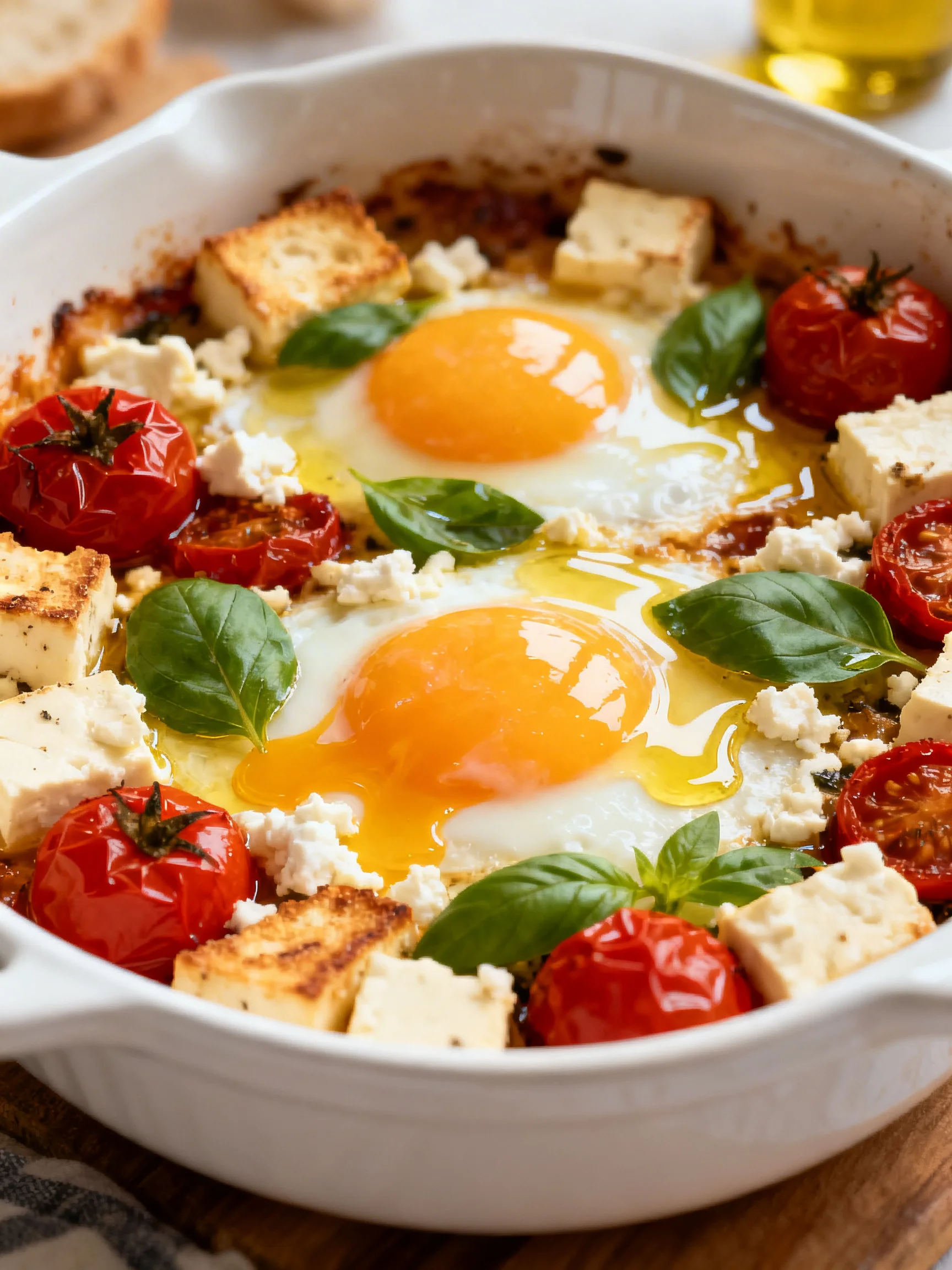
Baked Feta Eggs Recipe
Tested & Approved
by Sophie Lane
Introduction
Imagine a vibrant, one-pan breakfast where creamy feta melts into a rich tomato and pepper sauce, creating perfect little wells for eggs to bake. This Mediterranean Baked Feta Eggs recipe is my go-to for a stunning, flavor-packed brunch that feels indulgent yet is deceptively simple. After testing numerous variations, I’ve perfected the balance of herbs and spice for a dish that’s both comforting and impressively bright.
Published: April 13, 2026 Updated: October 11, 2026
Ingredients
The beauty of this dish lies in the freshness of its components. Using ripe cherry tomatoes and high-quality olive oil will make a noticeable difference in the depth of the final sauce.
- 2 cups cherry or grape tomatoes
- 1 red bell pepper, diced
- 1/2 small red onion, diced
- 3 cloves minced garlic
- 8 ounces feta cheese (block, not crumbled)
- 4 tablespoons olive oil
- 1 teaspoon dried oregano
- 1 teaspoon sea salt
- 1/2 teaspoon dried thyme
- 1/2 teaspoon ground black pepper
- 1/2 teaspoon red pepper flakes
- 1 cup chopped baby spinach
- 4 large eggs
- Optional for topping - chopped fresh basil or fresh chives
Timing
| Prep Time | 15 minutes |
| Cook Time | 25 minutes |
| Total Time | 40 minutes |
Context: It’s a perfect timeline for a relaxed weekend brunch or a surprisingly quick, impressive weeknight dinner.
Step-by-Step Instructions
Step 1 - Prep and Combine Vegetables
Preheat your oven to 400°F (200°C). In a large, oven-safe skillet or baking dish, combine the cherry tomatoes, diced red bell pepper, and diced red onion. Add the minced garlic, olive oil, dried oregano, sea salt, dried thyme, black pepper, and red pepper flakes. Toss everything thoroughly until the vegetables are evenly coated in oil and seasoning.
Step 2 - Roast the Vegetable Base
Place the skillet in the preheated oven and roast for 15 minutes. Unlike sautéing on the stovetop, roasting at this high heat caramelizes the natural sugars in the tomatoes and peppers, concentrating their flavor and creating a delicious base for the eggs.
Step 3 - Add Feta and Spinach
Step 4 - Create Wells for the Eggs
Using the back of a spoon, create four small indentations or “wells” in the hot vegetable and feta mixture. This step is crucial for keeping the eggs contained as they cook. (Pro tip: Make sure the wells go down to the bottom of the skillet to prevent the egg whites from running everywhere.)
Step 5 - Bake the Eggs
Carefully crack one egg into each of the four wells you created. Return the skillet to the oven and bake for 8-12 minutes. The exact time depends on your desired yolk consistency. For runny yolks with set whites, aim for 8-10 minutes. In my tests, 11 minutes yields a perfect jammy yolk.
Step 6 - Garnish and Serve
Once the eggs are baked to your liking, remove the skillet from the oven. The residual heat will continue to cook the eggs slightly, so factor that in. Let it rest for 2 minutes, then garnish generously with chopped fresh basil or chives. Serve your Mediterranean Baked Feta Eggs directly from the skillet with crusty bread for dipping.
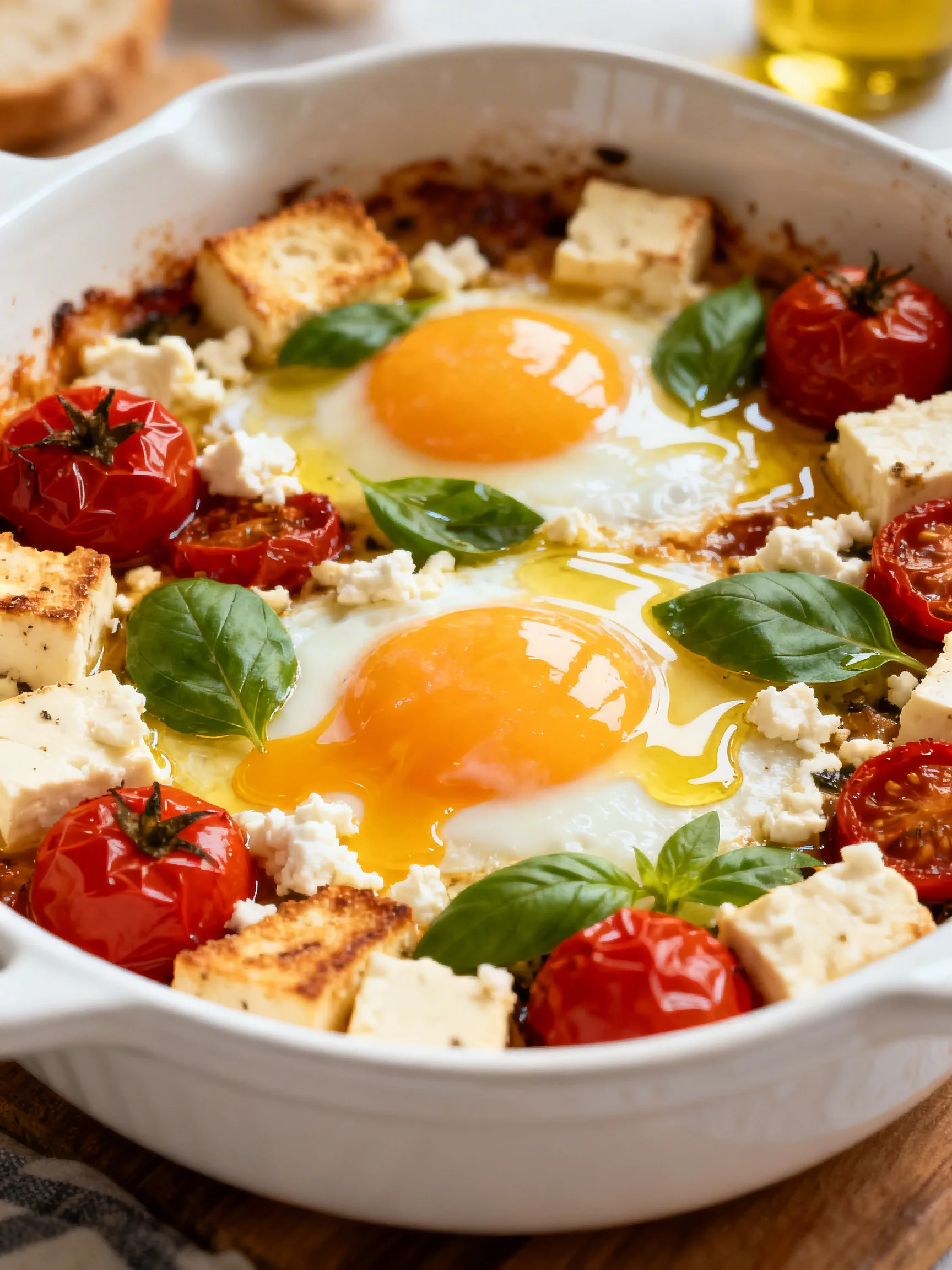
This dish is a good source of protein, Vitamin C from the peppers and tomatoes, and calcium from the feta.
Healthier Alternatives
- Lower-Fat Feta or Goat Cheese - Reduces overall fat and calories while maintaining a tangy, creamy texture.
- Add Chickpeas or White Beans - Boosts fiber and plant-based protein for a more substantial meal.
- Swap Spinach for Kale or Swiss Chard - Adds a heartier texture and different nutrient profile, like increased iron.
- Use Reduced-Sodium Feta.
- Serve with Whole Grain or Sourdough Bread - Offers more complex carbohydrates and fiber compared to white bread for dipping.
- Dairy-Free with Firm Tofu or Vegan Feta - Creates a plant-based version; crumble and bake as you would the feta block.
Serving Suggestions
- Serve directly from the skillet with warm, crusty bread or toasted pita for the ultimate dipping experience.
- For a low-carb option, pair with a simple side salad dressed with lemon and olive oil.
- Top with a drizzle of high-quality extra virgin olive oil and a sprinkle of za’atar or sumac for an extra flavor boost.
- Perfect for a weekend brunch centerpiece alongside fresh fruit and crispy potatoes.
- Pair with a dry rosé, a crisp Sauvignon Blanc, or sparkling water with lemon for a refreshing beverage.
- Turn it into a dinner by adding a side of grilled chicken or lamb meatballs.
This baked feta and egg dish is incredibly versatile. In summer, use heirloom cherry tomatoes and fresh basil; in winter, it’s a bright, comforting meal. You can also prep the vegetable base ahead of time for quicker assembly.
Common Mistakes to Avoid
- Mistake: Using pre-crumbled feta. Fix: Always use a block. Crumbled feta contains anti-caking agents that prevent it from melting properly into the creamy sauce we want.
- Mistake: Overcrowding the baking dish. Fix: Use a large (10-12 inch) skillet. Overcrowding steams the vegetables instead of roasting them, resulting in a watery sauce.
- Mistake: Not creating deep enough wells for the eggs. Fix: In Step 4, press the spoon firmly to the bottom of the pan. Shallow wells let egg whites run over the feta, making a mess.
- Mistake: Overbaking the eggs. Fix: Set a timer for 8 minutes and check. Remember, eggs carry-over cook in the hot skillet. For jammy yolks, pull them out when the whites are just set.
- Mistake: Adding raw, tough greens too late. Fix: If using kale or chard instead of baby spinach, add them in Step 2 to roast and soften.
- Mistake: Skipping the rest time after baking. Fix: Let the dish sit for 2-3 minutes. This allows the flavors to settle and the eggs to firm up perfectly for serving.
Storing Tips
- Fridge: Store leftovers in an airtight container for up to 3 days. For best results, store the egg separately from the tomato-feta base if possible.
- Freezer: Freezing is not recommended for the complete dish with eggs, as baked eggs become rubbery. However, you can freeze the roasted tomato and pepper base (without feta or eggs) for up to 3 months. Thaw overnight in the fridge before using.
- Reheat: Reheat portions gently in a skillet over low heat or in the microwave at 50% power. The USDA recommends reheating to an internal temperature of 165°F. Add a splash of water to prevent drying out.
For meal prep, you can roast the vegetable base and store it for 5 days. When ready to eat, reheat the base in a skillet, add the feta and spinach, then proceed with making wells and baking the eggs fresh. This ensures your Mediterranean baked eggs taste just-made.
Conclusion
This Mediterranean Baked Feta Eggs recipe is a guaranteed crowd-pleaser that turns simple ingredients into a spectacular meal. Its one-pan ease and vibrant flavor make it perfect for any occasion. For another tangy and satisfying dish, try this Cranberry Fluff Salad Recipe Easy. Give this recipe a try and share your creation in the comments below!
Frequently Asked Questions
Can I make Mediterranean Baked Feta Eggs ahead of time?
Yes, you can prep the vegetable base up to 2 days in advance. Roast the tomatoes, peppers, and onions as directed in Step 2, then let it cool and store it in an airtight container in the fridge. When ready to eat, reheat the base in your skillet, then proceed with adding the feta, spinach, and eggs. This advance prep actually deepens the flavors.
What can I use if I don’t have an oven-safe skillet?
You can use a standard 9×13 inch baking dish or any ceramic casserole dish. Prepare the vegetable mixture directly in the dish for roasting. According to my tests, a ceramic dish may require an extra 2-3 minutes of roasting time in Step 2, as it heats more slowly than metal.
Why did my baked feta eggs turn out watery?
A watery result is usually caused by the tomatoes releasing too much liquid. This happens if the tomatoes are overly ripe or the dish is overcrowded, preventing proper evaporation. To fix it, ensure your skillet is large enough and consider roasting the vegetable base for an additional 5 minutes before adding the feta to concentrate the sauce.
PrintBaked Feta Eggs
Ingredients
- 2 cups cherry or grape tomatoes
- 1 red bell pepper, diced
- 1/2 small red onion, diced
- 3 cloves minced garlic
- 8 ounces feta cheese
- 4 tablespoons olive oil
- 1 teaspoons dried oregano
- 1 teaspoons sea salt
- 1/2 teaspoon dried thyme
- 1/2 teaspoon ground black pepper
- 1/2 teaspoon red pepper flakes
- 1 cup chopped baby spinach
- 4 large eggs
- Optional for topping - chopped fresh basil or fresh chives
Instructions
- Preheat oven to 400 degrees F.
- If using ramekins or individual serving dishes* - divide the tomatoes, bell pepper, red onion, garlic, and feta cheese between 4 oven-safe dishes. Drizzle a tablespoon of olive oil over each dish.
- If using one large dish** - combine the tomatoes, bell pepper, red onion, and garlic in the dish and place the feta in the center. Drizzle the olive oil over the feta and veggies.
- Place the dried oregano, salt, dried thyme, black pepper, and red pepper flakes in a small bowl. Stir to combine.
- Sprinkle the spice mixture over the feta and veggies (divide equally between the four dishes if you are making individual servings).
- Place ramekins on a baking sheet before placing them in the oven, or place the baking dish directly in the oven. Bake for 25 minutes.
- Remove the dishes from the oven and stir to combine so the feta is evenly mixed in with the veggies. Then add the spinach and stir it in till combined.
- Create a well in the middle of each ramekin or four wells if using one baking dish. Crack the eggs into the wells.
- Place dishes back in the oven and bake for an additional 10 minutes.
- Top with optional chopped fresh herbs or sliced chives.
- Serve with crusty baguette, toast, or pita for dipping.
You Might Also Like
- Best High-Protein Overnight Oats Recipe
- Pancake Sausage Casserole Recipe
- Cottage Cheese Egg Bake Recipe
- Easy English Muffin Breakfast Pizza Recipe 🍕🍳🧀
Get our 10 best recipes - free
Join the Rapid Recipes newsletter and we’ll email you our 10 most-loved recipes as a free PDF.
Free PDF + new recipes every week. Unsubscribe anytime.