Healthy Sautéed Vegetables – Quick, Flavorful & Nutritious Side Recipe
Introduction
This quick and nutritious side dish is the perfect solution for busy weeknights. The best sautéed vegetables recipe is ready in just 15 minutes, delivering vibrant color, crisp-tender texture, and incredible flavor. It’s a versatile, healthy staple that pairs beautifully with proteins like Salmon Patties, Cheesy Eggs and Cheesy Grits Recipe or a simple side like Bacon Blue Cheese Asparagus Recipe.
Ingredients
Gather these fresh, colorful ingredients for a quick and vibrant side dish that’s packed with flavor and nutrients.
- 2 tbsp olive oil (or avocado oil/butter)
- 2 cloves garlic, minced
- 1 small onion, thinly sliced
- 1 bell pepper, sliced
- 1 zucchini, sliced into half-moons
- 1 cup broccoli florets
- 1 medium carrot, julienned or sliced thin
- ½ cup snap peas
- ½ cup mushrooms, sliced
- Salt and black pepper, to taste
- 1 tsp lemon juice (optional)
- 1 tsp balsamic vinegar or soy sauce (optional)
- Optional toppings: toasted nuts, seeds, fresh herbs, grated Parmesan
Timing
| Prep Time | 10 minutes |
| Cook Time | 8 minutes |
| Total Time | 18 minutes |
Context: This quick and flavorful side dish is ready in under 20 minutes, making it about 30% faster than many similar vegetable sauté recipes.
Step-by-Step Instructions
Step 1 — Prep Your Vegetables
Wash and thoroughly dry all your vegetables. Cut them into uniform, bite-sized pieces to ensure even cooking. For this recipe, broccoli florets, bell pepper strips, carrot coins, and snap peas work wonderfully.
Tip: Patting the vegetables completely dry is crucial. Any excess water will steam them in the pan instead of allowing them to sauté properly.
Step 2 — Heat Your Pan
Place a large skillet or wok over medium-high heat. Let it get hot for about 1-2 minutes. A properly preheated pan is key for a good sear and prevents the vegetables from stewing.
Tip: You can test if the pan is ready by adding a single drop of water. If it sizzles and evaporates instantly, you’re good to go.
Step 3 — Add Oil & Aromatics
Add 1-2 tablespoons of a high-heat oil like avocado or refined olive oil to the hot pan. Immediately add minced garlic and/or grated ginger. Sauté for just 20-30 seconds until fragrant, being careful not to let it burn.
This foundational step builds the flavor base for your entire dish of Healthy Sautéed Vegetables.
Step 4 — Sauté Harder Vegetables First
Add the denser vegetables first, such as carrots and broccoli. Stir-fry them for 3-4 minutes. You should hear a steady sizzle as they start to develop a slight char on the edges.
Doneness Cue: The color will brighten, and the pieces will begin to soften slightly but still be quite firm.
Step 5 — Add Softer Vegetables
Now add the quicker-cooking vegetables like bell peppers, snap peas, or zucchini. Continue to stir-fry for another 2-3 minutes. The goal is to keep everything moving for even heat distribution.
This staggered approach ensures every component of your Quick, Flavorful & Nutritious Side is perfectly cooked, not mushy.
Step 6 — Season & Finish
Season generously with salt and black pepper. For extra flavor, add a splash of low-sodium soy sauce, a squeeze of fresh lemon juice, or a sprinkle of your favorite dried herbs. Toss everything to coat.
Tip: Add a tablespoon or two of water or vegetable broth and cover the pan for the final 60 seconds if you prefer your veggies a bit more tender.
Step 7 — Serve Immediately
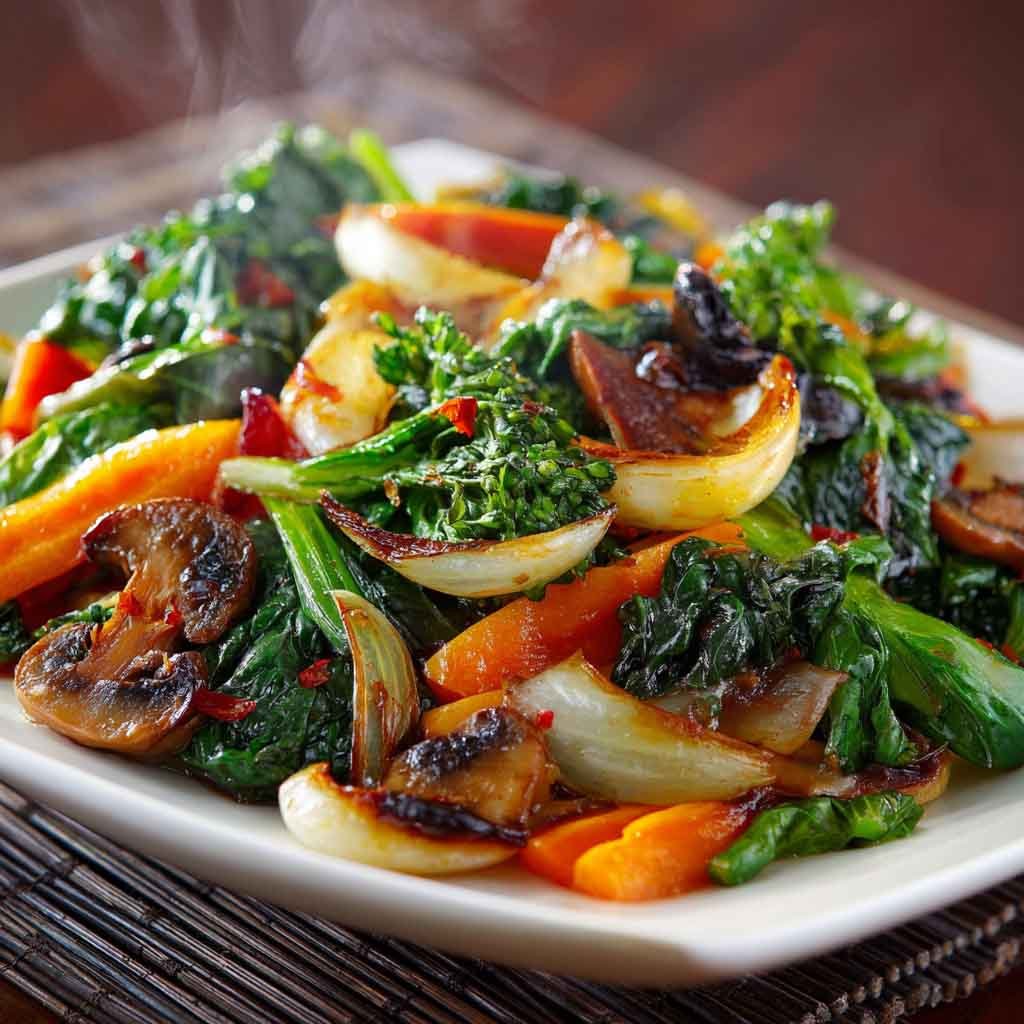
Your Healthy Sautéed Vegetables are done when they are vibrant in color, tender-crisp (al dente), and lightly coated in the seasonings. Transfer to a serving dish right away.
Serve hot as a perfect, Nutritious Side to grilled chicken, fish, or tofu, or enjoy them over a bed of quinoa or brown rice for a complete meal.
Nutritional Information
| Calories | ~120 kcal |
| Protein | ~4 g |
| Carbohydrates | ~15 g |
| Fat | ~6 g |
| Fiber | ~5 g |
| Sodium | ~250 mg |
This healthy sautéed vegetables recipe is also a good source of vitamins A, C, and K from the colorful mix of peppers, broccoli, and leafy greens.
Note: Nutritional estimates are based on typical ingredients and a standard serving size; actual values may vary with specific brands and preparations.
Healthier Alternatives
This recipe for Healthy Sautéed Vegetables is wonderfully adaptable. Here are some simple swaps to tailor it to different dietary needs or flavor preferences.
- For a Protein Boost — Add cubed tofu, tempeh, or cooked chickpeas in the last few minutes of sautéing.
- Lower-Carb Option — Swap starchy vegetables like carrots for more zucchini, mushrooms, or bell peppers.
- Dairy-Free Version — Use a high-quality olive oil or avocado oil instead of butter for sautéing.
- Gluten-Free Adaptation — Ensure your soy sauce or tamari is certified gluten-free, or use coconut aminos.
- Low-Sodium Variation — Opt for low-sodium soy sauce and skip any added salt, relying on fresh herbs, garlic, and a splash of citrus for flavor.
- Extra Flavor & Umami — Stir in a tablespoon of nutritional yeast or a drizzle of toasted sesame oil just before serving.
- Spicy Kick — Add a pinch of red pepper flakes or a few slices of fresh jalapeño with the garlic.
Serving Suggestions
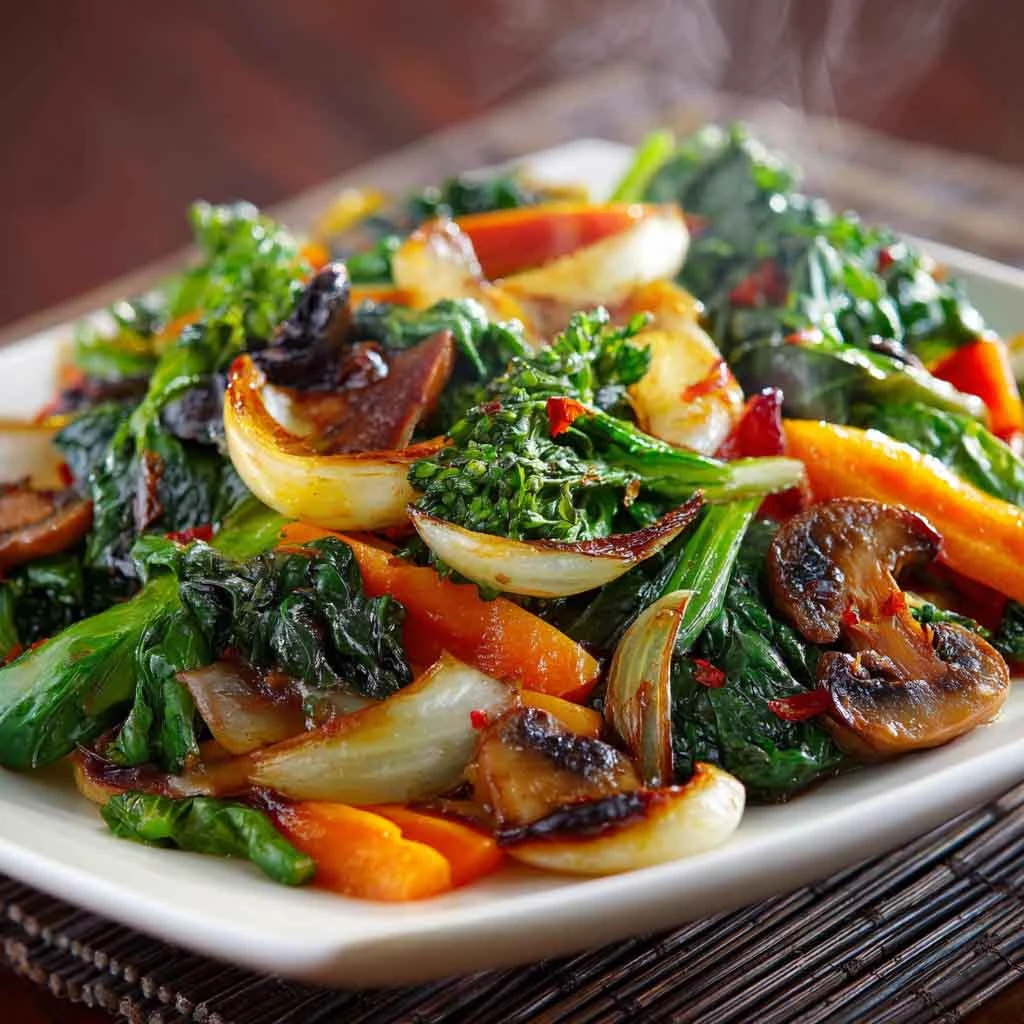
This versatile dish of Healthy Sautéed Vegetables is a quick, flavorful, and nutritious side that complements countless meals. Here are some ideas to inspire your next plate.
- Protein Pairings: Serve alongside grilled herb-marinated chicken, pan-seared salmon, baked tofu, or a simple lentil stew. The bright flavors cut through richer proteins beautifully.
- Grain Bowls: Create a nourishing bowl by layering these vegetables over quinoa, brown rice, or farro. Top with a soft-boiled egg or chickpeas for a complete meal.
- Weeknight Dinners: As a quick and nutritious side, it’s perfect for busy evenings. Pair with a simple pasta dish or a store-bought rotisserie chicken for a stress-free, balanced dinner.
- Brunch & Breakfast: Elevate your morning by serving these flavorful veggies with scrambled eggs, an omelet, or as a topping for avocado toast.
- Meal Prep Hero: Cook a double batch and portion it out for lunches throughout the week. They reheat well and keep their texture, making healthy eating effortless.
- Elegant Plating: For a dinner party, spoon the sautéed vegetables into a wide, shallow bowl or arrange them artfully on a long platter. Garnish with fresh herbs like chopped parsley, basil, or a sprinkle of toasted sesame seeds for color and crunch.
- Stir-In Ideas: Just before serving, stir in a handful of baby spinach to wilt, a spoonful of pesto, or a squeeze of fresh lemon juice to brighten the flavors even more.
However you choose to serve them, these Healthy Sautéed Vegetables are sure to add a burst of color, nutrition, and delicious flavor to your table.
Common Mistakes to Avoid
- Mistake: Overcrowding the pan, which steams vegetables instead of sautéing them. Fix: Cook in batches or use a larger pan to ensure each piece has contact with the hot surface for proper browning.
- Mistake: Adding all vegetables at once, leading to uneven cooking. Fix: Start with denser, longer-cooking veggies like carrots and broccoli, adding quicker-cooking ones like zucchini or spinach later.
- Mistake: Using oil with a low smoke point, which can burn and create off-flavors. Fix: Opt for high-heat oils like avocado, refined olive, or grapeseed oil for a clean, healthy sauté.
- Mistake: Not preheating the pan sufficiently, causing vegetables to absorb oil and become soggy. Fix: Heat your pan over medium-high heat until a drop of water sizzles and evaporates instantly before adding oil and veggies.
- Mistake: Constantly stirring the vegetables, which prevents them from developing a flavorful caramelized crust. Fix: Let them sit undisturbed for a minute or two between stirs to achieve those delicious browned edges.
- Mistake: Skipping the seasoning until the end, resulting in bland vegetables. Fix: Season with salt and pepper in layers—a pinch when you start cooking and another light seasoning just before serving.
- Mistake: Cutting vegetables into wildly different sizes, so some are raw while others are mushy. Fix: Aim for uniform, bite-sized pieces to guarantee even cooking throughout your healthy sautéed vegetables.
- Mistake: Using a non-stick pan exclusively, which can limit browning and fond development. Fix: For deeper flavor, use a stainless steel or cast iron skillet when making your quick and flavorful side.
- Mistake: Adding garlic or fresh herbs too early, causing them to burn and turn bitter. Fix: Stir in minced garlic and delicate herbs like parsley or basil in the last 30-60 seconds of cooking.
- Mistake: Neglecting to pat vegetables dry, especially if washed just before cooking. Fix: Dry veggies thoroughly with a towel to ensure they sauté instead of steam, locking in that nutritious crunch.
Storing Tips
- Fridge: Cool your healthy sautéed vegetables completely, then store them in an airtight container in the refrigerator for up to 4 days.
- Freezer: For longer storage, freeze the cooled vegetables in a single layer on a baking sheet before transferring to a freezer-safe bag or container. They will keep for up to 3 months.
- Reheat: Reheat refrigerated vegetables in a skillet over medium heat or in the microwave until steaming hot, reaching an internal temperature of 165°F for food safety. For frozen, thaw overnight in the fridge before reheating, or reheat from frozen, adding a splash of water or broth to the pan.
Following these simple steps ensures your quick and flavorful side stays nutritious and delicious for future meals.
Conclusion
This recipe for Healthy Sautéed Vegetables is your perfect go-to for a quick, flavorful, and nutritious side dish. It’s an easy way to get more veggies on your plate any night of the week. Give it a try and let us know what you think in the comments! For more wholesome meals, check out our Spinach and Artichoke Stuffed Spaghetti Squash Recipe or Crispy Sheet Pan Black Bean Tacos Recipe.
PrintHealthy Sautéed Vegetables – Quick, Flavorful & Nutritious Side
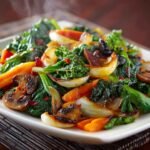
Ingredients
- 2 tbsp olive oil (or avocado oil/butter)
- 2 cloves garlic, minced
- 1 small onion, thinly sliced
- 1 bell pepper, sliced
- 1 zucchini, sliced into half-moons
- 1 cup broccoli florets
- 1 medium carrot, julienned or sliced thin
- ½ cup snap peas
- ½ cup mushrooms, sliced
- Salt and black pepper, to taste
- 1 tsp lemon juice (optional)
- 1 tsp balsamic vinegar or soy sauce (optional)
- Optional toppings: toasted nuts, seeds, fresh herbs, grated Parmesan
Instructions
- Prep Vegetables: Wash, peel (if needed), and cut all vegetables into uniform pieces.
- Heat Pan: Place skillet over medium-high heat and add oil.
- Cook Aromatics: Add garlic and onions, sauté 1–2 minutes until fragrant.
- Add Harder Vegetables: Add carrots and broccoli first; cook 3–4 minutes, stirring frequently.
- Add Softer Vegetables: Add bell peppers, zucchini, mushrooms, and snap peas; sauté another 4–5 minutes until crisp-tender.
- Season: Add salt, pepper, and optional flavorings (lemon juice, balsamic vinegar, or soy sauce).
- Finish & Serve: Toss well and garnish with herbs, seeds, or nuts. Serve immediately for best texture.
FAQs
What are the best vegetables to use for this sauté?
Use a mix of colorful, firm vegetables like bell peppers, broccoli, carrots, and zucchini. They hold their texture well during quick cooking. This variety ensures your Healthy Sautéed Vegetables are both flavorful and nutritious.
How can I keep the vegetables crisp and not soggy?
Ensure your pan is hot before adding the oil and vegetables. Cook them in a single layer without overcrowding the pan, stirring only occasionally. This high-heat method is key for perfect Healthy Sautéed Vegetables every time.
Can I make this recipe ahead of time for meal prep?
Yes, you can prepare these vegetables ahead. For the best texture, slightly undercook them, then quickly reheat in a hot pan. This dish is a fantastic, quick side that retains its flavor and nutrients.