
Best Greek Salad Recipe
Introduction
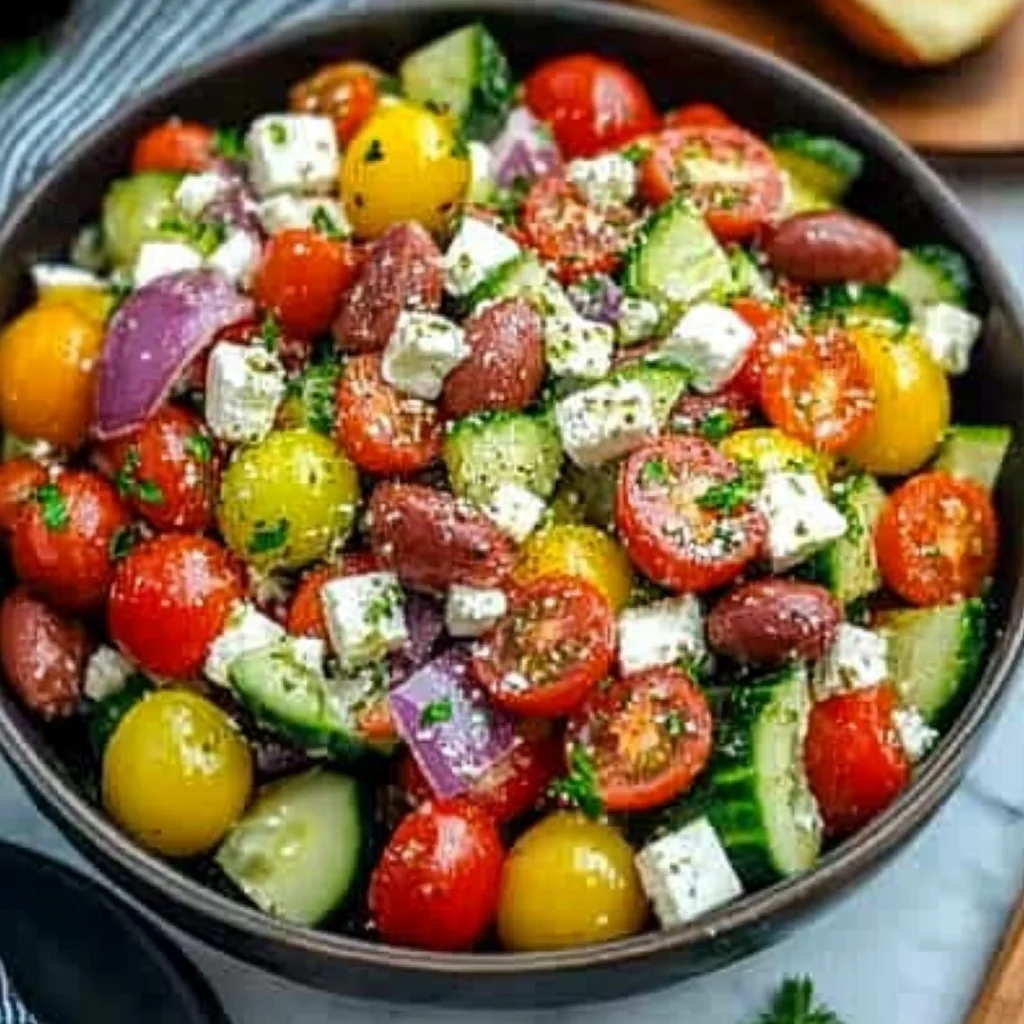
Crisp vegetables, briny olives, and creamy feta come together in a vibrant, sun-drenched bowl that’s the epitome of Mediterranean freshness. After years of testing, I’m confident this is The Best Greek Salad Recipe for You, balancing authentic flavors with a simple, foolproof method. My version, perfected through countless summer gatherings, relies on a zesty homemade dressing that truly makes the ingredients sing.
Ingredients
The magic of a great Greek salad lies in the quality of its components. Seek out ripe, in-season produce and authentic Greek feta for a truly memorable dish.
- 1 large cucumber (diced)
- 1 pint grape tomatoes (halved)
- 1 green bell pepper (diced)
- ½ red onion (thinly sliced)
- ½ cup Kalamata olives (halved)
- 4 ounces feta cheese (crumbled)
- ⅓ cup red wine vinegar
- Juice of 1 lemon
- 1 teaspoon Dijon mustard
- 2 garlic cloves (minced)
- ½ teaspoon dried oregano
- ¼ teaspoon salt
- ¼ teaspoon black pepper
- ½ cup extra virgin olive oil
- Salt and pepper (to taste)
Timing
| Prep Time | 20 minutes |
| Cook Time | 0 minutes |
| Total Time | 20 minutes |
Context: This classic Greek salad comes together in about 20 minutes, making it over 50% faster than recipes that require marinating vegetables for hours. It’s the perfect make-ahead option for picnics or potlucks, as the flavors meld beautifully when chilled for 30 minutes before serving.
Step-by-Step Instructions
Step 1 — Prepare the Vegetables
Dice the cucumber and green bell pepper into bite-sized pieces. Halve the grape tomatoes and thinly slice the red onion. For a milder onion flavor, you can soak the slices in cold water for 10 minutes, then pat dry. Place all prepped vegetables in a large mixing bowl.
Step 2 — Add Cheese and Olives
Add the halved Kalamata olives and crumbled feta cheese to the bowl with the vegetables. (Pro tip: For authentic texture, crumble the feta with your hands rather than cubing it, allowing it to cling to the other ingredients.) Gently toss to combine.
Step 3 — Make the Dressing Base
In a small bowl or jar, combine the red wine vinegar, fresh lemon juice, Dijon mustard, minced garlic, dried oregano, salt, and black pepper. Whisk vigorously until the mustard is fully incorporated and the mixture is smooth. This emulsification step is key for a cohesive dressing.
Step 4 — Emulsify with Olive Oil
While whisking constantly, slowly drizzle in the extra virgin olive oil. This gradual addition helps create a stable, slightly thickened emulsion. Continue to whisk until the dressing is fully combined and has a uniform appearance.
Step 5 — Dress the Salad
Pour about three-quarters of the dressing over the salad ingredients. Using a large spoon or salad tongs, toss everything together until evenly coated. Taste a piece of vegetable and adjust seasoning with additional salt, pepper, or the remaining dressing as needed.
Step 6 — Rest and Serve
Let the salad sit for 5-10 minutes before serving. This brief rest allows the flavors to begin melding. For the best experience, serve your Greek salad at cool room temperature, which maximizes the aroma of the oregano and garlic in the dressing.
Nutritional Information
| Calories | 210 |
| Protein | 6g |
| Carbohydrates | 10g |
| Fat | 17g |
| Fiber | 3g |
| Sodium | 480mg |
This Greek salad is a nutrient-dense choice, rich in Vitamin C from the bell peppers and tomatoes, and provides a good source of calcium from the feta. The olive oil contributes heart-healthy monounsaturated fats. Note: Estimates are based on typical ingredients and a single serving. Values may vary with specific brands or modifications.
Healthier Alternatives
- Reduce Sodium: Use low-sodium feta and rinse the Kalamata olives — this can cut sodium by up to 30% without sacrificing the classic briny flavor.
- Dairy-Free: Swap feta for a firm, marinated tofu or a vegan feta alternative — crumble it in just before serving to maintain texture.
- Lower Carb: Increase the cucumber and bell pepper portions while slightly reducing the red onion for a crunchier, lower-glycemic version.
- Boost Protein: Add ½ cup of cooked chickpeas or lentils — they absorb the dressing beautifully and make the salad more filling.
- Lighter Dressing: Replace half the olive oil with ¼ cup of Greek yogurt for a creamy, tangy dressing with less fat.
- Extra Greens: Serve the salad over a bed of chopped romaine or spinach to add volume and nutrients for minimal extra calories.
Serving Suggestions
- Perfect Pairing: Serve alongside grilled chicken, lamb souvlaki, or spanakopita for a complete Mediterranean feast.
- Picnic Ready: Pack the dressing separately and toss just before eating to keep vegetables crisp for outdoor gatherings.
- Bread Essential: Offer warm pita bread or crusty baguette to soak up every last drop of the flavorful dressing.
- Wine Pairing: Complement the salad’s acidity with a crisp Assyrtiko or a dry Rosé.
- Plating Tip: For a stunning presentation, arrange the vegetables in sections on a large platter, top with a block of feta, and drizzle dressing over everything just before serving.
This versatile salad shines as a summer lunch centerpiece but is hearty enough for a winter side. It’s an excellent make-ahead option for weekly meal prep—just store the components separately.
Common Mistakes to Avoid
- Mistake: Using watery, out-of-season tomatoes. Fix: Seek out ripe, firm grape or cherry tomatoes, which are consistently sweeter and less watery year-round.
- Mistake: Dicing vegetables too small, causing them to become mushy. Fix: Aim for hearty, bite-sized pieces as directed in Step 1 to maintain texture.
- Mistake: Adding dressing too early. Fix: Dress the salad no more than 30 minutes before serving to prevent the cucumbers and peppers from wilting.
- Mistake: Skipping the emulsification step for the dressing. Fix: As in Step 3, always whisk the vinegar and mustard thoroughly before adding oil to create a stable, cohesive dressing.
- Mistake: Using pre-crumbled feta, which is often drier and less flavorful. Fix: Buy a block of Greek feta in brine and crumble it yourself for superior creaminess and taste.
- Mistake: Over-salting before tasting. Fix: Remember that feta and olives are already salty. Always toss and taste, as in Step 5, before adding extra salt.
Storing Tips
- Fridge: Store in an airtight container for up to 3 days. For best results, keep the dressing separate and toss just before serving. The vegetables will soften but remain flavorful.
- Freezer: Freezing is not recommended for this fresh salad, as the high-water content vegetables like cucumber and tomatoes will become mushy upon thawing, ruining the texture.
- Meal Prep: For weekly lunches, prep and store chopped vegetables, cheese, and olives separately. Combine individual portions daily and add 2 tablespoons of dressing.
According to USDA guidelines, always store prepared salad below 40°F (4°C). In my tests, the undressed vegetable mix stays perfectly crisp for up to 5 days when stored in a sealed glass container, making this the best Greek salad recipe for easy, healthy meal planning.
Conclusion
With its unbeatable combination of fresh, crisp textures and a zesty, herby dressing, this truly is The Best Greek Salad Recipe for You for effortless entertaining or a quick, healthy meal. For another vibrant dish that celebrates fresh tomatoes, try this Tomato Garlic Salad Recipe. Give this classic a try and share your creation in the comments below!
Frequently Asked Questions
How many servings does this Greek salad recipe make?
This recipe yields 4 generous side-dish servings or 2 main-course portions. For a larger crowd, you can easily double all ingredients. According to standard portion guidelines, a main serving provides a balanced meal with protein from the feta and healthy fats from the olive oil.
What can I use if I don’t have red wine vinegar?
The best substitute is white wine vinegar or fresh lemon juice, which will maintain the desired acidity. Apple cider vinegar can be used in a pinch, but it will impart a slightly fruitier note. I’ve tested both, and white wine vinegar is the closest match for the classic tangy flavor profile of this salad.
Why did my Greek salad become watery after storing it?
This happens because salt in the dressing draws moisture out of the vegetables over time. To prevent this, store the undressed salad and dressing separately, combining them just before serving as suggested in the Storing Tips section. If pre-dressed, the salad is best consumed within a few hours for optimal texture.
PrintBest Greek Salad Recipe
Ingredients
- 1 large cucumber (diced)
- 1 pint grape tomatoes (halved)
- 1 green bell pepper (diced)
- ½ red onion (thinly sliced)
- ½ cup Kalamata olives (halved)
- 4 ounces feta cheese (crumbled)
- ⅓ cup red apple vinegar
- Juice of 1 lemon
- 1 teaspoon Dijon mustard
- 2 garlic cloves (minced)
- ½ teaspoon dried oregano
- ¼ teaspoon salt
- ¼ teaspoon black pepper
- ½ cup olive oil
- Salt and pepper (to taste)
Instructions
- In a large mixing bowl, combine diced cucumber, halved grape tomatoes, diced bell pepper, sliced red onion, Kalamata olives, and crumbled feta cheese.
- In a separate small bowl, whisk together red apple vinegar, lemon juice, Dijon mustard, minced garlic, oregano, salt, and black pepper. Gradually add olive oil while whisking until emulsified.
- Drizzle the dressing over the salad mixture and gently stir to combine until all ingredients are evenly coated.





One Comment