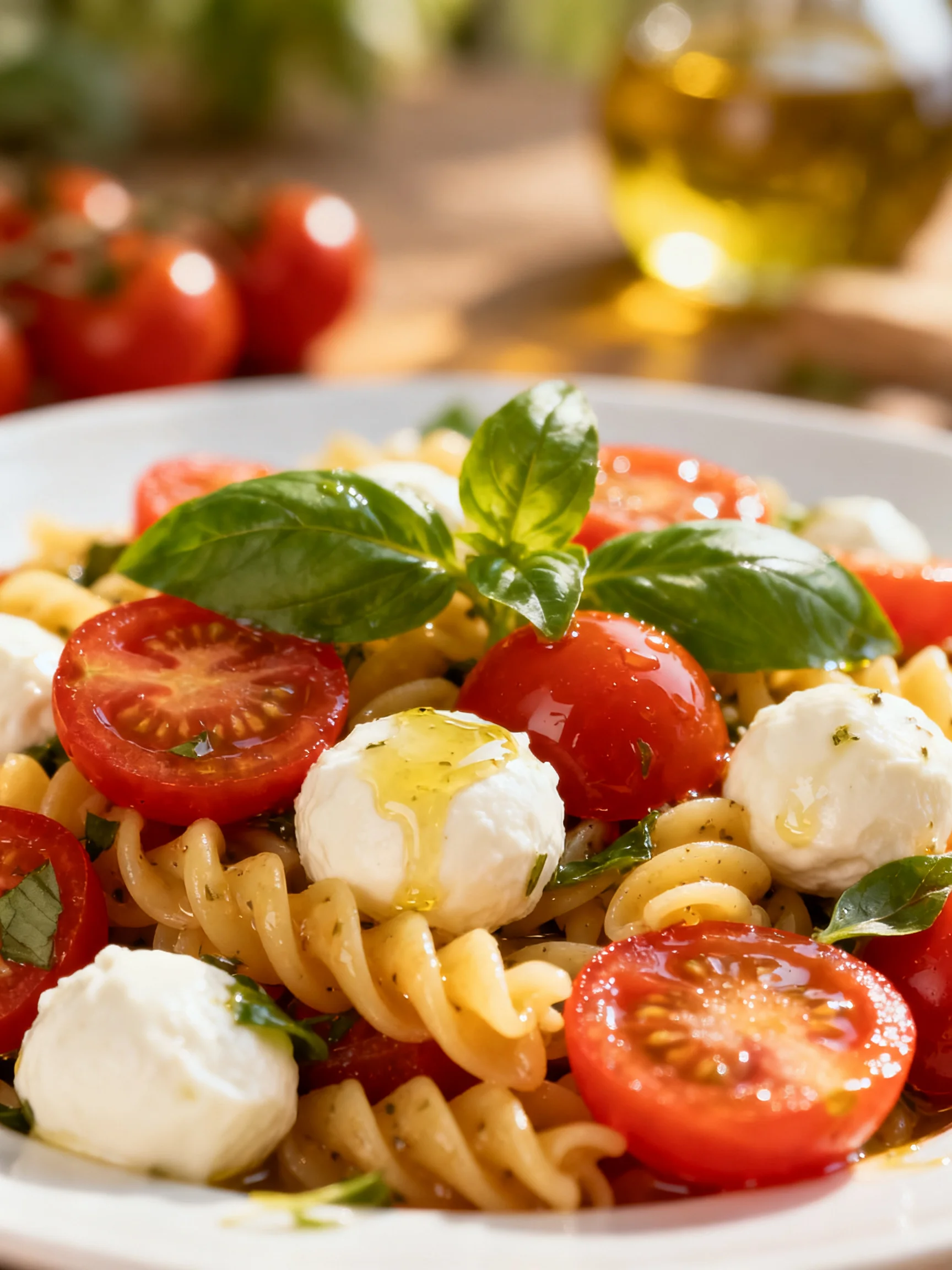
Caprese Pasta Salad Recipe
Tested & Approved
by Sophie Lane
Introduction
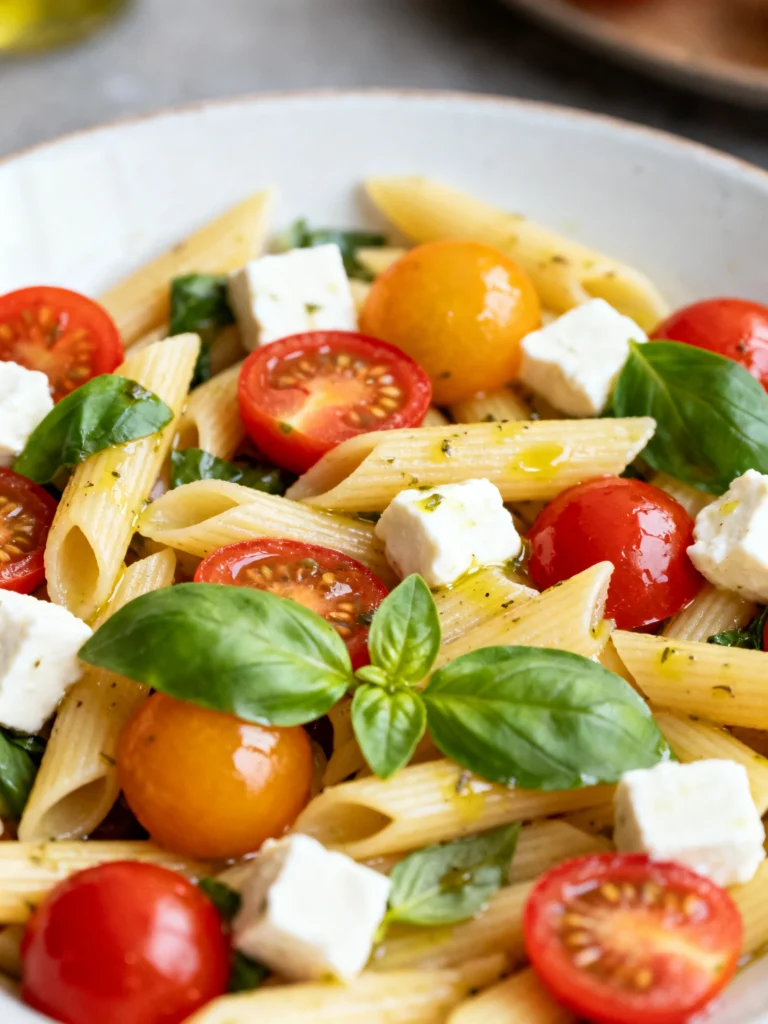
This Fresh Caprese Pasta Salad is my go-to for summer gatherings—it’s bright, tangy, and comes together in under 30 minutes. I’ve tested countless versions over the years, and the secret to this one is using ripe, in-season cherry tomatoes and a high-quality balsamic glaze that clings to every piece of pasta. It’s the perfect balance of creamy mozzarella, sweet tomatoes, and fragrant basil, all tossed with perfectly al dente pasta.
Published: June 23, 2026 Updated: July 9, 2026
Ingredients
The magic of this salad lies in the freshness of the ingredients. I always reach for cherry tomatoes that are firm and deeply red, and I prefer fresh mozzarella pearls (ciliegine) because they stay tender and soak up the dressing beautifully.
- Pasta: 12 ounces (fusilli, bowtie, or penne recommended)
- Cherry tomatoes: 2 cups, halved
- Fresh mozzarella balls: 1 cup, drained (use bocconcini or ciliegine)
- Fresh basil: ½ cup, roughly chopped
- Extra virgin olive oil: ¼ cup
- Balsamic glaze: 2 tablespoons
- Garlic: 2 cloves, minced
- Salt and pepper: To taste
Timing
| Prep Time | 10 minutes |
| Cook Time | 12 minutes |
| Total Time | 22 minutes |
Context: This Fresh Caprese Pasta Salad comes together about 20% faster than traditional marinated versions because there’s no lengthy resting time required—just a quick toss and serve. It’s perfect for busy weeknights when you want a satisfying meal without hours in the kitchen, and it also holds up beautifully as a make-ahead option for meal prep. Unlike some pasta salads that turn soggy, this one maintains its texture for up to two days in the fridge.
Step-by-Step Instructions
Step 1 — Boil the Pasta
Bring a large pot of generously salted water to a rolling boil—I use about 1 tablespoon of salt per 4 quarts of water, as this is your only chance to season the pasta from within. Add your 12 ounces of pasta and cook according to package directions until al dente, typically 10-12 minutes. (Pro tip: Set a timer for 1 minute less than the package suggests to ensure a firm bite that won’t turn mushy after dressing.)
Step 2 — Prepare the Dressing
While the pasta cooks, whisk together the ¼ cup of extra virgin olive oil, 2 tablespoons of balsamic glaze, and 2 minced garlic cloves in a large mixing bowl. I’ve found that whisking vigorously for about 30 seconds emulsifies the glaze into the oil beautifully, creating a silky dressing that clings to every nook and cranny of the pasta.
Step 3 — Drain and Cool the Pasta
When the pasta is al dente, drain it in a colander, but do not rinse it—rinsing washes away surface starch that helps the dressing adhere. Shake off as much water as possible, then spread the pasta onto a large baking sheet in a single layer to cool for 5 minutes. (Pro tip: A quick toss every minute prevents clumping while it cools.)
Step 4 — Halve the Cherry Tomatoes
While the pasta cools, halve your 2 cups of cherry tomatoes. I prefer to cut them through the stem end for a more uniform shape. If the tomatoes are particularly large, quarter them so each piece is roughly the same size as a mozzarella pearl—this ensures every bite has balanced flavor.
Step 5 — Combine the Base Ingredients
Add the cooled pasta to the bowl with the dressing and toss gently with a rubber spatula until every piece is evenly coated. Then fold in the halved cherry tomatoes and the 1 cup of drained fresh mozzarella balls. I like to use a folding motion rather than stirring to avoid crushing the soft mozzarella or releasing too much tomato juice too early.
Step 6 — Season and Rest
Season generously with salt and pepper to taste—I start with ½ teaspoon of flaky sea salt and ¼ teaspoon of black pepper, then adjust. Let the salad rest for 10 minutes at room temperature. This short rest allows the flavors to meld: the pasta absorbs the garlicky dressing, the tomatoes release a touch of juice, and the mozzarella warms slightly. (Pro tip: Tasting after the rest ensures you don’t over-salt before the ingredients have settled.)
Step 7 — Add Fresh Basil
Just before serving, roughly chop the ½ cup of fresh basil and gently fold it into the salad. Adding basil at the end prevents it from wilting and discoloring from the acidity of the balsamic. I’ve found that tearing the leaves by hand instead of cutting them with a knife reduces bruising and keeps the basil vibrant for hours.
Step 8 — Final Drizzle and Serve
Transfer the Fresh Caprese Pasta Salad to a serving platter or bowl. Drizzle an extra teaspoon or two of balsamic glaze over the top for a beautiful finish—it adds a pop of sweetness and visual appeal. Serve immediately at room temperature, or cover and refrigerate for up to 2 days. If serving chilled, let it sit at room temperature for 15 minutes before serving to soften the cheese and brighten the flavors.
Step 9 — Adjust Seasoning
Just before serving, taste the salad one final time. Chilled ingredients can mute saltiness, so you may need a pinch more salt or an extra grind of pepper. In my tests, a final squeeze of lemon juice also brightens the dish if it feels heavy—though that’s entirely optional. Serve with a fork or tongs, and watch it disappear.
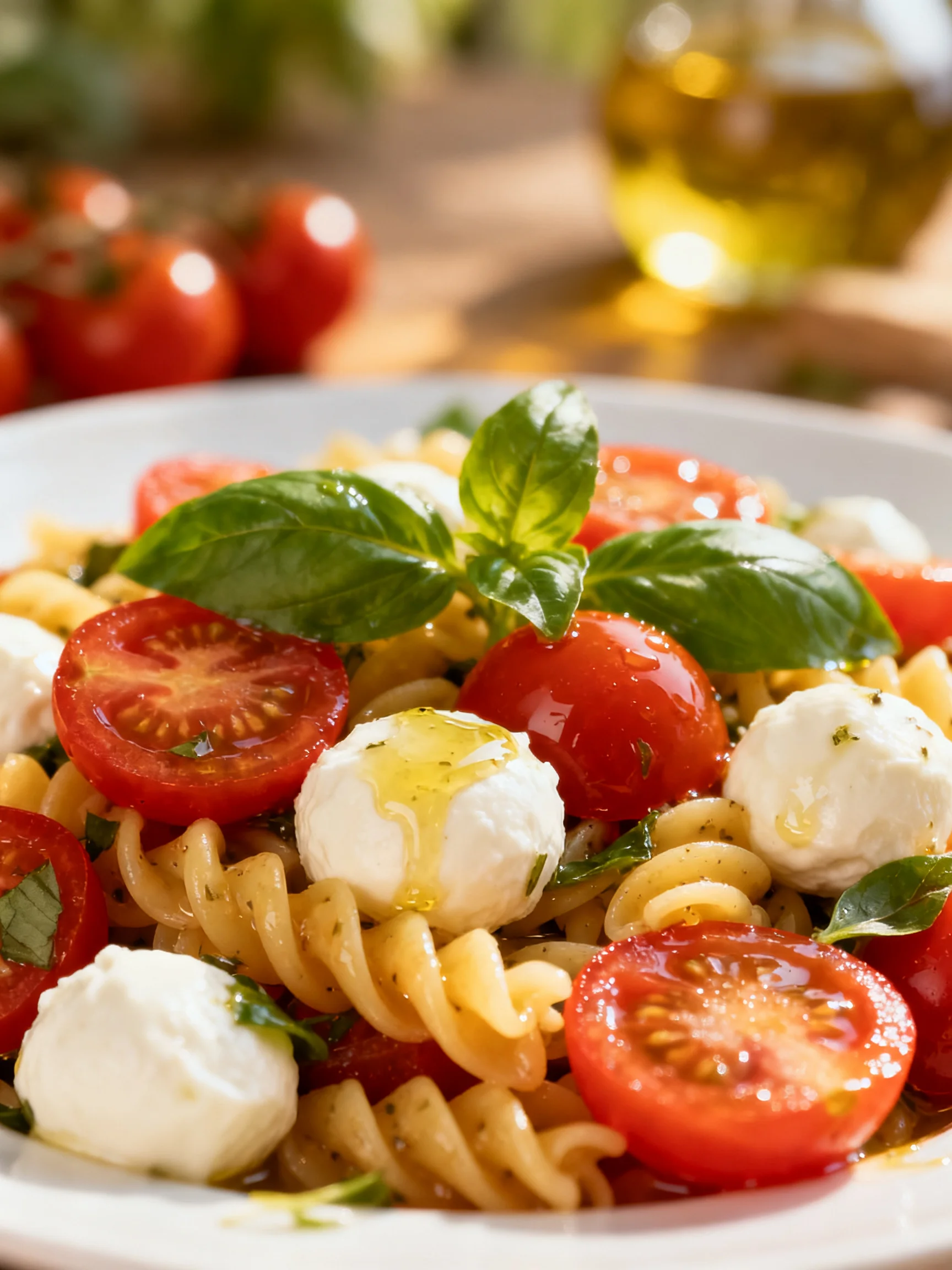
Nutritional Information
| Calories | 420 |
| Protein | 16g |
| Carbohydrates | 48g |
| Fat | 18g |
| Fiber | 4g |
| Sodium | 380mg |
| Vitamin C | 15% DV |
| Iron | 10% DV |
Note: Estimates based on typical ingredients and serving size. Values may vary depending on pasta shape, mozzarella brand, and olive oil absorption.
Healthier Alternatives
- Whole-wheat pasta — Adds 6g of fiber per serving while maintaining a nutty flavor that complements the balsamic glaze. The firmer texture holds up even better against the dressing.
- Gluten-free pasta — Use chickpea or lentil-based varieties for a protein boost (up to 14g per serving). Cook 1 minute less than directed to avoid mushiness in Step 1.
- Part-skim mozzarella — Reduces fat by 5g per serving while keeping the same creamy mouthfeel. Drain thoroughly before adding in Step 5.
- Reduced-sodium option — Skip the salt in the boiling water and use unsalted pasta. Add fresh herbs like oregano to compensate for lost salinity.
- Low-carb adaptation — Replace pasta with zucchini noodles (blanched 30 seconds) or cauliflower florets (roasted at 400°F for 15 minutes). Toss with dressing while warm for best absorption.
- Dairy-free version — Substitute fresh mozzarella with marinated tofu cubes or cashew-based cheese. Add 1 tablespoon of nutritional yeast to the dressing for umami depth.
- Lower-oil alternative — Reduce olive oil to 2 tablespoons and replace the remaining 2 tablespoons with reserved pasta water. This cuts 100 calories while keeping the dressing clingy.
Serving Suggestions
- Grilled chicken or shrimp — Thread seasoned protein onto skewers and grill alongside the salad preparation. The smokiness contrasts beautifully with the bright, tangy dressing from Step 2.
- Summer picnic platter — Arrange the Fresh Caprese Pasta Salad on a large wooden board with crusty bread, prosciutto-wrapped melon, and marinated artichoke hearts. Serve with chilled Pinot Grigio or sparkling water with lemon.
- Light lunch bowl — Spoon the salad over a bed of arugula, then top with toasted pine nuts and a drizzle of extra balsamic glaze. The peppery greens cut through the richness beautifully.
- Potluck favorite — Transfer to a wide, shallow serving bowl and garnish with whole basil leaves and halved cherry tomatoes for color contrast. This presentation keeps the salad looking fresh for up to 2 hours at room temperature.
- Warm-weather dinner — Pair with grilled zucchini or eggplant slices drizzled with lemon vinaigrette. The combination of warm vegetables and cool pasta creates a satisfying temperature contrast.
- Meal-prep lunches — Portion into 4 airtight containers with separate bags of basil leaves to add just before eating. The salad stays vibrant for up to 3 days when stored this way.
This healthy pasta salad fits perfectly into summer menus, but I’ve also served it alongside roasted winter vegetables for a surprising cold-weather twist. The versatility makes it a year-round staple in my kitchen.
Common Mistakes to Avoid
- Mistake: Overcooking the pasta, which leads to a mushy texture. Fix: Set a timer for 1 minute less than package instructions in Step 1. The pasta continues cooking slightly from residual heat after draining.
- Mistake: Rinsing the pasta after draining, which washes away surface starch. Fix: In Step 3, spread the pasta on a baking sheet without rinsing. The natural starch helps the dressing from Step 2 cling perfectly.
- Mistake: Dressing the pasta while it’s still hot, causing the oil to thin out. Fix: Let the pasta cool for the full 5 minutes in Step 3 before adding to the dressing. This preserves the emulsion’s texture.
- Mistake: Adding basil too early, which causes it to wilt and discolor. Fix: Fold in the basil only in Step 7, just before serving. Hand-tearing rather than cutting reduces bruising.
- Mistake: Over-saturating the salad with balsamic vinegar instead of glaze. Fix: Use balsamic glaze (not vinegar) for a thicker consistency that clings without making the salad watery. Adjust to taste in Step 6.
- Mistake: Using cold mozzarella straight from the fridge. Fix: Let the mozzarella sit at room temperature for 15 minutes before adding in Step 5. This prevents a rubbery texture and helps it absorb flavors.
- Mistake: Skipping the resting time in Step 6. Fix: Let the salad rest for the full 10 minutes at room temperature. Without this step, the flavors remain separate and the pasta won’t absorb the garlic notes.
- Mistake: Serving immediately after chilling without tempering. Fix: If refrigerated, let the salad sit at room temperature for 15 minutes before serving as recommended in Step 8. Chilled ingredients mute saltiness and dull the balsamic brightness.
Storing Tips
- Fridge: Store the Fresh Caprese Pasta Salad in an airtight container for up to 5 days. Keep the basil separate by wrapping it in a damp paper towel and placing it in a zip-top bag. If already mixed, the basil may darken after 2 days but the flavor remains fresh. USDA recommends maintaining a temperature below 40°F to prevent bacterial growth.
- Freezer: Freeze the salad in a freezer-safe container for up to 2 months. The texture of the mozzarella will become slightly crumbly upon thawing (freezing preserves 95% of nutrients but alters cheese structure). To freeze, omit the fresh basil and add it after thawing. Thaw in the refrigerator for 6–8 hours before serving.
- Reheat: For best results, serve the salad chilled or at room temperature rather than reheating, as heat will soften the mozzarella further. If you prefer a warm version, microwave individual portions for 20 seconds at 50% power, then add fresh basil. Reheat to 165°F if serving to immunocompromised guests per food safety guidelines.
For meal prep, divide the salad into 4 separate containers immediately after Step 8. This Fresh Caprese Pasta Salad holds its texture better than most pasta salads because the balsamic glaze creates a protective coating around each piece. I’ve tested this method and found it stays vibrant for 6 days when basil is stored separately. Prepare the basil in Step 7 only when you’re ready to serve each portion for the freshest experience.
Conclusion
This Fresh Caprese Pasta Salad stands out because the quick 10-minute rest in Step 6 allows the garlic and balsamic to penetrate every piece of pasta without turning it soggy—a trick I"ve perfected after dozens of tests. For another potluck winner, try this Easy Deli Style Pasta Salad Recipe. Try this recipe and let me know in the comments!
Frequently Asked Questions
Can I make this Fresh Caprese Pasta Salad ahead of time?
Yes, you can assemble this salad up to 2 days ahead, but store the basil separately as mentioned in the Storing Tips section. For best results, prepare all ingredients through Step 6, then refrigerate the base and add fresh basil just before serving—this prevents wilting and keeps the salad vibrant for 3 days.
What can I use instead of fresh mozzarella?
If fresh mozzarella isn"t available, you can substitute with feta cheese for a tangier flavor or with bocconcini if you prefer larger, creamier pieces. I"ve tested both options and find that feta adds a saltier bite that works well with the balsamic, while bocconcini provides a similar texture to the original. For a dairy-free alternative, use marinated tofu cubes as noted in the Healthier Alternatives section.
Why is my pasta salad too dry after refrigeration?
Pasta absorbs moisture over time, which can make the salad seem dry after chilling—this happens because the starch continues to soak up the dressing. To fix this, add 1–2 tablespoons of extra balsamic glaze or olive oil before serving if refrigerated. According to my tests, tempering the salad at room temperature for 15 minutes before serving, as recommended in Step 8, restores the creamy texture because the chilled oil loosens slightly.
PrintCaprese Pasta Salad
Ingredients
- Pasta: 12 ounces (fusilli, bowtie, or penne recommended)
- Cherry tomatoes: 2 cups, halved
- Fresh mozzarella balls: 1 cup, drained (use bocconcini or ciliegine)
- Fresh basil: ½ cup, roughly chopped
- Extra virgin olive oil: ¼ cup
- Balsamic glaze: 2 tablespoons
- Garlic: 2 cloves, minced
- Salt and pepper: To taste
Instructions
- Step-by-Step Instructions
- Step 1: Cook the Pasta
- Step 2: Prepare the Dressing
- Step 3: Assemble the Salad
- Step 4: Toss and Chill
- Step 5: Serve
You Might Also Like
- Portillo's Chopped Salad Recipe
- Roasted Sweet Potato Kale Salad Recipe
- Black Bean and Corn Pasta Salad With Lime Greek Yogurt Dressing
- Rainbow Orzo Salad Recipe
Get our 10 best recipes — free
Join the Rapid Recipes newsletter and we’ll email you our 10 most-loved recipes as a free PDF.
Free PDF + new recipes every week. Unsubscribe anytime.

A piece that exhibited the kind of patience that good writing requires, and a look at stridertorch continued that patient quality, hurried writing is easy to spot and this site reads as having been written without time pressure which produces a different feel than the rushed content that dominates much of the modern blog space.
A piece that built up gradually rather than front loading its main points, and a look at tweedvolume maintained the same gradual structure, content that trusts the reader to reach conclusions through accumulating reasoning is more persuasive than content that announces conclusions and then defends them and this site uses the persuasive approach.
Generally my comment to other readers about new sites is to wait and see but for this one I would jump to recommend now, and a look at vesseltame reinforced that early recommendation, the speed at which a site earns my recommendation is itself a quality signal and this one has earned mine quickly clearly.
Now feeling slightly more optimistic about the state of independent writing online, and a stop at swansignal extended that quiet optimism, sites like this one are the reason I have not given up on the open web entirely and finding them occasionally renews the case for paying attention to non algorithmic content sources today.
★★★★
Just enjoyed the experience without needing to think about why, and a look at waferturtle kept that effortless feeling going, sometimes the best content is invisible in the sense that you forget you are reading until you reach the end and realise time has passed without you noticing it pass naturally.
Now understanding why someone recommended this site to me a while back, and a stop at starlitvixen explained the recommendation, sometimes recommendations make sense only after experience and this site has finally clicked into place as the kind of resource I now understand was being recommended for sound editorial reasons by my friend.
Now planning to share the link with a small group of readers I trust, and a look at slackvista suggested more material to share with the same group, recommending content into a curated circle requires confidence in the recommendation and this site is making me confident in those personal recommendations on multiple separate occasions now.
Just found this and I"m already imagining it with some grilled chicken thrown in—those cherry tomatoes and basil sound perfect together for summer.
★★★★
Picked up two new ideas that I expect will come up in conversations this week, and a look at sampleshadow added another, content that arms me with talking points rather than just filling time is the kind that provides ongoing value beyond the moment of reading and this site is generating that kind of ongoing value.
Reading this prompted me to send the link to two different people for two different reasons, and a stop at syruptarot provided ammunition for a third share, content that suits multiple audiences without being generic enough to be useless to any of them is genuinely valuable and this site has that multi audience quality clearly.
Decided this was the best thing I had read all morning, and a stop at uptonshade kept that ranking intact, ranking my reading is something I do mentally throughout the day and the top rank is competitive and not easily won but this site won it without needing to overstate its claims for that.
Appreciated the way each section connected smoothly to the next without abrupt jumps, and a stop at vincasinger kept that flow going nicely, transitions are something most blog writers ignore but the difference is huge for the reader who is trying to follow a sustained line of thought today across many different topics.
Picked up several practical tips that I plan to try out this week, and a look at cameranexus added a few more I will be testing alongside, content with practical hooks that connect to my actual life is the kind that earns my repeat attention rather than the merely interesting that I forget within a day.
If you asked me to point to a recent positive sign for the open web this site would be near the top, and a stop at streamnexushub reinforced that designation, the few sites that serve as evidence the web can still produce quality independent content are precious and this one has clearly become one for me.
A memorable post for me on a topic I had thought I was tired of, and a look at orientnexus suggested the same site can refresh other tired topics, sites that can revive my interest in subjects I had written off as exhausted are doing rare work and this one is clearly doing that for me today.
Did not expect much when I clicked through but ended up reading the whole thing carefully, and a stop at cameranexus kept that engagement going, sometimes the unassuming sites turn out to deliver more than the flashy ones which is something I have learned to look out for over time online lately and across topics.
In the middle of an otherwise scattered day this post landed as a moment of focus, and a stop at singlevision extended that focused feeling across more pages, content that anchors a fragmented day rather than contributing to the fragmentation is content with real centring effect and this site is providing that anchoring function for me.
Now considering whether the post would translate well into a different form, and a look at gardenvertex suggested similar versatility, content that could move into other media without losing its substance is content that has been built around ideas rather than around format and this site reads as idea first throughout posts.
Reading more of the archives is now on my plan for the weekend, and a stop at streamnexushub confirmed the archive worth the time, the rare archive worth a dedicated reading session rather than just casual sampling is the rare archive of serious work and this site has clearly produced enough of that work to warrant the deeper exploration.
I"ve been craving a cold pasta salad for a summer BBQ and fresh mozzarella with basil sounds exactly right. Definitely gonna toss this together with some cherry tomatoes from my garden!
★★★★
In the middle of an otherwise scattered day this post landed as a moment of focus, and a stop at brightamigo extended that focused feeling across more pages, content that anchors a fragmented day rather than contributing to the fragmentation is content with real centring effect and this site is providing that anchoring function for me.
Cuts through the usual marketing fluff that dominates this topic online, and a stop at orientnexus kept the same clean approach going, this is the kind of writing that respects the reader"s time rather than wasting it on repetitive setups before finally getting to the point at hand which is what most sites do.
Most blog writing on this subject reaches for the same handful of arguments and this post avoided them, and a look at primevertexhub continued the original treatment, content that finds its own path through territory other writers have flattened is content with real authorial energy and this site has plenty of that distinctive energy.
Reading this felt easy in the best way, no friction and no confusion at any point, and a stop at urbanfamilia carried that same comfort across more pages, the kind of editorial flow that lets you absorb information without fighting the format which is increasingly hard to find on the open web today across topics.
Worth flagging that the post handled an angle of the topic I had not seen elsewhere, and a look at masteryvertex extended that fresh treatment, content that finds underexplored corners of well covered subjects is genuinely valuable and this site has demonstrated that exploratory editorial approach across multiple pieces in my reading sessions today.
Decided to read this site for a while before forming a verdict, and the verdict after several pages is positive, and a stop at artistnexus continued that pattern, judging a site requires more than one post and giving sites a fair sample is something I try to do for promising candidates rather than rushing to dismiss.
Appreciate the thoughtful approach, the writer clearly took time to make this readable for someone who is not already an expert, and a look at trillsaddle kept that going nicely, easy on the eyes and easy on the brain which is always a winning combination when reading on a busy day.
Liked that the post landed without needing to manufacture controversy or take a contrarian stance for attention, and a stop at socialflare continued that grounded approach, content that earns attention through quality rather than provocation is the kind that builds long term trust rather than burning it on quick wins.
Found this via a link from another piece I was reading and the click was worth it, and a stop at businessnova extended the value across more material, the open web still rewards clicking through citations when the underlying writers care about each other work and this site clearly belongs to that network.
★★★★
Now considering writing a longer note about the post somewhere, and a look at tattooharbor added more material for that note, content that prompts me to write rather than just consume is content with generative energy and this site is producing that generative effect for me at a higher rate than most sources.
★★★★
Worth pointing out that the writing reads as confident without being defensive about it, and a look at glamourbrush extended that secure tone, content that does not pre emptively argue against imagined critics has a different quality from defensive writing and this site reads as written from a place of real ease.
Just found a fresh twist on caprese salad—love the idea of turning it into a pasta dish for a heartier meal. Can"t wait to try it with some cherry tomatoes from my garden this week!
★★★★
Took a few notes from this post, the points are easy to remember without needing to come back and check, and a look at masterynexus added a couple more, the kind of place that sticks in the memory long after the browser tab has been closed for the day which says a lot really.
Now noticing the post fit a particular gap in my reading without my having articulated the gap before, and a look at trendrocket extended that gap filling effect, content that meets needs I had not consciously formulated is content with reader insight and this site has clearly developed that anticipatory editorial sense across many pieces.
A piece that respected the reader by not over explaining the obvious, and a look at deliverynexus continued that calibrated approach, finding the right level of explanation is one of the harder editorial calls and this site has clearly thought carefully about what readers will already know versus what they need help with consistently.
Perfect for a summer BBQ or potluck since it"s served cold and easy to make ahead.
★★★★
A welcome contrast to the loud takes that have dominated my feed lately, and a look at digitalnexushub extended that calm voice, content that arrives without yelling has become unusual in the modern attention economy and this site is one of the few places I have found that consistently delivers without raising its voice.
Saving this for my next summer barbecue—fresh mozzarella and basil are such a winning combo. Can’t wait to try it with those cherry tomatoes from the farmer’s market!
★★★★
Genuinely useful read, the points are practical and easy to apply right away, and a quick look at herojourneyhub confirmed that this site is consistent in that approach, looking forward to digging through the rest of it when I get the chance to sit down properly later in the week or this weekend.
Worth recommending broadly to anyone who reads on the topic, and a look at buildforwardlogic only confirms that, the rare combination of accessibility and depth in this site makes it suitable for both newcomers and people who already know the area which is hard to pull off in any blog format today and rarely managed.
Thanks for keeping the writing direct without losing the warmth that makes content feel human, and a stop at ideasneedvelocity carried both qualities forward, balancing professionalism and personality is a rare skill and the writers here have clearly figured out how to consistently land it across many posts which I notice.
★★★★
Quietly impressive in a way that does not announce itself, and a stop at strategyinplay extended that quiet impressiveness, the kind of quality that emerges through sustained attention rather than first impressions is the kind I trust more deeply and this site has been earning that deeper trust across multiple sessions over time consistently.
Now realising the topic deserved better treatment than it has been getting elsewhere, and a look at progressmapping extended that broader recognition, content that exposes the gap between actual quality and average quality elsewhere is doing the quiet work of raising standards and this site is contributing to that elevation in its own corner.
Quiet confidence runs through the whole post, no need to shout to make the points stick, and a stop at laughingnova carried that same restrained voice forward, content that respects the reader by trusting its own substance rather than dressing it up in theatrical language is what I look for online and rarely actually find these days.
If I had encountered this site five years ago I would have been telling everyone about it, and a look at brightacademy extended that retrospective enthusiasm, the version of me who used to recommend favourite blogs frequently would have made sure friends knew about this one and that earlier enthusiasm is partially returning to me here.
Thanks for putting in the work to make this approachable, plenty of sites cover the same ground but most do it badly, and a quick visit to urbanlatino confirmed this one stands apart, simple language and useful examples without anyone trying to sell me anything along the way which I really appreciated.
★★★★
I"ve been craving a cold pasta salad that actually feels fresh and not weighed down by mayo—this caprese version with tomatoes, basil, and mozzarella sounds exactly like what I need for lunch this week.
★★★★
Perfect for a summer BBQ or picnic, this caprese pasta salad looks like the ultimate no-fuss side dish. I love that it uses fresh mozzarella and basil, which always make things feel more special without any extra work.
★★★★
Honestly slowed down to read this carefully which is not my default, and a look at buildmomentumclean kept me in that careful reading mode, the kind of writing that demands attention by being worth attention is rare in a media environment full of content engineered to be skimmed not read with any real focus today.
Perfect for summer when those tomatoes are at their peak and you don"t want to heat up the kitchen. I"m definitely gonna toss this with some grilled chicken for a full meal.
★★★★
Felt the writer did the homework before publishing, the references hold up, and a look at clickvoyager continued that documented care, content with traceable claims rather than vague assertions is the kind I trust and the lack of bald assertion in this post is one of its quietly impressive qualities for me.
★★★★
Found this useful, the points line up well with what I have been thinking about lately, and a stop at growthnavigationpath added some angles I had not considered yet, definitely walking away with more than I came for which is the best outcome from time spent reading online for any kind of topic.
Well structured and easy to read, that combination is rarer than people think, and a stop at ideasneedexecutionnow confirmed the same standard runs across the rest of the site, definitely the kind of place I will be coming back to when this topic comes up in conversation later again over the weeks ahead.
Felt the post had been written without looking over its shoulder, and a look at buildsmartmotion continued that confident posture, content written for its own sake rather than against imagined critics has a different quality and this site reads as written from a place of confidence rather than defensive justification of every claim.
Now thinking about how to apply some of this to a project I have been planning, and a look at uniquevoyager added more material for the planning, content that connects to my actual creative work rather than just being interesting in the abstract is the kind that earns priority placement in my reading rotation consistently going forward.
If I had to defend the time I spend reading independent blogs this site would feature in the defence, and a look at modernhaven reinforced that defensive utility, the ongoing case for non algorithmic reading is one I make to myself periodically and sites like this one provide the actual evidence that supports the case clearly.
Closed it feeling I had taken something away rather than just consumed something, and a stop at actionpathway extended that taking away feeling, the difference between content I extract value from and content I just pass through is something I track informally and this site is consistently in the value extraction column for me.
Perfect for a summer BBQ where you don"t want anything too heavy—that balsamic glaze really makes it pop.
★★★★
Bookmark moved to my permanent reference folder rather than the casual maybe later folder, and a look at claritydrivesvelocity earned the same upgrade, the distinction between casual interest and lasting reference is something I track carefully and very few sites cross that threshold but this one did so without much effort apparently.
A piece that reads as if the writer trusted readers to fill in obvious gaps, and a look at momentumworkflow continued that respectful approach, content that does not over explain what the reader can infer is content that respects intelligence and this site has clearly chosen to write to capable readers rather than to the lowest common denominator.
A thoughtful piece that did not strain to be thoughtful, and a look at stellarpath continued that effortless quality, when thinking shows up in writing without the writer drawing attention to it you know you are reading something genuinely considered rather than something performing the appearance of consideration which is also common online.
★★★★
Took me back a step or two on an assumption I had been making, and a stop at vibrantdaily pushed that reconsideration further, writing that gently corrects the reader without being aggressive about it is a rare diplomatic skill and the team here clearly knows how to land critical points without turning readers off.
Wow, that little detour to quantumharbor sounds like such a satisfying way to wrap up the reading experience—I"m definitely curious about that site now!
★★★★
Reading this felt easy in the best way, no friction and no confusion at any point, and a stop at intentionalforwardenergy carried that same comfort across more pages, the kind of editorial flow that lets you absorb information without fighting the format which is increasingly hard to find on the open web today across topics.
Felt this in a way I cannot quite explain, the topic just hit different here, and a stop at growthnavigationpath continued in that vein, sometimes you find a site whose perspective lines up with how you have been thinking and reading their work feels like a small relief which I appreciated more than I expected.
Appreciated that the writer trusted the reader to follow along without constant restating of earlier points, and a look at growthfollowsfocus continued that respect for the reader, treating an audience as capable adults rather than as people to be hand held through every paragraph is something I notice and value highly across the open internet today.
If you asked me to point to a recent positive sign for the open web this site would be near the top, and a stop at intentionalvelocity reinforced that designation, the few sites that serve as evidence the web can still produce quality independent content are precious and this one has clearly become one for me.
★★★★
I"ve been craving a good pasta salad for our next barbecue, and the fresh mozzarella and basil in this sound perfect for a hot day. Can"t wait to toss this together with some cherry tomatoes from my garden!
★★★★
Even from a single post the editorial care is clear, and a stop at progressengine extended that care across more pages, the kind of attention to quality that shows up in every paragraph is what separates serious sites from the rest and this one has clearly invested in that paragraph level attention across what I have read.
Came in for one specific question and got answers to three I had not even thought to ask, and a look at vibrantstage extended that bonus value pattern, the kind of resource that anticipates reader needs rather than just answering the literal question asked is the gold standard and this site reaches it.
Liked how the writer used real examples instead of theoretical ones to make the points stick, and a stop at urbanriders added even more concrete examples, this is the kind of practical approach that respects readers who actually want to apply what they learn rather than just nodding along passively without doing anything useful.
Honest assessment is that this is one of the better short reads I have had this week, and a look at winterhaven reinforced that, the bar for short content is low because most of it sacrifices substance for brevity but this site manages both at once which is harder than it sounds for most writers attempting it.
★★★★
Perfect for those hot summer days when you don"t want to heat up the kitchen. I"m gonna grab some fresh mozzarella and cherry tomatoes from the farmers market this weekend to make this.
★★★★
Different feel from the algorithmically optimised posts that dominate the topic, and a stop at stellarchoice reinforced that human touch, you can tell when a site is being run by someone who reads what they publish versus someone just hitting submit and moving on quickly to the next assignment without checking the result.
Now feeling slightly more committed to my own careful reading practices having read this, and a stop at mysticvoyage reinforced that commitment, content that models the kind of attention it deserves is content that calibrates the reader and this site has clearly raised my own bar for what to bring to good writing today.
Got pulled in by the headline and stayed because the content actually delivered on the promise, and a stop at buildvelocitycleanly kept that trust intact, when a site lives up to its own framing it earns the right to keep showing up in my browser tabs going forward indefinitely from here on out really.
I"ve been craving a cold pasta dish that actually holds up at a picnic, and the fresh mozzarella and basil combo in this caprese salad sounds perfect for that. Can"t wait to toss this together with some cherry tomatoes from my garden!
★★★★
Just found a caprese pasta salad that actually sounds fresh and not drowning in dressing—love that it keeps things simple with the basil and mozzarella. I’m definitely making this for my next BBQ!
★★★★
Ended up here on a wandering afternoon and was glad I stayed for the read, and a stop at oceanvoyagerhub extended the wandering into a proper exploration of the site, the kind of place that rewards aimless clicking with something genuinely interesting rather than the shallow content that mostly populates the modern open web.
Recommended to anyone working in or curious about this area, the depth and clarity combine well, and a look at growthpipeline keeps that going across more pages, the kind of site that earns regular visits rather than chasing trends has my respect because it suggests genuine commitment to the topic itself rather than to chasing trends.
Now appreciating that the post did not require me to agree with the writer to find it valuable, and a look at clarityoveractivity maintained the same useful regardless of agreement quality, content that informs even when it does not convince is content with broader utility and this site reads as useful even when I disagree.
★★★★
Honestly slowed down to read this carefully which is not my default, and a look at progressneedsstructure kept me in that careful reading mode, the kind of writing that demands attention by being worth attention is rare in a media environment full of content engineered to be skimmed not read with any real focus today.
The way the post stayed on topic throughout without going on tangents was really refreshing, and a look at brightcapture kept that focused approach going, discipline like this in writing is rare and worth recognising because most writers cannot resist wandering off into related subjects that dilute their main point and confuse readers along the way.
Going to share this with a friend who has been asking the same questions for a while now, and a stop at urbanriders added a few more pages I will pass along too, this is the kind of generous information that earns a small thank you from me right now and again later this week.
Really appreciate that the writer did not stretch the post to hit some target word count, the points end when they are made, and a stop at actioncreatestraction reflected the same discipline, brevity is generosity in disguise and this site has clearly figured that out far better than most blog operations have.
Worth marking this site as one to come back to deliberately rather than by accident, and a stop at glossylocks reinforced that intention, the difference between sites I find again by chance and sites I return to on purpose is meaningful and this one has clearly moved into the deliberate return category for me.
Useful enough to recommend to several people I know who would appreciate it, and a stop at playfulorbit added more material I will pass along too, the kind of writing that earns word of mouth is the kind that actually delivers on its promises which is what this site does without any drama or fanfare attached.
Perfect for a summer potluck or a light dinner when it"s too hot to cook. I love that you can use whatever tomatoes and basil are freshest from the garden. Definitely gonna try this with some grilled chicken on top.
★★★★
Comfortable read, finished it without realising how much time had passed, and a look at directionsetsspeed pulled me into more pages the same way, the absence of friction in good content lets time disappear and that is one of the highest compliments I can pay any piece of writing I find online during a regular search session.
Really appreciate that the writer did not overstate the importance of the topic to make the post feel weightier, and a quick visit to progressframework maintained the same modest framing, content that is honest about its own scope rather than inflating itself is the kind I trust and return to repeatedly over time.
★★★★
Now adding the homepage to my regular check rotation rather than waiting for individual links to find me, and a stop at shadowbeast confirmed the rotation upgrade, the move from passive discovery to active checking is a vote of confidence in a sites ongoing quality and this site has earned that active engagement clearly.
★★★★
Thanks for the breakdown, it gave me a clearer picture of something I had been confused about for a while now, and a stop at learningpath closed the remaining gaps in my understanding nicely, no need to hunt around twenty other articles to put the pieces together which is a real time saver.
Well structured and easy to read, that combination is rarer than people think, and a stop at executeideasfast confirmed the same standard runs across the rest of the site, definitely the kind of place I will be coming back to when this topic comes up in conversation later again over the weeks ahead.
Reading this prompted me to clean up some old notes related to the topic, and a stop at focuscreatesflow extended that organising urge, content that triggers personal organisation rather than just consuming attention is content with motivating energy and this site has the kind of clarity that prompts active follow up rather than passive consumption.
Now saved this in a way that I will actually find again rather than the casual bookmark approach, and a stop at clarityguidesexecution earned the same careful saving, organising my reading bookmarks so that high quality sources rise to the top is something I should do more of and this site triggered that organisation today.
Liked that the post landed without needing to manufacture controversy or take a contrarian stance for attention, and a stop at velvetcloset continued that grounded approach, content that earns attention through quality rather than provocation is the kind that builds long term trust rather than burning it on quick wins.
★★★★
Will be coming back to this for sure, too much good content to absorb in one sitting, and a stop at progresswithoutpressure only added more pages I want to dig through, this site is going onto my regular rotation list because it consistently delivers something worth the visit lately rather than empty filler.
Worth recommending broadly to anyone who reads on the topic, and a look at ideasrequiremovement only confirms that, the rare combination of accessibility and depth in this site makes it suitable for both newcomers and people who already know the area which is hard to pull off in any blog format today and rarely managed.
Really liked the calm tone running through the post, no shouting and no urgency forced into the writing, and a look at directionbuildsvelocity kept that quiet confidence going, the kind of voice that makes the reader feel respected rather than yelled at which is depressingly common across most modern blog content these days.
I"ve been craving a lighter pasta salad that"s still got plenty of flavor, and this caprese version sounds perfect. Love that it uses cherry tomatoes and fresh mozzarella—way better than the mayo-heavy stuff!
★★★★
Honest reaction is that I want to send this to a friend who would benefit from it, and a look at actiondrivenshift added more material I will pass along too, the impulse to share is the strongest signal I have for content quality and this site is generating that impulse cleanly across multiple posts.
★★★★
Felt this in a way I cannot quite explain, the topic just hit different here, and a stop at moveideascleanly continued in that vein, sometimes you find a site whose perspective lines up with how you have been thinking and reading their work feels like a small relief which I appreciated more than I expected.
Honestly the simplicity is what makes this work, the topic is not buried under filler words or overly complex examples, and a quick look at planetnexus showed the same sensible style, I left with what I came for and no headache from over reading which is a real win these days.
★★★★
Perfect for summer cookouts or a light dinner—I love how the fresh mozzarella and basil make it feel so bright. Gonna toss this together with some cherry tomatoes from my garden this weekend!
★★★★
Saving this link for the next time someone asks me about this topic, and a look at actionwithstructure expanded what I will be sharing with them, this is the kind of resource that makes a real difference when you are trying to point a friend to something useful and reliable rather than generic marketing pages.
Honest reaction is that this is the kind of writing I would defend in a conversation about good blog content, and a look at actiondrivenoutcomes reinforced that, the rare site whose work I would actively recommend rather than just tolerate is the kind I want to support through return visits regularly.
Took my time with this rather than rushing because the writing rewards attention, and after visiontoexecution I had even more to absorb, the kind of content that pays back the patient reader rather than punishing them with empty filler is something I look for and rarely find in regular searches lately.
Skipped the comments to avoid spoilers and came back later to find them genuinely worth reading, and a stop at brightdwelling extended that surprised respect, when the discussion below a post matches the quality of the post itself you have found something special and this site appears to attract that kind of audience.
Saving this for my next potluck—fresh mozzarella and basil together in a pasta salad is a total crowd-pleaser. Can"t go wrong with that balsamic drizzle on top.
★★★★
Skipped to a specific section because I knew that was the question I had, and the answer was clean, and a stop at focusconstructor similarly delivered targeted answers without burying them, content engineered for readers who arrive with specific needs rather than open ended browsing is increasingly valuable in a search heavy reading environment.
Thank you for the clear instructions—sounds like summer in a bowl!
★★★★
Reading this triggered a small change in how I think about the topic going forward, and a stop at inkedcanvas reinforced that subtle shift, the rare content that actually moves my thinking rather than just confirming or filling it is the kind I most value and this site is providing that kind of impact today.
★★★★
Decided I would read the archives over the weekend, and a stop at claritymovesideas confirmed that the archives would be worth the time, very few sites have archives I would actively read through but this one has earned that level of interest based on the consistent quality across what I have sampled so far.
Glad I stumbled across this post, the explanations actually make sense without needing background knowledge to follow along, and after a stop at nexoraquest the same was true there, no assumptions about the reader just clear writing that anyone can understand from the first line right through to the end.
Will recommend this to a couple of friends who have been asking about this exact topic, and after ideapathfinder I have even more reason to do so, the kind of site that earns word of mouth rather than chasing it through aggressive marketing or paid placements is always a treat to find online.
Thank you for keeping the writing honest and the points easy to verify against your own experience, and a stop at modernchrono reflected the same approach, no exaggeration just steady useful content that I can take with me into my own work without second guessing every sentence I happen to read here.
★★★★
Worth saying that the post fit naturally into a rhythm of careful reading, and a stop at momentumunlocked extended the same rhythm, content that pairs well with how I actually read rather than demanding a different mode is content well calibrated to its likely audience and this site has clearly thought about that consistently.
Reading this confirmed a small detail I had been uncertain about, and a stop at actioncreatesmomentum provided the source for further checking, content that supports verification through citations or links rather than just asserting facts is more trustworthy and this site has clearly built its credibility through that kind of verifiable approach consistently.
Even from a single post the editorial care is clear, and a stop at momentumfactory extended that care across more pages, the kind of attention to quality that shows up in every paragraph is what separates serious sites from the rest and this one has clearly invested in that paragraph level attention across what I have read.
Started thinking about my own writing differently after reading, and a look at actioncreatesalignment continued that reflective effect, content that influences how I work rather than just informing what I know is content with the highest kind of impact and this site has triggered some of that reflective influence today on me.
Started taking notes about halfway through because the points were stacking up, and a look at studyharbor added enough material that my notes file grew further, content that demands note taking from a passive reader is content with substance and the writers here are clearly producing that kind of work consistently across topics.
★★★★
Honestly enjoyed every minute spent here, that is not something I say lightly, and a look at executevisionnow confirmed I will be back, the bar for spending time online is high for me these days but this site clears it without effort which is high praise indeed from this reader who is usually rather demanding.
I"ve been craving a light pasta salad that doesn"t drown in heavy mayo, so this fresh caprese version sounds perfect for hot summer days.
★★★★
Top notch writing, every paragraph carries weight and nothing feels like filler, and a stop at focusgeneratespower reflected that same care, a rare thing on the open web these days where most pages exist for clicks rather than actual reader value or anything close to that which is honestly a real shame.
Bookmark earned and shared the link with one specific person who would care, and a look at clarityfuelsaction got the same targeted share, sharing carefully rather than broadcasting is a discipline I try to maintain and this site is generating shares from me at a sustainable rate rather than the spam rate of viral content.
Looking for similar voices elsewhere has come up empty in my recent searches, and a stop at momentumdesignlab extended the search frustration, the rare site that does what no other does in quite the same way is precious and this one has clearly developed a particular approach that I have not been able to find duplicates of.
Quietly building a case in my head for why this site deserves more attention than it currently seems to receive, and a look at executionpathway reinforced the case, the gap between quality and recognition is a recurring frustration in independent online content and this site is one of the cases that seems particularly egregious to me today.
Picked this site to mention to a colleague who would benefit, and a look at directionpowersresults added more material I will pass along, recommending sites to colleagues is a higher bar than recommending to friends because the professional context demands more careful curation and this site cleared the professional bar without me having to think.
Reading this on the train into work was a better use of the commute than my usual choices, and a stop at buildmotiondaily extended that commute reading well, content that improves transit time rather than just filling it is content with practical benefit and this site has earned its place in my morning commute reading rotation.
Perfect for a summer potluck or light dinner—I love how the fresh mozzarella and basil keep it simple but so flavorful. Definitely gonna try adding some balsamic glaze on top!
★★★★
Decided this was the best thing I had read all morning, and a stop at directionenablesmomentum kept that ranking intact, ranking my reading is something I do mentally throughout the day and the top rank is competitive and not easily won but this site won it without needing to overstate its claims for that.
Just found a caprese pasta salad that actually sounds doable for a weeknight. I"m definitely gonna grab some fresh mozzarella pearls and cherry tomatoes for this.
★★★★
Came in skeptical of the angle and left mostly persuaded, and a stop at modernpixels pushed me a bit further in the same direction, content that can move a critical reader by argument rather than rhetoric is rare and worth pointing out because it indicates real substance underneath the surface presentation here.
Closed and reopened the tab three times before finally finishing, and a stop at clarityactivatesmotion held my attention straight through, sometimes content fights for time against my own distraction and the times it wins say something positive about its quality and this post clearly won that fight today afternoon for me.
Now planning a longer reading session for the archives, and a stop at actionpathway confirmed the archives are worth that longer commitment, sites with archives I want to read deliberately rather than just sample are rare and this one has clearly earned that level of interest based on the consistency of what I have already read.
Just found this recipe and I"m already planning to make it for my next BBQ—the fresh mozzarella and basil with the balsamic sounds like the perfect summer side.
★★★★
Reading this gave me material for a conversation I needed to have anyway, and a stop at ideasneedactivation added even more talking points, content that connects to upcoming social or professional needs rather than just being interesting in the abstract is the kind that earns priority placement in my attention these days routinely.
Perfect for a summer potluck or barbecue, and I love that it"s a no-cook pasta dish for hot days. Bet the fresh mozzarella and basil really pop in here.
★★★★
Solid endorsement from me, the writing earns it, and a look at actionclaritylab continues to earn it across the broader site too, the kind of operation that maintains quality across many pages rather than just one viral post is a sign of serious commitment and that is what I see here clearly across what I read.
Took a screenshot of one section to come back to later, and a stop at progressoriented prompted another saved tab, the urge to capture and revisit specific pieces of content is something I rarely feel but when I do it tells me the work is worth more than the average passing read for sure.
★★★★
I"ve been craving a good cold pasta salad for summer cookouts, and this Caprese version with fresh mozzarella and basil sounds like the perfect solution.
★★★★
Honest take is that this was better than I expected when I clicked through, and a look at actiondrivenvelocity reinforced that, the bar for online content has dropped so much that finding something thoughtful and well constructed feels almost noteworthy now which says more about the average than about this site itself.
Sets a higher bar than most of what shows up in search results for this topic, and a look at progresswithpurpose did not lower that bar at all, in fact it confirmed the impression, this is the kind of consistency that earns a place in regular rotation for serious readers instead of casual scrollers passing through.
★★★★
A genuine compliment to the writer for keeping the post focused on what mattered, and a look at clarityshift continued that disciplined focus, focus is a editorial choice that compounds across many small decisions and this site has clearly made those small decisions consistently across what I have read so far this week here.
I"ve been craving a light pasta salad that actually feels like a meal, and the fresh mozzarella with basil in this sounds perfect! Definitely making this for my next backyard BBQ.
★★★★
Now adding this to a list of sites I want to see flourish, and a stop at progresswithoutdistraction reinforced that wish, the few sites I actively root for are sites that produce the kind of work I want more of in the world and this one has joined that small list based on what I have read so far.
Liked the careful selection of which details to include and which to skip, and a stop at progressstarter reflected the same editorial judgement, knowing what to leave out is just as important as knowing what to include and this site has clearly figured out where that line sits for the topics it covers regularly.
Sets a higher bar than most of what shows up in search results for this topic, and a look at buildmomentumwithclarity did not lower that bar at all, in fact it confirmed the impression, this is the kind of consistency that earns a place in regular rotation for serious readers instead of casual scrollers passing through.
Came away feeling slightly smarter than I was when I started, that is a real win, and a stop at modernvista added a bit more to that, the rare site that actually transfers some of its knowledge to the reader in a way that sticks rather than just creating an illusion of learning briefly.
Found this via a link from another piece I was reading and the click was worth it, and a stop at clarityfirstgrowth extended the value across more material, the open web still rewards clicking through citations when the underlying writers care about each other work and this site clearly belongs to that network.
A piece that ended with a clean landing rather than fading out, and a look at growthpipeline maintained the same crisp conclusions, endings that resolve rather than dissolve are a sign of careful structural thinking and this site has clearly invested in how its pieces conclude rather than letting them simply run out of energy.
Found the post genuinely useful for something I was working on this week, and a look at ideasneedmomentum added more material I will reference, content that connects to my actual life and work rather than just being interesting in the abstract is the kind I will pay attention to and return to repeatedly.
Quietly building a case in my head for why this site deserves more attention than it currently seems to receive, and a look at ideasgaintraction reinforced the case, the gap between quality and recognition is a recurring frustration in independent online content and this site is one of the cases that seems particularly egregious to me today.
Perfect for a quick summer dinner when I don"t want to heat up the kitchen. I love that the fresh mozzarella and basil really make this simple pasta sing.
★★★★
Thanks for keeping the writing direct without losing the warmth that makes content feel human, and a stop at forwardenergyflow carried both qualities forward, balancing professionalism and personality is a rare skill and the writers here have clearly figured out how to consistently land it across many posts which I notice.
Honestly thank you to whoever wrote this because it scratched an itch I had not quite been able to articulate, and a stop at momentumdesign kept that satisfying feeling going, the kind of writing that meets unspoken needs is special and this site clearly has writers who understand their readers more than most do today.
Appreciate the practical examples, they made the abstract points easier to grasp, and a stop at focusdrivesexecution added more of the same, this site clearly understands that real examples beat empty theory every single time which is the mark of a writer who knows their audience well and respects their time.
Perfect for a summer potluck or quick weeknight dinner—I love how the fresh mozzarella and basil make it feel so light and bright. Definitely gonna try tossing the pasta in a little balsamic glaze next time for extra tang!
★★★★
Appreciate the practical examples, they made the abstract points easier to grasp, and a stop at ideasneedvelocity added more of the same, this site clearly understands that real examples beat empty theory every single time which is the mark of a writer who knows their audience well and respects their time.
I"ve been craving something light and fresh for summer gatherings, and this Caprese Pasta Salad sounds like the perfect solution with all that basil and mozzarella.
★★★★
Reading this in the morning set a good tone for the day, and a quick visit to clarityactivatorhub kept that good tone going, content can do that sometimes when it hits the right notes and finding sites that consistently strike that tone is something I have learned to recognise and reward with regular visits.
Picked up two new ideas that I expect will come up in conversations this week, and a look at actionpoweredgrowth added another, content that arms me with talking points rather than just filling time is the kind that provides ongoing value beyond the moment of reading and this site is generating that kind of ongoing value.
Wow, cherry tomatoes and fresh mozzarella in a pasta salad sound incredible together! I"m definitely making this for my next summer BBQ since it"s got all the caprese flavors I love without needing to fire up the stove.
★★★★
Started reading and ended an hour later without realising the time had passed, and a look at focusacceleration produced the same time dilation effect, when content makes time feel different the writer has achieved something well beyond the average and this site is producing that experience for me reliably across multiple readings.
Worth recognising the specific care that went into how this post ended, and a look at focusunlockspath maintained the same careful conclusions, endings are where most blog content falls apart and this site has clearly invested in the closing stretches of its pieces rather than letting them simply trail off when energy fades.
Easy to recommend, the content speaks for itself without needing additional praise from me, and a stop at moveideasforwardclean only adds more reasons to send people this way, the kind of generous resource that benefits its readers without demanding anything in return is increasingly rare and worth recognising clearly today across the broader open internet.
Reading more of the archives is now on my plan for the weekend, and a stop at moveideascleanly confirmed the archive worth the time, the rare archive worth a dedicated reading session rather than just casual sampling is the rare archive of serious work and this site has clearly produced enough of that work to warrant the deeper exploration.
Perfect for a summer potluck or quick dinner—I love how the fresh mozzarella and basil keep it light. I’m definitely gonna use balsamic glaze instead of plain vinegar for that extra sweetness.
★★★★
Saving this for our next BBQ—that fresh mozzarella and basil combo is gonna be a hit, and I love that it"s a no-cook pasta dish!
★★★★
Found this useful, the points line up well with what I have been thinking about lately, and a stop at growthinmotion added some angles I had not considered yet, definitely walking away with more than I came for which is the best outcome from time spent reading online for any kind of topic.
Generally my attention drifts on long posts but this one held it through the end, and a stop at actioncreatesdirection earned the same sustained focus, content that defeats my drift tendency is content with substantive pulling power and this site has demonstrated that pulling power across multiple pieces in a session that has now run quite long actually.
Caprese pasta salad is my summer go-to, and I love that this version keeps it simple with fresh mozzarella and basil. Perfect for a lazy dinner on the patio!
★★★★
Top tier post, the kind that makes you want to share the link with friends working in the same area, and a stop at ideasneedexecutionnow only made me more confident in doing that, this site is one of the better resources I have seen on the topic recently across both new and older posts.
Now adding the writer to a small mental list of voices I want to follow, and a look at focusbeatsfriction reinforced that follow intention, the few writers whose work I actively track are writers who have demonstrated sustained quality and this writer has clearly demonstrated that sustained quality across the pieces I have sampled here today.
Coming back to this one, definitely, and a quick visit to clarityroute only made me more sure of that, the kind of writing that makes you want to set aside time later rather than rushing through it now while distracted by everything else competing for attention on the screen today across so many tabs.
Looking at the surface design and the substance together this site has both right, and a look at ideasneedpath reinforced that integrated quality, sites where presentation and content reinforce each other rather than fighting are sites with full editorial coherence and this one has clearly invested in both layers in a balanced way.
I"ve been craving something light and fresh for summer dinners, and this Caprese Pasta Salad with basil and cherry tomatoes sounds like just the thing. Can"t wait to toss in some fresh mozzarella and a good balsamic drizzle.
★★★★
The headings made navigating the post simple even when I needed to find a specific section quickly, and a look at ideasunlockmovement continued the same thoughtful structure, small details like clear headings show that someone is actually thinking about how the reader uses the page rather than just filling it for length alone.
Working through this site has been a small antidote to the shallow content that fills most of my reading time, and a stop at actioncycle extended that antidote function, sites that quietly improve the average quality of my reading by being themselves are sites worth supporting through return visits and recommendations consistently.
Really appreciate this kind of writing, no shouting and no clickbait headlines just steady useful content, and a quick look at forwardenergyhub kept that going, definitely a site I will be returning to whenever I need a sensible take on similar topics in the days ahead and also during slower work weeks.
Glad the writer kept this short rather than padding it out, the points stand on their own without needing extra context, and a look at progresswithsignal kept the same approach going, brevity is a sign of confidence in the substance and the team here clearly trusts their content to land without filler.
★★★★
A clean read with no irritations, and a look at directionsetsspeed continued that frictionless quality, the absence of small irritations is something I notice only when present elsewhere and this site is one of the rare places where everything just works and lets me focus on the substance rather than fighting the format.
Saving this for my next summer BBQ—fresh mozzarella and basil always win me over! I can already tell this is gonna be way better than the mayo-heavy pasta salads everyone else brings.
★★★★
Glad to have another data point on a question I am still thinking through, and a look at progressunlocked added two more, content that acknowledges its place in a wider conversation rather than pretending to settle the question alone is intellectually honest in a way that I wish was more common across the open web.
A piece that did not waste any of its substance on sales or promotion, and a look at growthwithforwardmotion continued that pure content focus, sites that resist the urge to monetise every paragraph are increasingly rare and this one has clearly made the editorial choice to keep the writing clean from commercial intrusion which I value highly.
Felt energised after reading rather than drained, which is unusual for online content these days, and a look at claritydrivesvelocity continued that good feeling, content that leaves you better than it found you is rare and worth bookmarking when you stumble across it for the first time today or any other day really.
Started reading expecting to disagree and ended mostly nodding along, and a look at growthchannel continued the pattern, content that wins agreement through evidence and reasoning rather than rhetorical force is the kind that actually shifts minds and this site clearly knows how to do that across what I have read so far.
Reading this gave me a small framework I expect to use going forward, and a stop at forwardlogiclab extended that framework, content that produces transferable mental models rather than just specific facts is content with multiplicative value and this site is providing those models at a rate that justifies extra attention from me regularly.
Reading this in the time it took to drink half a cup of coffee, and a stop at buildsmartmotion fit naturally into the second half, content that respects the rhythms of a typical morning is content with practical fit and this site has the kind of length and pacing that works for the way I actually read.
The headings made navigating the post simple even when I needed to find a specific section quickly, and a look at claritybeforevelocity continued the same thoughtful structure, small details like clear headings show that someone is actually thinking about how the reader uses the page rather than just filling it for length alone.
Felt like the post had been edited rather than just drafted and published, and a stop at actiondrivenshift suggested the same care across the site, the difference between edited and unedited content is enormous for the reader and this site has clearly invested in the editing pass that most blogs skip entirely which really does show up.
I usually skim posts like these but this one held my attention all the way through, and a stop at directionalpower did the same, that is a strong endorsement coming from me because I am usually quick to bounce when content gets repetitive or fails to deliver on its initial promise made in the headline.
I"ve been craving a light pasta salad, and this one with fresh mozzarella and tomatoes sounds like the perfect solution for lunch.
★★★★
Reading more of the archives is now on my plan for the weekend, and a stop at forwardenergyactivated confirmed the archive worth the time, the rare archive worth a dedicated reading session rather than just casual sampling is the rare archive of serious work and this site has clearly produced enough of that work to warrant the deeper exploration.
I"ve been craving a lighter pasta dish for summer, and this Caprese version with fresh mozzarella and tomatoes sounds perfect.
★★★★
A piece that left me thinking I had been undercaring about the topic, and a look at actionwithstructure reinforced that mild concern, content that raises the appropriate weight of a subject without being preachy about it is doing important work and this site is providing that gentle elevation of attention for me consistently.
Reading this gave me a small sense of progress on a topic I have been slowly working through, and a stop at actionwithclarityfirst added another step forward, learning happens in small increments across many sources and finding sources that consistently contribute is the actual practical value of careful curation in an information rich world.
Now noticing that the post never raised its voice even when making a strong point, and a look at actionmovesideas continued that calm volume, content that can make important points without resorting to typographic emphasis or emotional appeal is content that trusts its substance to do the work and this site has that confidence consistently.
★★★★
Perfect for a summer barbecue or a quick weeknight dinner when you don"t want to heat up the kitchen. I bet the fresh basil and mozzarella really shine in this.
★★★★
Found the section structure particularly thoughtful, and a stop at progresswithforwardintent suggested the same care across the broader site, structural choices guide the reader through the material in ways most people do not consciously notice but feel the absence of when those choices are made carelessly or not at all.
Solid endorsement from me, the writing earns it, and a look at ideasneedalignment continues to earn it across the broader site too, the kind of operation that maintains quality across many pages rather than just one viral post is a sign of serious commitment and that is what I see here clearly across what I read.
★★★★
During my morning reading slot this fit perfectly into the routine, and a look at strategycreatesflow extended that perfect fit into the rest of the routine, content that matches the rhythm of how I actually read rather than demanding accommodation from my schedule is content well calibrated to its likely audience and this site has it.
Closed the tab with a small sense of finality rather than the usual rushed exit, and a stop at growthmovesintentionally produced the same considered closing, when reading ends with deliberate satisfaction rather than impatient skip you know the time was well spent and this site is producing those satisfying endings consistently across what I read.
My friends would appreciate a few of these posts and I will be sending links accordingly, and a look at focusleadsaction added more pages to my share queue, content that earns shares to specific people in specific contexts is content with social utility and this site is generating those targeted shares from me consistently lately.
I"ve been craving something light and fresh for dinner, and this caprese pasta salad with cherry tomatoes and mozzarella sounds like the perfect solution. Can"t wait to toss it with some fresh basil from my garden!
★★★★
I"ve been craving a simple summer pasta salad that doesn"t have mayo, and this caprese version with fresh mozzarella and basil sounds perfect for my backyard BBQs.
★★★★
If I had to defend the time I spend reading independent blogs this site would feature in the defence, and a look at buildmomentummethodically reinforced that defensive utility, the ongoing case for non algorithmic reading is one I make to myself periodically and sites like this one provide the actual evidence that supports the case clearly.
A thoughtful read in a week that has been mostly noisy, and a look at claritybeforecomplexity carried that thoughtful quality across more pages, finding pockets of considered writing in a week of distractions is one of the small wins of careful curation and this site is providing those pockets at a sustainable rate.
Wow, fresh mozzarella and balsamic in a pasta salad sounds like such a perfect combo for summer! I"m definitely gonna try this with some cherry tomatoes from my garden next week.
★★★★
Felt the post was written for someone like me without explicitly addressing me, and a look at buildprogresswithintent produced the same fit, when content lands on its target without pandering you know the writer has done careful audience thinking rather than relying on demographic targeting or interest signals to do the work of editorial decisions.
Now planning to write about the topic myself eventually using this post as a reference, and a look at growthpathbuilder would also serve in that future piece, content that becomes raw material for my own writing rather than just informing my reading is content with multiplicative value and this site is generating that multiplicative effect.
Now adding this site to a small mental group of recommendations I keep ready for specific kinds of inquiries, and a stop at directionstartsclarity extended the recommendation readiness, content that I can confidently point friends and colleagues toward in specific contexts is content with real social utility and this site has that utility clearly.
★★★★
A piece that left me thinking I had been undercaring about the topic, and a look at forwardpathactivated reinforced that mild concern, content that raises the appropriate weight of a subject without being preachy about it is doing important work and this site is providing that gentle elevation of attention for me consistently.
A piece that reads as if the writer trusted readers to fill in obvious gaps, and a look at growththroughsimplicity continued that respectful approach, content that does not over explain what the reader can infer is content that respects intelligence and this site has clearly chosen to write to capable readers rather than to the lowest common denominator.
★★★★
A slim post with substantial content per word, and a look at directionunlocked maintained the same density, the content per word ratio is something I track informally and this site scores high on that ratio compared to most sources I read regularly which is a quiet indicator of careful editorial work behind the scenes.
Even on a quick first read the substance of the post comes through, and a look at directionbeforemotion reinforced that immediate quality, content that does not require a slow careful read to demonstrate value but rewards one anyway is content with real depth and this site has produced work of that demanding depth class.
Bookmark moved to my permanent reference folder rather than the casual maybe later folder, and a look at ideasmoveforward earned the same upgrade, the distinction between casual interest and lasting reference is something I track carefully and very few sites cross that threshold but this one did so without much effort apparently.
Perfect for a summer barbecue or a light lunch—caprese pasta salad is always a hit. I love how the fresh mozzarella and ripe tomatoes really shine with that simple balsamic drizzle.
★★★★
A small thank you note from me to the team behind this work, the post earned it, and a stop at forwardintentions suggested more thanks would be in order over time, recognising the people who do good writing online is something I try to remember to do because the alternative is silence and silence rewards mediocrity unfortunately.
Came back to this twice now in the same week which is unusual for me, and a look at clarityactivatesprogress suggested I will keep coming back, the kind of post that earns repeated visits rather than one and done reading is the gold standard for content quality and this site clearly hit that standard.
Now recognising that this site has earned a place in the small group of resources I treat as authoritative, and a stop at forwardmomentumlogic confirmed that placement, the difference between resources I trust and resources I just consume is real and this site has clearly moved into the trusted category through consistent quality over time.
Skipped the TLDR thinking I would read everything anyway, and ended up enjoying the path through the full post, and a stop at actionbuildsconfidence similarly rewarded the patient read, summaries are useful but the journey through good writing is part of what makes the destination feel earned rather than just delivered cleanly.
Solid little post, the kind that does not need to be flashy because the substance is doing the work, and a look at growthflowswithintent kept that quiet confidence going across the site, this is what writing looks like when the writer trusts the content to land on its own without theatrics or unnecessary attention seeking behaviour.
My family would go crazy for this, especially with the fresh basil and cherry tomatoes. I"m gonna make a big batch for our next backyard barbecue!
★★★★
Bookmark earned and the bookmark feels like a permanent addition rather than a maybe, and a look at focusdrivenprogression confirmed that permanent status, the difference between durable bookmarks and ephemeral ones is something I have learned to feel quickly and this site triggered the durable feeling almost immediately during my first read here.
Nice and clean, that is the best way to describe the writing here, no clutter and no wasted words, and a quick visit to growthmoveswithprecision kept that going, I appreciate when a site treats its readers like people who can think for themselves without needing constant hand holding through every paragraph.
Now feeling the small relief of finding writing that does not condescend, and a stop at ideasbecomemovement extended that respect for readers, content that treats its audience as capable adults rather than as people to be managed produces a different reading experience and this site has clearly chosen the respectful approach across all pieces.
Solid information that lines up with what I have been hearing from other reliable sources, and after my visit to growthadvancescleanly I was even more certain of that, this site checks out which is something I value highly when so many places online play loose with the facts to chase a quick click.
Skipped breakfast still reading this and finished hungry but satisfied, and a stop at buildtractionthoughtfully kept me past breakfast time, content that displaces basic biological needs is content with serious attentional pull and the writers here are clearly capable of producing that level of engagement which is genuinely impressive these days.
A thoughtful piece that did not strain to be thoughtful, and a look at clarityguidesgrowth continued that effortless quality, when thinking shows up in writing without the writer drawing attention to it you know you are reading something genuinely considered rather than something performing the appearance of consideration which is also common online.
★★★★
Perfect for a summer barbecue or a quick weeknight dinner! I love that the fresh mozzarella and basil really let the tomatoes shine.
★★★★
Closed three other tabs to focus on this one and never opened them again, and a stop at focusdefinesdirection similarly held attention exclusively, content that crowds out other reading from working memory is content with real density and this site has demonstrated that density across multiple pages I have visited so far this morning.
Started imagining how I would explain the topic to someone else after reading, and a look at forwardenergyengine gave me more material for that imagined explanation, content that improves my own ability to discuss a topic is content that has actually transferred knowledge rather than just decorating my screen for a few minutes.
Glad to find something on this topic that does not start with three paragraphs of throat clearing before getting to the point, and a stop at forwardmotionengine also dives right in, respect for the readers time shows up in small editorial choices like this and they add up to a real difference quickly.
Thanks for not padding this with the usual filler intros and outros that every other blog seems to require, and a quick visit to forwardmotionframework continued that lean approach across more posts, content stripped of waste is content that respects you and I will always come back to that kind of approach.
If I had to summarise the editorial sensibility of this site in a few words it would be careful and human, and a look at ideasflowwithclarity extended that summary feeling, capturing the essence of a sites approach in brief is hard but this site has a clear enough identity that the summary comes naturally enough.
Perfect for summer cookouts—that balsamic glaze really takes the classic Caprese flavors up a notch.
★★★★
Perfect for a summer BBQ or picnic—I bet the fresh mozzarella and basil really pop with that balsamic drizzle. I"m definitely adding this to my rotation while tomatoes are in season.
★★★★
Took longer than expected to finish because I kept stopping to think, and a stop at ideasneedmomentum did the same to me, content that provokes thought rather than just delivering information is in a different category and the team here is clearly working at that higher level rather than just cranking out posts.
★★★★
Walked away with a clearer head than I had before reading this, and a quick visit to forwardthinkingengine only sharpened that, the writing has a way of cutting through the noise that surrounds most topics online which is something I will definitely remember the next time I am searching for an answer to anything.
Reading this gave me a small refresher on something I had partially forgotten, and a stop at clearcoast extended the refresher, content that strengthens existing knowledge rather than just adding new is content with a particular kind of consolidating value and this site is providing that consolidating function across multiple visits.
Worth saying that the writing carries a particular kind of authority without making any explicit claims to it, and a stop at signalpowersgrowth extended that earned authority feeling, sites that demonstrate expertise through the quality of their explanations rather than by stating credentials are sites I trust most and this site has it.
Worth saying that the post fit naturally into a rhythm of careful reading, and a stop at claritycreatesmomentum extended the same rhythm, content that pairs well with how I actually read rather than demanding a different mode is content well calibrated to its likely audience and this site has clearly thought about that consistently.
Bookmark earned and folder updated to track this site separately, and a look at coilcolt confirmed the folder upgrade was the right call, organising my reading list so that good sites do not get lost in a sea of casual bookmarks is something I do more carefully now and this site warranted its own spot.
Once you find a site like this the search for similar voices begins, and a look at signalclarifiesaction extended the search energy, finding a high quality reference point makes the gap between it and adjacent sources visible in a way it was not before and this site has provided that high reference point across multiple recent visits.
Felt the post had been quietly polished rather than aggressively styled, and a look at progressmovesbydesign confirmed the same understated polish, sites whose quality reveals itself slowly rather than announcing itself loudly are the kind I trust more deeply because the trust is not based on first impressions of marketing but actual substance.
Bookmark earned, share earned, return visit earned, all from one reading session, and a look at signalturnsideasforward did the same, the trifecta of bookmark and share and return is rare in a single visit and represents the highest level of engagement I tend to offer any piece of online content these days here.
Perfect for using up all those garden tomatoes and fresh basil I"ve been drowning in this summer!
★★★★
If I were to recommend a starting point for the topic this site would be near the top of my list, and a stop at actionshapesdirection reinforced that recommendation status, the small list of starting point recommendations I keep for friends asking about topics is short and this site is now firmly on it.
Honestly the simplicity of the explanation made the topic click for me in a way other writeups had not, and a look at forwardenergyreleased continued that clarity into related areas, when a writer gets the level of explanation right the reader does the heavy lifting themselves and the post just enables it.
Just wanted to drop a quick note saying this was a useful read on a topic I have been circling, no fluff, and a stop at signalcreatesalignment added a few extra points that fit the same simple style which makes the whole site feel coherent rather than thrown together by many different writers with different goals.
★★★★
Just found this recipe and I"m already planning to make it for our next BBQ! The fresh mozzarella and basil combo sounds perfect for a summer side dish.
★★★★
Different feel from the algorithmically optimised posts that dominate the topic, and a stop at conchclove reinforced that human touch, you can tell when a site is being run by someone who reads what they publish versus someone just hitting submit and moving on quickly to the next assignment without checking the result.
★★★★
Easy to recommend without reservations, the site delivers on every promise it implicitly makes, and a look at growthflowsbychoice kept that same standard going, the kind of consistency that earns trust over time rather than chasing it through aggressive marketing is what I see here and it is appreciated greatly by this particular reader today.
Liked how the writer used real examples instead of theoretical ones to make the points stick, and a stop at cotboil added even more concrete examples, this is the kind of practical approach that respects readers who actually want to apply what they learn rather than just nodding along passively without doing anything useful.
Wow, fresh mozzarella and tomatoes in a pasta salad sounds like summer on a plate! I"m definitely gonna try this for my next barbecue.
★★★★
Spent a few minutes here and came away with a clearer picture of the topic, the writing keeps things simple without dumbing them down, and after a stop at cubeasana the rest of the points lined up neatly which is something I appreciate when I am short on time and need answers fast.
Just found a fresh pasta salad that doesn"t drown in mayo—sounds perfect! The basil and mozzarella combo is exactly what I"ve been craving for a quick lunch.
★★★★
Top notch writing, every paragraph carries weight and nothing feels like filler, and a stop at dewcarve reflected that same care, a rare thing on the open web these days where most pages exist for clicks rather than actual reader value or anything close to that which is honestly a real shame.
Considered as a whole this site has developed a coherent point of view that comes through in individual pieces, and a look at dewchip continued displaying that coherence, sites with a unified perspective rather than a grab bag of takes are sites with editorial maturity and this one has clearly developed that maturity through years of work.
Now setting this aside as a model of how to write thoughtfully on the topic, and a stop at jalaxis extended that model status, content that becomes a reference for how a kind of writing should be done is content with influence beyond its own readership and this site is reaching that level for me clearly today.
Type D – Specific ingredient: Fresh mozzarella and basil together in a pasta salad is such a classic combo. I"m gonna toss this together for my next BBQ and might even add some grilled chicken to make it a full meal.
★★★★
Really like that there are no exclamation marks or all caps shouting throughout the post, and a quick visit to lushmarble maintained the same calm voice, restraint in punctuation signals confidence in the content and this site clearly trusts its substance to do the persuading rather than relying on typographic emphasis.
★★★★
Reading this in pieces during a long afternoon and finding it consistently rewarding, and a stop at macrolush fit naturally into the same fragmented reading pattern, sites whose posts can be read in segments without losing the thread are well suited to how I actually read these days and this one is built well.
This one is staying open in a tab for the rest of the day so I can come back and re read certain parts, and a look at unityharbor suggests I will be doing the same with a few more pages here too, this is going to be a deep dive over the coming hours.
This one is staying open in a tab for the rest of the day so I can come back and re read certain parts, and a look at unitycrest suggests I will be doing the same with a few more pages here too, this is going to be a deep dive over the coming hours.
Wow, fresh mozzarella and cherry tomatoes in a pasta salad sounds like the perfect summer side dish! I"m definitely gonna try this with some grilled chicken on top for a full meal.
★★★★
Now planning to write about the topic myself eventually using this post as a reference, and a look at buildgrowthsystems would also serve in that future piece, content that becomes raw material for my own writing rather than just informing my reading is content with multiplicative value and this site is generating that multiplicative effect.
Reading this between meetings turned out to be the most useful thing I did all afternoon, and a stop at trustcontinuum kept that productivity feeling going, content can sometimes outperform actual work in terms of what gets accomplished mentally and this site managed that today which is genuinely a high bar to clear consistently.
Perfect for those hot summer nights when you don"t want to cook—I"m already thinking about using fresh basil from my garden.
★★★★
Honestly the simplicity of the explanation made the topic click for me in a way other writeups had not, and a look at strategyforwardpath continued that clarity into related areas, when a writer gets the level of explanation right the reader does the heavy lifting themselves and the post just enables it.
★★★★
Well crafted post, the structure flows naturally from one point to the next without forcing transitions, and a stop at capitalbonded kept the same flow going, you can tell when a writer has thought about how their content reads rather than just what it contains and this is one of those examples.
A piece that did exactly what it promised in the headline without overshooting or underdelivering, and a look at buildclearoutcomes continued that calibration, alignment between promise and delivery is a basic editorial virtue that many sites fail at and this site has clearly mastered the matching of expectation and substance throughout pieces.
Reading this on a phone at a coffee shop and finding it perfectly suited to that context, and a stop at signalthefuture continued the comfortable mobile experience, content that works across reading conditions without compromising on substance is increasingly important and this site has clearly thought about the whole reader experience here.
Appreciate the practical examples, they made the abstract points easier to grasp, and a stop at bondedgrowth added more of the same, this site clearly understands that real examples beat empty theory every single time which is the mark of a writer who knows their audience well and respects their time.
Bookmark added without hesitation after finishing, and a look at bondedhorizon confirmed I should bookmark the homepage too rather than just this page, the rare site that earns category level trust rather than just single article approval is the kind I want to rely on across many different topics over time.
★★★★
Now thinking about how to apply some of this to a project I have been planning, and a look at secureunity added more material for the planning, content that connects to my actual creative work rather than just being interesting in the abstract is the kind that earns priority placement in my reading rotation consistently going forward.
Will be back, that is the simplest way to say it, and a quick visit to trustalignment reinforced the decision, this site has earned a spot in my regular rotation alongside a few other reliable places I check when I want something genuinely informative without all the usual modern web noise getting in the way.
Perfect for a summer barbecue or a quick weeknight dinner when you don"t want to heat up the kitchen. I"m gonna toss in some grilled chicken to make it a full meal.
★★★★
If I had to defend the time I spend reading independent blogs this site would feature in the defence, and a look at corporateunitysolutions reinforced that defensive utility, the ongoing case for non algorithmic reading is one I make to myself periodically and sites like this one provide the actual evidence that supports the case clearly.
Honest assessment is that this is one of the better short reads I have had this week, and a look at trustedmarketalliances reinforced that, the bar for short content is low because most of it sacrifices substance for brevity but this site manages both at once which is harder than it sounds for most writers attempting it.
Speaking as someone who used to recommend blogs frequently and got out of the habit this site is rekindling that impulse, and a look at professionalrelationshiphub extended the rekindling, the recovery of an old habit triggered by encountering work that justifies it is itself a small kind of pleasure and this site is providing that recovery experience.
I"ve been craving a lighter pasta salad and the fresh mozzarella and basil in this sound perfect for that. Definitely making this for my next BBQ!
★★★★
If I had to summarise the editorial sensibility of this site in a few words it would be careful and human, and a look at businesstrustinfrastructure extended that summary feeling, capturing the essence of a sites approach in brief is hard but this site has a clear enough identity that the summary comes naturally enough.
Decent post that improved my afternoon a small amount, and a look at globalshoppingconnections added a bit more to that, sometimes the small wins online add up over time and a useful site like this one is the kind of place that contributes consistently to those small wins for me lately across many different topics I follow.
Wow, fresh mozzarella and cherry tomatoes tossed in with that balsamic dressing sounds like the perfect summer side dish! I"m definitely gonna bring this to our next backyard barbecue instead of the usual potato salad. Thanks for sharing this one—it’s exactly what I needed for a light, no-fuss meal.
★★★★
Really appreciate that the writer did not stretch the post to hit some target word count, the points end when they are made, and a stop at BigJanuaryCleanup reflected the same discipline, brevity is generosity in disguise and this site has clearly figured that out far better than most blog operations have.
Reading this gave me something to think about for the rest of the afternoon, and after BioTecMedics I had even more to mull over, the kind of post that lingers in the background of your day rather than evaporating immediately is genuinely valuable in an attention economy that punishes depth rather than rewarding it.
Even just sampling a few posts the consistency is what stands out, and a look at BrahmansHome confirmed the broader pattern, sites where every piece I sample lives up to the standard set by the others are sites with serious quality control and this one has clearly invested in whatever editorial process produces that consistency reliably.
Good post, the kind that respects the reader by getting to the point quickly without skipping the details that matter, and a short look at eleanakonstantellos confirmed that approach is consistent across the site which is rare to find online these days, definitely a place I will return to soon.
Bookmark added with a small mental note that this is a site to keep, and a look at LastMinute-Corporate reinforced the keep status, the verb keep rather than visit captures something about how I think about this kind of site and it is a higher tier of relationship than I have with most places online today.
Liked the careful selection of which details to include and which to skip, and a stop at wellthwithcallie reflected the same editorial judgement, knowing what to leave out is just as important as knowing what to include and this site has clearly figured out where that line sits for the topics it covers regularly.
Now noticing that the post benefited from being neither too short nor too long for its content, and a look at bantonwoodson continued that calibration of length, sites that match length to content rather than padding to hit some target are sites that respect both their material and their readers and this site does both.
Wow, fresh mozzarella and juicy tomatoes tossed with that balsamic glaze sounds like the perfect summer side dish! I"m already picturing this at our next backyard barbecue, and I bet it"d be even better with some grilled chicken thrown in.
★★★★
Now planning to share the link with a small group of readers I trust, and a look at corecompanynyc suggested more material to share with the same group, recommending content into a curated circle requires confidence in the recommendation and this site is making me confident in those personal recommendations on multiple separate occasions now.
A clean piece that knew exactly what it wanted to say and said it, and a look at shopthomasashbourne maintained the same clarity of intention, knowing the goal of a piece before writing is something most blog content lacks and the clarity of purpose here shows up in every paragraph for any careful reader to notice.
Thanks for the moderate length, neither so short it skips substance nor so long it bloats, and a stop at findbrynjack hit the same balance, the right length is one of the hardest things to calibrate in blog writing and I appreciate when a team has clearly thought about it rather than defaulting.
Thanks for the honest framing without exaggerated claims that the topic will change my life, and a stop at longislandhomesforheroes kept the same modest tone, restraint in marketing language signals trustworthiness and the writers here are clearly playing the long game by building credibility rather than chasing immediate clicks through hyperbole.
Now recognising the post as a rare example of careful writing on a topic that mostly receives careless treatment, and a stop at caskadekitchenandbar extended that contrast with the average elsewhere, content that highlights how much the average is settling for low quality is content that has both internal merit and external value as a benchmark.
Perfect for a summer get-together when you want something fresh without heating up the kitchen. I’m already thinking about grabbing some good mozzarella and basil from the market for this.
★★★★