
Homemade Salsa Recipe Easy
Introduction
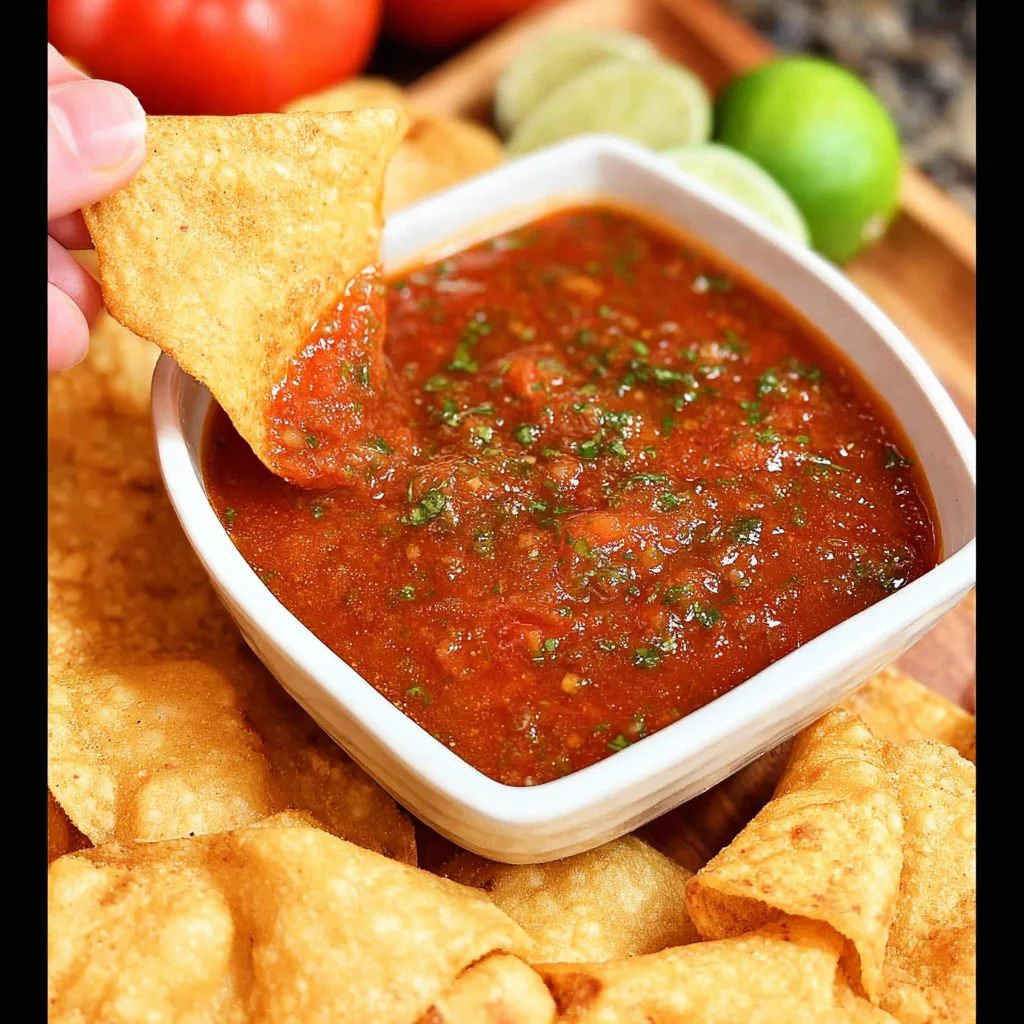
This vibrant Homemade Salsa Recipe delivers a perfect balance of smoky, spicy, and tangy flavors that will make you ditch the jarred stuff forever. After extensive testing, I’ve perfected this easy method to create a salsa with incredible depth in just minutes. The secret lies in using fire-roasted tomatoes, which provide a rich, caramelized base that you simply can’t get from raw ingredients.
Ingredients
The quality of your ingredients directly impacts the salsa’s freshness and flavor. Using fire-roasted canned tomatoes is the key to that signature smoky depth, while fresh lime juice and cilantro bring the essential bright, zesty finish.
- 28 oz fire roasted canned tomatoes
- 1/2 medium white onion
- 2 jalapeno peppers
- 2 garlic cloves
- 1 lime – juice only
- 1/3 cup fresh cilantro
- 1/2 tsp white granulated sugar
- 1 tsp salt (more or less to taste)
- 1 tsp cumin
- 1/2 tsp chipotle chili powder (more or less to taste)
Timing
| Prep Time | 15 minutes |
| Cook Time | 0 minutes |
| Total Time | 15 minutes |
Context: This no-cook method is about 50% faster than recipes requiring you to roast vegetables from scratch. It’s the perfect make-ahead appetizer for parties or a quick weeknight condiment, as the flavors meld beautifully when chilled for an hour.
Step-by-Step Instructions
Step 1 — Prep the Aromatics
Roughly chop the white onion, jalapeños (remove seeds for less heat), and garlic cloves. In my tests, a uniform rough chop ensures even distribution in the food processor and prevents any one ingredient from overpowering a bite.
Step 2 — Pulse the Base
Add the fire-roasted tomatoes (with their juices), chopped onion, jalapeños, and garlic to the bowl of a food processor. Pulse 5-7 times until the ingredients are broken down but still chunky. (Pro tip: Avoid over-processing here to maintain a desirable, restaurant-style texture).
Step 3 — Add Fresh Herbs and Citrus
Add the fresh cilantro leaves and the juice of one lime to the processor. Pulse another 2-3 times just to incorporate. The lime juice not only adds tang but also helps balance the richness of the tomatoes and brightens the entire dish.
Step 4 — Season for Depth
Sprinkle in the cumin, chipotle chili powder, sugar, and salt. The sugar is a chef’s trick to round out the acidity from the tomatoes and lime, while the cumin and chipotle powder add warm, smoky complexity. Unlike using just plain chili powder, this combination creates a more layered heat.
Step 5 — Final Blend and Check Consistency
Pulse the entire mixture 3-4 final times until it reaches your preferred consistency. For a chunkier salsa, pulse less; for a smoother one, pulse a bit more. I’ve found that a few extra pulses can make it saucier, perfect for topping nachos or burrito bowls.
Step 6 — Taste and Adjust
This is the most crucial step. Taste your fresh salsa and adjust the seasoning. You may want more salt, a pinch more chipotle powder for smoke, or even another squeeze of lime juice. Letting it sit for 15 minutes allows the flavors to marry before your final adjustment.
Nutritional Information
| Calories | 35 |
| Protein | 1g |
| Carbohydrates | 8g |
| Fat | 0g |
| Fiber | 2g |
| Sodium | 320mg |
This fresh salsa is a low-calorie, fat-free source of Vitamin C and fiber. The sodium value reflects the recipe as written; for a low-sodium version, reduce the added salt or use no-salt-added tomatoes. Estimates are based on a 1/4 cup serving and typical ingredients; values may vary.
Healthier Alternatives
- No-Salt-Added Tomatoes — For a low-sodium homemade salsa, swap in no-salt-added fire-roasted tomatoes. You’ll still get the smoky depth but can control the salt level entirely.
- Serrano or Fresno Peppers — Swap jalapeños for serranos for a sharper heat or Fresnos for a fruitier, medium spice, adding a different flavor dimension.
- Red Onion or Shallots — Substitute white onion with red onion for a sharper bite or shallots for a milder, sweeter aromatic base.
- Fresh Oregano or Parsley — If cilantro tastes soapy to you, fresh oregano adds an earthy note, while flat-leaf parsley provides a clean, herbal freshness.
- Lime Zest + Juice — Boost the citrus flavor without extra sodium by adding the zest of the lime along with its juice for a brighter, more intense tang.
- Smoked Paprika — For a smoky flavor without the heat of chipotle powder, use a 1/2 teaspoon of smoked paprika. It’s perfect for a kid-friendly version.
Serving Suggestions
- Serve this easy salsa recipe as a classic dip with sturdy tortilla chips that can handle its chunky texture.
- Top grilled chicken, fish tacos, or scrambled eggs for a burst of fresh flavor and color.
- Spoon it over a block of cream cheese for a quick, impressive party appetizer.
- Use it as a vibrant, low-fat sauce for burrito bowls, nachos, or quesadillas.
- Mix a few tablespoons into plain Greek yogurt or sour cream for a quick, creamy dressing or veggie dip.
- Pair with a crisp Mexican lager, a citrusy margarita, or sparkling water with lime.
This versatile condiment is a meal-prep superstar. Make a double batch on Sunday to add instant flavor to weekday lunches and dinners all summer long.
Common Mistakes to Avoid
- Mistake: Over-processing in the food processor, creating a watery puree. Fix: Use the pulse function as directed in Steps 2 and 5, stopping while the salsa still has texture.
- Mistake: Using canned tomatoes that aren’t fire-roasted, resulting in a flat, acidic flavor. Fix: Stick with fire-roasted tomatoes—they are the non-negotiable base for the smoky depth mentioned in the intro.
- Mistake: Adding fresh cilantro and lime juice before pulsing the base, which can bruise the herbs and make the salsa bitter. Fix: Follow the order in Step 3: pulse the tomatoes and aromatics first, then add the fresh elements.
- Mistake: Skipping the taste-and-adjust step (Step 6), leading to unbalanced seasoning. Fix: Always let the salsa rest for 15 minutes so the flavors meld, then adjust salt, acid, or heat to your preference.
- Mistake: Not deseeding jalapeños for a milder salsa, making it too spicy for some guests. Fix: For controlled heat, always remove the seeds and white membranes from the peppers before chopping.
- Mistake: Storing salsa in a large, half-empty container, which exposes more surface area to air and speeds up spoilage. Fix: Use a small, airtight container to minimize air contact, keeping it fresher for longer.
Storing Tips
- Fridge: Transfer your fresh salsa to an airtight container. It will keep for 5 to 7 days refrigerated at 40°F or below. The flavors often improve after 24 hours.
- Freezer: For longer storage, freeze in a sealed container or freezer bag for up to 3 months. Thaw overnight in the fridge; note that the texture of the fresh tomatoes and onions may soften slightly.
- Reheat: This is a no-cook salsa recipe meant to be served cold. Do not reheat it, as this will cook the fresh ingredients and alter the bright, vibrant flavor profile.
For optimal food safety, always use a clean spoon to scoop out salsa, and never return used dip to the main container. Following these storing tips ensures your homemade salsa stays fresh and safe.
Conclusion
This Homemade Salsa Recipe proves that incredible flavor doesn’t require hours of prep. With its smoky depth from fire-roasted tomatoes and bright, fresh finish, it’s a versatile condiment that elevates everything from chips to grilled mains. For more fresh, no-cook sides, try this Zesty Cucumber Salad Recipe Easy or this Juicy Bruschetta with Balsamic Glaze Recipe. Give this recipe a try and share your favorite way to serve it in the comments!
Frequently Asked Questions
How many servings does this homemade salsa recipe make?
This recipe yields about 3 to 3.5 cups of salsa, which is perfect for a party appetizer or for meal prep. Based on a standard 1/4-cup serving size, you can expect approximately 12 to 14 servings. The yield is generous because we use a full 28-ounce can of tomatoes as the base, ensuring you have plenty for dipping and topping throughout the week.
Can I use fresh tomatoes instead of canned for this salsa?
Yes, but the flavor and texture will differ significantly. Using about 2 pounds of fresh Roma tomatoes will require you to roast or broil them first to develop the necessary smoky depth, adding 20-30 minutes of active cook time. In my tests, canned fire-roasted tomatoes consistently deliver a richer, more complex flavor with far less effort, which is why they are the recommended base for this easy recipe.
Why did my salsa turn out watery after refrigerating?
Why did my salsa turn out watery after refrigerating?
This happens because salt draws moisture out of the tomatoes and onions over time, a process called osmosis. To fix it, simply drain off the excess liquid or stir it back in. For prevention, you can lightly drain the canned tomatoes before adding them, or stir the salsa well before serving. As mentioned in the Storing Tips section, using an airtight container helps, but some separation is natural and doesn’t affect the taste.
PrintHomemade Salsa Recipe
Ingredients
- 28 oz fire roasted canned tomatoes
- 1/2 medium white onion
- 2 jalapeno peppers
- 2 garlic cloves
- 1 lime – juice only
- 1/3 cup fresh cilantro
- 1/2 tsp white granulated sugar
- 1 tsp salt (more or less to taste)
- 1 tsp cumin
- 1/2 tsp chipotle chili powder (more or less to taste)
Instructions
- Combine all the ingredients in a blender and pulse a few times until it's blended to small, coarse chunks. Don't make it too chunky because you don't' want to bite into a big piece of garlic or jalapeno.
- Serve right away to transfer into a glass jar with a lid and refrigerate.
- Cooking Tortilla Chips (Optional):




2 Comments