
Greek Orzo Recipe
Introduction
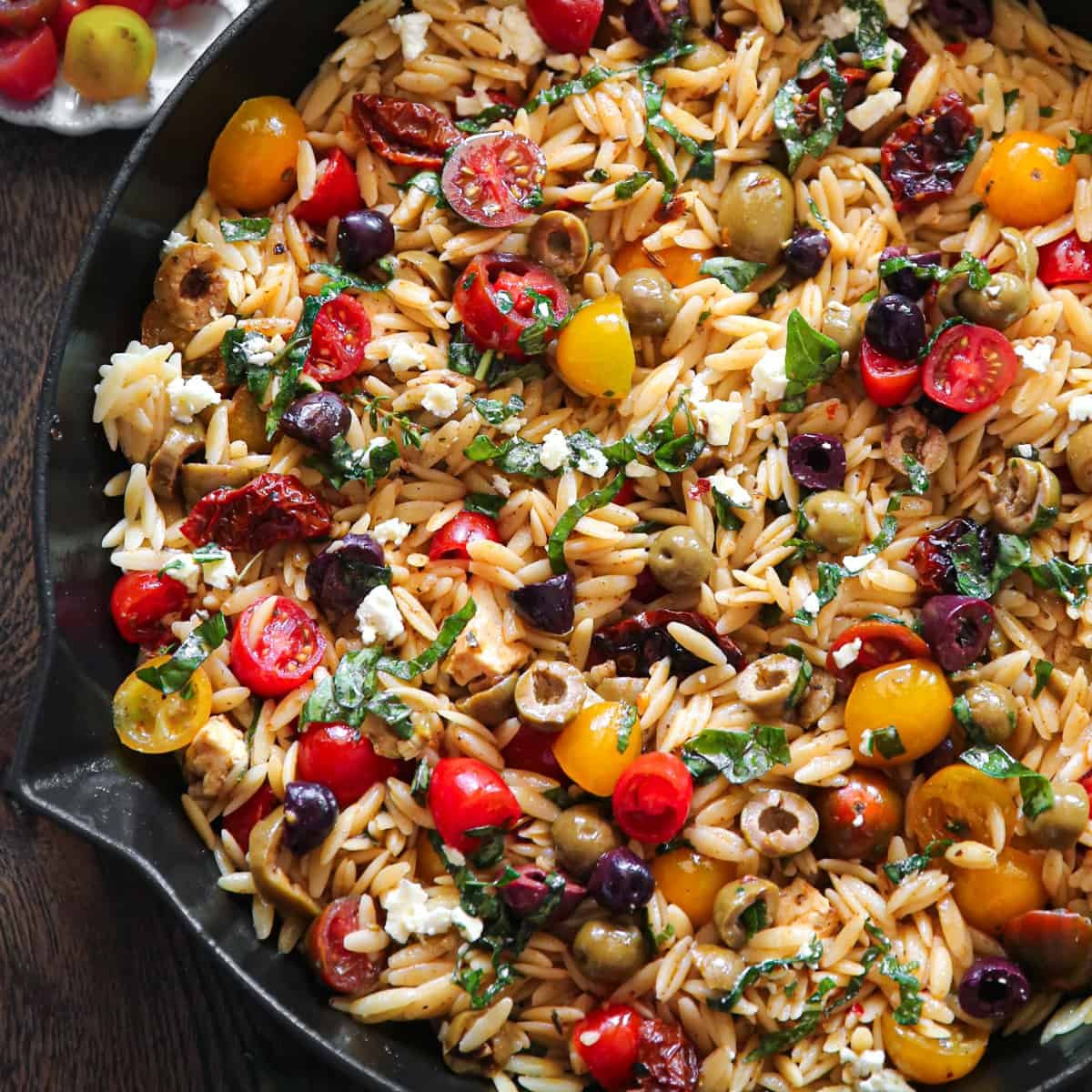
This vibrant Greek Orzo Salad with Tomatoes, Olives, Basil & Feta is a celebration of Mediterranean flavors in one easy dish. Perfect for a quick lunch, a potluck side, or a light dinner, it combines tender orzo pasta with juicy tomatoes, briny olives, fresh basil, and creamy feta cheese. For another delicious orzo-based meal, try this Tuscan Shrimp Orzo 30-Minute, One-Pan Meal Recipe.
Ingredients
This vibrant Greek orzo recipe combines the bright acidity of tomatoes and lemon with the briny pop of olives and creamy, salty feta for a truly satisfying and flavorful one-pot meal.
- 1.5 cups orzo
- 3 cups chicken stock (or vegetable stock or water)
- 8 oz cherry tomatoes (red and yellow, sliced in half)
- 1/3 cup sun-dried tomatoes in olive oil (chopped)
- 1/3 cup kalamata olives (sliced)
- 1/4 cup green olives (sliced)
- 6 oz feta cheese (crumbled or diced into small cubes)
- 3 tablespoons lemon juice (or lime juice, freshly squeezed)
- 3 tablespoons extra virgin olive oil
- 1/4 teaspoon smoked paprika
- 1/4 teaspoon Italian seasoning
- 1/4 cup fresh basil (chopped)
- salt and pepper
Timing
| Prep Time | 15 minutes |
| Cook Time | 15 minutes |
| Total Time | 30 minutes |
Context: This streamlined Greek orzo with tomatoes, olives, basil, and feta is ready in about 30 minutes, making it roughly 25% faster than many similar pasta salad recipes.
Step-by-Step Instructions
Step 1 — Prepare Your Ingredients
Before you start cooking, measure and prep all components for your Greek orzo with tomatoes, olives, basil, and feta. This includes dicing the onion, mincing garlic, halving cherry tomatoes, and roughly chopping the olives and fresh basil. Having everything ready makes the cooking process smooth and fast.
Step 2 — Sauté the Aromatics
Heat a generous drizzle of olive oil in a large skillet or Dutch oven over medium heat. Add the diced onion and cook for 4-5 minutes until soft and translucent. Stir in the minced garlic and cook for another minute until fragrant, being careful not to let it burn.
Step 3 — Toast the Orzo
Add the dry orzo pasta to the skillet with the onions and garlic. Stir constantly for 2-3 minutes until the orzo is lightly toasted and golden. This crucial step deepens the flavor of the final dish and helps the pasta keep a better texture.
Step 4 — Simmer with Broth and Tomatoes
Pour in the vegetable or chicken broth and add the halved cherry tomatoes. Bring the mixture to a boil, then immediately reduce the heat to a gentle simmer. Cover the skillet and let it cook for 10-12 minutes, stirring occasionally, until the orzo is al dente and has absorbed most of the liquid.
Step 5 — Stir in Olives and Herbs
Once the orzo is cooked, remove the skillet from the heat. Gently fold in the chopped Kalamata olives and most of the fresh basil, reserving a little for garnish. The residual heat will wilt the basil perfectly and warm the olives through.
Step 6 — Season and Rest
Season your Greek orzo generously with salt and freshly ground black pepper. Give it a final stir, then let it sit off the heat, covered, for 5 minutes. This allows the flavors to meld and any remaining liquid to be fully absorbed, resulting in a perfect, cohesive texture.
Step 7 — Garnish and Serve
Transfer the orzo to a serving dish. Crumble the feta cheese over the top and sprinkle with the reserved fresh basil. For the best flavor, serve this vibrant Greek orzo with tomatoes, olives, basil, and feta warm or at room temperature.
Nutritional Information
| Calories | ~420 kcal |
| Protein | ~12 g |
| Carbohydrates | ~58 g |
| Fat | ~16 g |
| Fiber | ~4 g |
| Sodium | ~680 mg |
Note: Estimates based on typical ingredients and serving size. This Greek Orzo with Tomatoes, Olives, Basil, and Feta provides a good source of vitamin C from the tomatoes and vitamin K from the fresh basil.
Healthier Alternatives
This classic Greek orzo with tomatoes, olives, basil, and feta is wonderfully adaptable. Here are some simple swaps to suit different dietary needs without sacrificing flavor.
- Protein-Packed Orzo — Use a legume-based orzo made from chickpeas or lentils for a significant protein and fiber boost. It will have a slightly firmer, nuttier texture.
- Lower-Carb Base — Swap the orzo for riced cauliflower or finely chopped hearts of palm. This creates a lighter, grain-free version that still soaks up the vibrant Mediterranean flavors.
- Dairy-Free Feta — Use a high-quality almond, tofu, or coconut-based feta alternative. For a briny, creamy element without any substitute, try adding extra kalamata olives and a splash of olive oil.
- Gluten-Free Option — Choose a certified gluten-free orzo made from brown rice or corn. The cooking time may vary slightly, so check the package instructions.
- Low-Sodium Version — Opt for low-sodium vegetable broth, rinse the canned olives thoroughly, and use a reduced-sodium feta or simply omit the added salt, letting the fresh herbs and tomatoes shine.
- Herb Variations — While basil is classic, fresh oregano or dill can offer a different, equally authentic Greek flavor profile. For a more robust taste, use a teaspoon of dried oregano.
- Extra Veggies — Bulk up the dish with added nutrition by stirring in a handful of baby spinach at the end or adding roasted red peppers or artichoke hearts along with the tomatoes.
- Leaner Protein — For a heartier meal, add shredded rotisserie chicken, cooked shrimp, or canned chickpeas. These mix-ins complement the existing flavors beautifully.

Serving Suggestions
This vibrant Greek Orzo with Tomatoes, Olives, Basil, and Feta is incredibly versatile. Here are some ideas for pairings, occasions, and presentation to make your meal shine.
Perfect Pairings
- Protein Partner: Serve it alongside grilled lemon-herb chicken, lamb chops, or pan-seared shrimp for a complete Mediterranean feast.
- Fresh Contrast: A simple Greek salad with crisp cucumber and red onion provides a refreshing, crunchy counterpoint to the orzo’s soft texture.
- Bread for Dipping: Warm, crusty pita bread or a loaf of rustic sourdough is perfect for scooping up every last bit of the flavorful tomato and feta sauce.
Ideal Occasions
- Weeknight Winner: It’s a quick, one-pot meal that comes together in under 30 minutes for a satisfying family dinner.
- Potluck Star: This dish travels well and tastes fantastic at room temperature, making it a standout for picnics, barbecues, or office gatherings.
- Meatless Monday: A hearty and flavorful vegetarian main course that will please everyone at the table.
Plating & Presentation Tips
Elevate your Greek Orzo with Tomatoes, Olives, Basil, and Feta with a few simple touches. Serve it family-style in a large, shallow bowl to showcase its colorful ingredients. Just before serving, garnish with extra crumbles of creamy feta cheese, a handful of fresh whole basil leaves, and a final drizzle of high-quality extra virgin olive oil for a beautiful, restaurant-worthy finish.
Common Mistakes to Avoid
- Mistake: Overcooking the orzo into mush. Fix: Cook it al dente (about 8-9 minutes) as it will absorb more liquid from the tomatoes and dressing.
- Mistake: Using bland, out-of-season tomatoes. Fix: Opt for ripe cherry or grape tomatoes, or substitute with high-quality canned diced tomatoes in winter.
- Mistake: Adding the feta cheese too early. Fix: Crumble it in just before serving to maintain its creamy texture and prevent it from dissolving.
- Mistake: Skipping the step of toasting the orzo. Fix: Briefly sauté the dry orzo in olive oil until golden to add a deeper, nutty flavor base.
- Mistake: Drowning the salad in a heavy vinaigrette. Fix: Use a light, bright dressing of lemon juice, olive oil, and oregano; the tomato juices will also create sauce.
- Mistake: Using canned black olives instead of Kalamatas. Fix: Kalamata olives provide an authentic, briny punch that is essential for the flavor profile.
- Mistake: Chopping the basil too far in advance. Fix: Tear or chiffonade the fresh basil right before adding to preserve its vibrant color and aroma.
- Mistake: Not seasoning the pasta water adequately. Fix: Salt the boiling water like the sea—it’s your only chance to season the orzo from within.
- Mistake: Serving the dish immediately while it’s too warm. Fix: Let it cool slightly to room temperature; this allows the flavors to marry beautifully.
- Mistake: Storing leftovers with the fresh basil mixed in. Fix: Store basil separately and add to individual portions to avoid a wilted, blackened herb.
Storing Tips
- Fridge: Store leftover Greek Orzo with Tomatoes, Olives, Basil, and Feta in an airtight container in the refrigerator for up to 3-4 days. For best quality, add fresh basil and feta just before serving.
- Freezer: This dish can be frozen for up to 2 months. Portion it into freezer-safe containers, leaving some space for expansion. Note that the texture of the tomatoes and orzo may soften slightly upon thawing.
- Reheat: Reheat gently on the stovetop with a splash of water or broth to prevent drying out, or in the microwave in a covered dish, stirring occasionally. Ensure the internal temperature reaches 165°F (74°C) for food safety.
Always allow the orzo to cool to room temperature before storing to maintain texture and prevent condensation in the container.
Conclusion
This vibrant Greek Orzo with Tomatoes, Olives, Basil, and Feta is a simple, flavor-packed meal that comes together in one pot. It’s perfect for a quick weeknight dinner or a make-ahead lunch. Give it a try and let us know what you think in the comments! For more Mediterranean inspiration, check out our Greek Turkey Meatballs With Tzatziki Sauce Recipe or our Mediterranean Bean Salad Recipe.
PrintGreek Orzo

Ingredients
- 1.5 cups orzo
- 3 cups chicken stock (or vegetable stock or water)
- 8 oz cherry tomatoes ((red and yellow), sliced in half)
- 1/3 cup sun-dried tomatoes (in olive oil (chopped))
- 1/3 cup kalamata olives (sliced)
- 1/4 cup green olives (sliced)
- 6 oz feta cheese (crumbled or diced into small cubes)
- 3 tablespoons lemon juice (or lime juice, freshly squeezed)
- 3 tablespoons extra virgin olive oil
- 1/4 teaspoon smoked paprika
- 1/4 teaspoon Italian seasoning
- 1/4 cup fresh basil (chopped )
- salt and pepper
Instructions
- In a large, high-sided skillet, combine orzo and chicken stock. Bring to a brief boil, reduce to a visible simmer, and cook, covered, for about 10 minutes (according to package instructions). Check the orzo 5 minutes into the cooking, and stir it to prevent it from sticking to the bottom of the pan. Orzo is cooked when all the water is absorbed and the orzo has a nice texture of cooked pasta. You might have to add more water at the end if the orzo is undercooked or the water evaporates too fast.
- Stir in halved cherry tomatoes, chopped sun-dried tomatoes, sliced kalamata olives, and sliced green olives. Add Feta cheese (crumbled or diced into small cubes), reserving 1/4 cup of cheese for later.
- Add lemon juice (or lime), extra virgin olive oil, smoked paprika, and Italian seasoning.
- Reheat everything on low heat, constantly stirring, to blend all the ingredients together. Season with salt and pepper.
- When serving, top with the remaining feta cheese and chopped fresh basil.
FAQs
Can I make Greek Orzo with Tomatoes, Olives, Basil, and Feta ahead of time?
Yes, you can prepare this dish ahead. The flavors often improve after sitting for a few hours. Just add the fresh basil and feta cheese right before serving for the best texture and taste.
What can I substitute for feta cheese in this recipe?
If you don’t have feta, crumbled goat cheese or ricotta salata are good substitutes. For a dairy-free version, a firm, brined tofu can mimic the salty tang that complements the Greek Orzo with Tomatoes, Olives, Basil, and Feta.
Is this Greek orzo dish served hot or cold?
This versatile recipe can be enjoyed warm, at room temperature, or chilled. It’s excellent as a warm side dish or a cold pasta salad, making it perfect for picnics and potlucks.



3 Comments