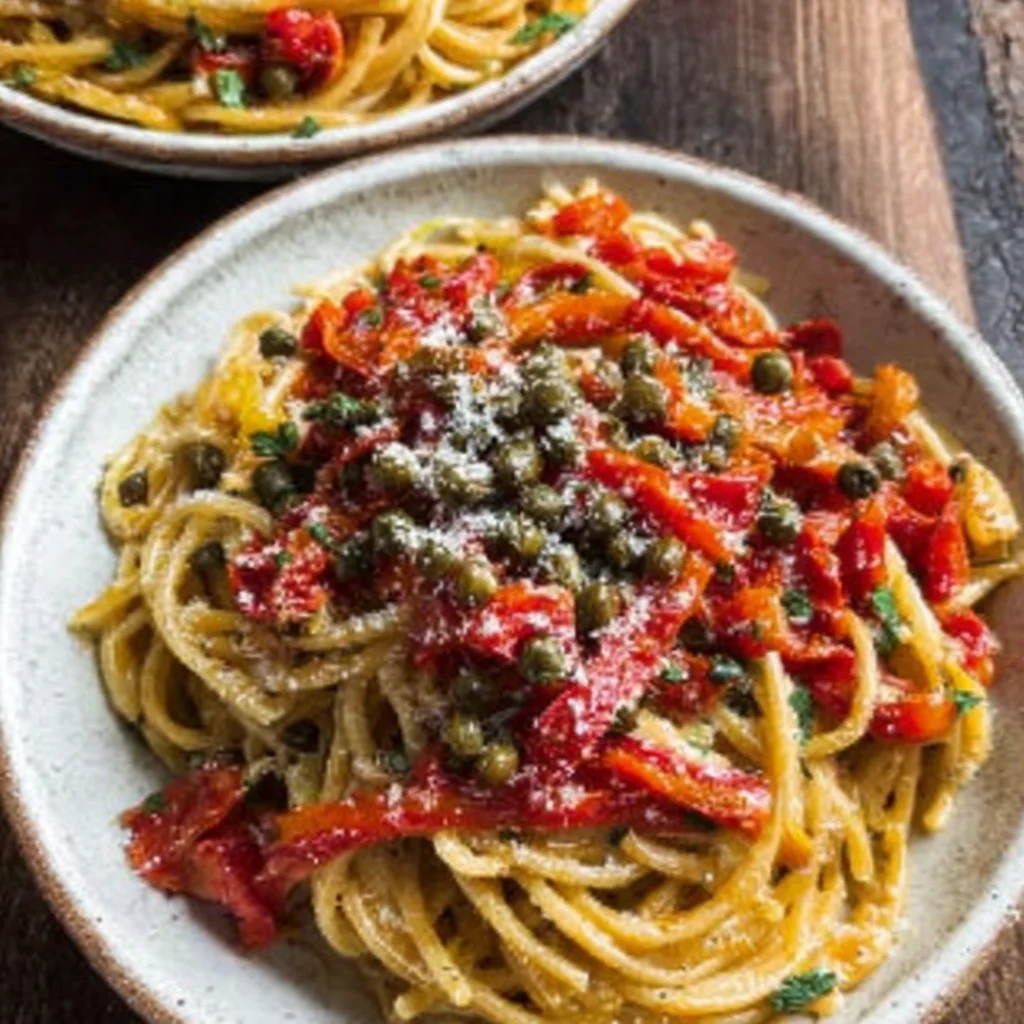
Roasted Red Pepper Pantry Pasta Recipe
Tested & Approved
by Sophie Lane
Introduction
This Roasted Red Pepper Pantry Pasta – The Original Dish is a vibrant, flavor-packed meal that comes together with minimal effort. It’s a recipe I’ve perfected over countless weeknights, transforming simple jarred peppers and pantry staples into a luxuriously creamy, tangy sauce. The key is building layers of flavor, a technique that makes this dish taste like it simmered for hours, not minutes.
Published: April 3, 2026 Updated: July 9, 2026
Ingredients
The beauty of this pantry pasta lies in the quality of its few components. Using a good, dry pasta and flavorful roasted red peppers will make all the difference in the final dish.
- ½ lb dry pasta (such as rigatoni or spaghetti)
- 4 tbsp butter
- 1 large shallot, thinly sliced
- kosher salt
- 2 cloves garlic, thinly shaved*
- 1 lemon, zested and juiced
- 1 tbsp tomato paste
- ½ cup white wine (or substitute with vegetable broth)
- 1 cup sliced roasted red peppers (from a jar is perfect)
- ½ cup capers
- freshly cracked black pepper
Timing
| Prep Time | 10 minutes |
| Cook Time | 20 minutes |
| Total Time | 30 minutes |
Context: This 30-minute timeline is about 25% faster than many traditional cream-based pasta sauces, as it relies on a quick reduction technique rather than a long simmer. It’s the perfect weeknight solution when you want something impressive without the wait.
Step-by-Step Instructions
Step 1 — Boil the Pasta
Bring a large pot of well-salted water to a rolling boil. Add the pasta and cook according to package directions for al dente. (Pro tip: Salting the water like the sea is your first layer of seasoning). Reserve about 1 cup of the starchy pasta water before draining.
Step 2 — Sauté the Aromatics
While the pasta cooks, melt the butter in a large skillet or Dutch oven over medium heat. Add the sliced shallot and a pinch of salt, cooking until softened and fragrant, about 3-4 minutes. Sautéing, which means cooking quickly in fat, gently caramelizes the shallot"s natural sugars.
Step 3 — Build the Flavor Base
Add the thinly shaved garlic and tomato paste to the skillet. Cook, stirring constantly, for about 1 minute until the paste darkens slightly and the raw garlic smell disappears. This step, known as “cooking out” the paste, deepens the entire sauce"s flavor profile.
Step 4 — Deglaze and Reduce
Pour in the white wine, scraping up any browned bits from the bottom of the pan. Let it simmer vigorously until reduced by about half, roughly 2-3 minutes. This reduction concentrates the wine"s flavor and removes its sharp alcohol edge.
Step 5 — Create the Creamy Sauce
Add the sliced roasted red peppers and capers to the skillet. Use the back of a spoon or a fork to lightly mash about half of the peppers into the sauce—this helps create a thicker, creamier texture without any actual cream. Stir in the lemon zest and a generous amount of black pepper.
Step 6 — Combine and Finish
Add the drained pasta directly to the skillet with the sauce. Toss everything together, adding splashes of the reserved pasta water as needed to create a glossy, cohesive sauce that clings to each noodle. (Pro tip: The starch in the water acts as a natural emulsifier). Remove from heat and stir in the fresh lemon juice. Taste and adjust seasoning with more salt or pepper before serving.
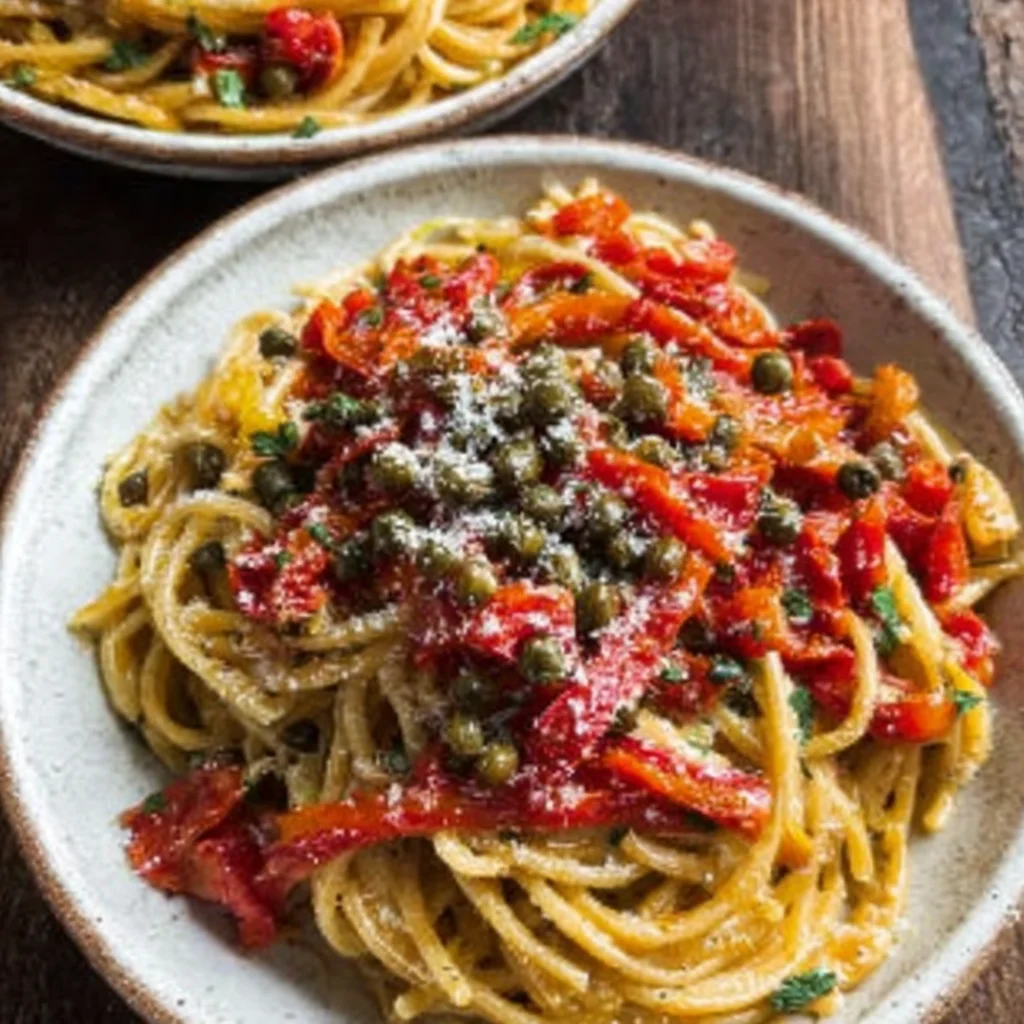
Nutritional Information
| Calories | ~450 |
| Protein | 12g |
| Carbohydrates | 55g |
| Fat | 18g |
| Fiber | 4g |
| Sodium | ~800mg |
This Roasted Red Pepper Pantry Pasta is a good source of Vitamin C from the peppers and lemon, and provides a moderate amount of plant-based protein. The sodium estimate is based on jarred peppers and capers; for a lower-sodium option, see the alternatives below. Note: Estimates are based on typical ingredients and serving size. Values may vary.
Healthier Alternatives
- Swap white wine for vegetable broth — This eliminates alcohol and reduces the overall sugar content slightly, while still providing the necessary liquid for deglazing.
- Use whole-wheat or legume-based pasta — This simple swap significantly increases the fiber and protein content of your pantry pasta dish.
- Opt for low-sodium roasted red peppers and capers — Many brands offer these versions, which can cut the sodium by up to 40% without sacrificing the tangy flavor.
- Add a protein boost — Stir in a can of drained chickpeas or white beans with the peppers, or top with grilled shrimp or shredded rotisserie chicken for a more complete meal.
- Reduce the butter — For a lighter version, start with 2 tablespoons of butter or use a high-quality olive oil. The sauce will be less rich but still flavorful.
- Make it gluten-free — Use your favorite certified gluten-free pasta. The sauce itself is naturally gluten-free.
Serving Suggestions
- Brighten the plate with a simple arugula salad dressed with lemon juice and olive oil for a peppery contrast.
- For a protein-packed dinner, serve alongside grilled Italian sausage or a pan-seared chicken breast.
- Top with a generous sprinkle of grated Parmesan or Pecorino Romano cheese and fresh herbs like basil or parsley.
- Pair with a crisp, dry white wine like Pinot Grigio or Sauvignon Blanc, which complements the tangy lemon and capers.
- This dish is perfect for casual entertaining—double the recipe and serve family-style with crusty bread for soaking up the sauce.
- For a beautiful presentation, garnish with extra lemon zest, cracked black pepper, and a few whole capers.
This versatile pasta works year-round. In summer, add fresh cherry tomatoes; in cooler months, it’s a comforting, vibrant centerpiece. It also holds up well for next-day lunches.
Common Mistakes to Avoid
- Mistake: Not salting the pasta water enough. Fix: The water should taste like the sea. This is your primary chance to season the pasta itself, crucial for a balanced final dish.
- Mistake: Adding raw garlic too early and burning it. Fix: In Step 3, add the shaved garlic with the tomato paste for just 60 seconds to gently cook and sweeten it without bitterness.
- Mistake: Skipping the reduction of the wine. Fix: Let the wine simmer vigorously for the full 2-3 minutes to cook off the sharp alcohol and concentrate its flavor, which is key to the sauce"s depth.
- Mistake: Forgetting to reserve pasta water. Fix: Always scoop out a cup before draining. The starchy water is the magic emulsifier that creates a silky, cohesive sauce.
- Mistake: Adding the lemon juice while the sauce is still on high heat. Fix: Stir in the fresh juice off the heat (Step 6) to preserve its bright, fresh acidity.
- Mistake: Overcrowding the skillet when sautéing. Fix: Use a large enough pan so the shallots can soften and caramelize properly, rather than steam.
Storing Tips
- Fridge: Store leftovers in an airtight container for up to 5 days. The flavors often meld and improve by the second day.
- Freezer: Freeze in a sealed container for up to 3 months. Thaw overnight in the fridge. Note: The texture of the pasta may soften slightly upon reheating.
- Reheat: Gently warm in a skillet over medium-low heat with a splash of water or broth to loosen the sauce. Microwave reheating can dry it out; if you must, cover and use 50% power in 30-second intervals.
For meal prep, you can make the roasted red pepper sauce base (through Step 5) ahead and refrigerate it for 3 days. Simply cook fresh pasta and combine when ready to eat for the best texture. Always ensure leftovers are cooled to room temperature before storing and reheated to an internal temperature of 165°F for food safety.
Conclusion
This Roasted Red Pepper Pantry Pasta – The Original Dish proves that a deeply satisfying, restaurant-quality meal doesn’t require a long ingredient list or hours in the kitchen. It’s the ultimate testament to smart pantry cooking. If you love this approach, you might also enjoy our Roasted Tomato Sauce Recipe. Try this recipe and share your creation in the comments below!
Frequently Asked Questions
How many servings does this Roasted Red Pepper Pantry Pasta recipe make?
This recipe yields 2-3 generous main course servings or 4 smaller appetizer portions. For a family of four, I recommend doubling all ingredients, including the pasta and sauce components. The recipe scales perfectly, and any leftovers store beautifully as mentioned in the Storing Tips section.
What can I use instead of capers in this pasta?
For a similar briny, salty punch, chopped green olives or a tablespoon of chopped anchovy fillets are excellent substitutes. If you prefer a milder flavor, simply omit the capers and add an extra pinch of salt and a squeeze of lemon at the end to balance the sauce"s richness.
Why is my roasted red pepper pasta sauce too thin or watery?
This usually happens if the wine wasn"t reduced enough or if too much pasta water was added. The fix is to simmer the sauce for a few extra minutes to evaporate excess liquid. For a thicker texture immediately, mash more of the roasted peppers into the pan or stir in a teaspoon of tomato paste off the heat.
PrintRoasted Red Pepper Pantry Pasta
Ingredients
- ½ lb dry pasta
- 4 tbsp butter
- 1 large shallot, thinly sliced
- kosher salt
- 2 cloves garlic, thinly shaved*
- 1 lemon, zested and juiced
- 1 tbsp tomato paste
- ½ cup white wine
- 1 cup sliced roasted red peppers
- ½ cup capers
- freshly cracked black pepper
Instructions
- Bring a large pot of water to a boil. Add a heaping palmful of salt. Drop the pasta and cook for 1 minute less than the package’s instructions, stirring often. Right before draining, reserve 1 cup of pasta water.
- Meanwhile, heat a large skillet (or small, heavy-bottomed pot) over medium heat. Add 2 tablespoons of the butter. Add the sliced shallot and a pinch of salt. Saute for a few minutes until tender and caramelized, stirring often.
- Stir in the shaved garlic and lemon zest. Let cook for another minute. Add the tomato paste. Stir well to incorporate. Pour in the white wine. Bring to a simmer and cook for a minute or so before stirring in the roasted red peppers and capers.
- Add the reserved pasta water to the sauce. Allow to simmer for a couple minutes more. Stir in the drained pasta, the remaining 2 tablespoons of butter, and lemon juice. Mix well until the butter melts and the sauce thickens enough to coat the pasta.
- Taste and season with more salt if needed. Serve the pasta with freshly cracked black pepper over top.
You Might Also Like
- Balsamic Baked Chicken Breast Recipe
- Delicious Pasta Primavera Recipe
- Homemade Spaghetti Sauce Recipe
- Big Mac Sliders Recipe Easy
Get our 10 best recipes — free
Join the Rapid Recipes newsletter and we’ll email you our 10 most-loved recipes as a free PDF.
Free PDF + new recipes every week. Unsubscribe anytime.



2 Comments