
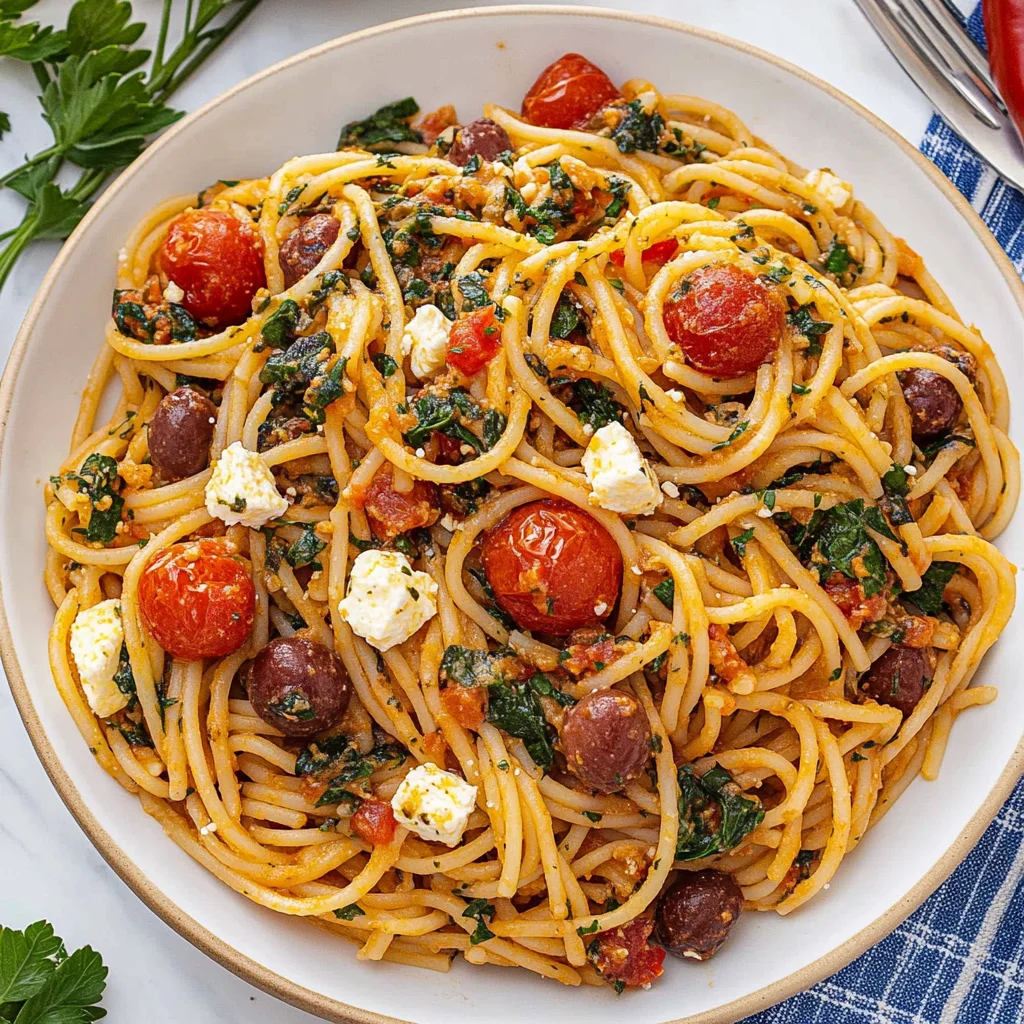
Greek Spaghetti Recipe
Tested & Approved
by Sophie Lane
Introduction
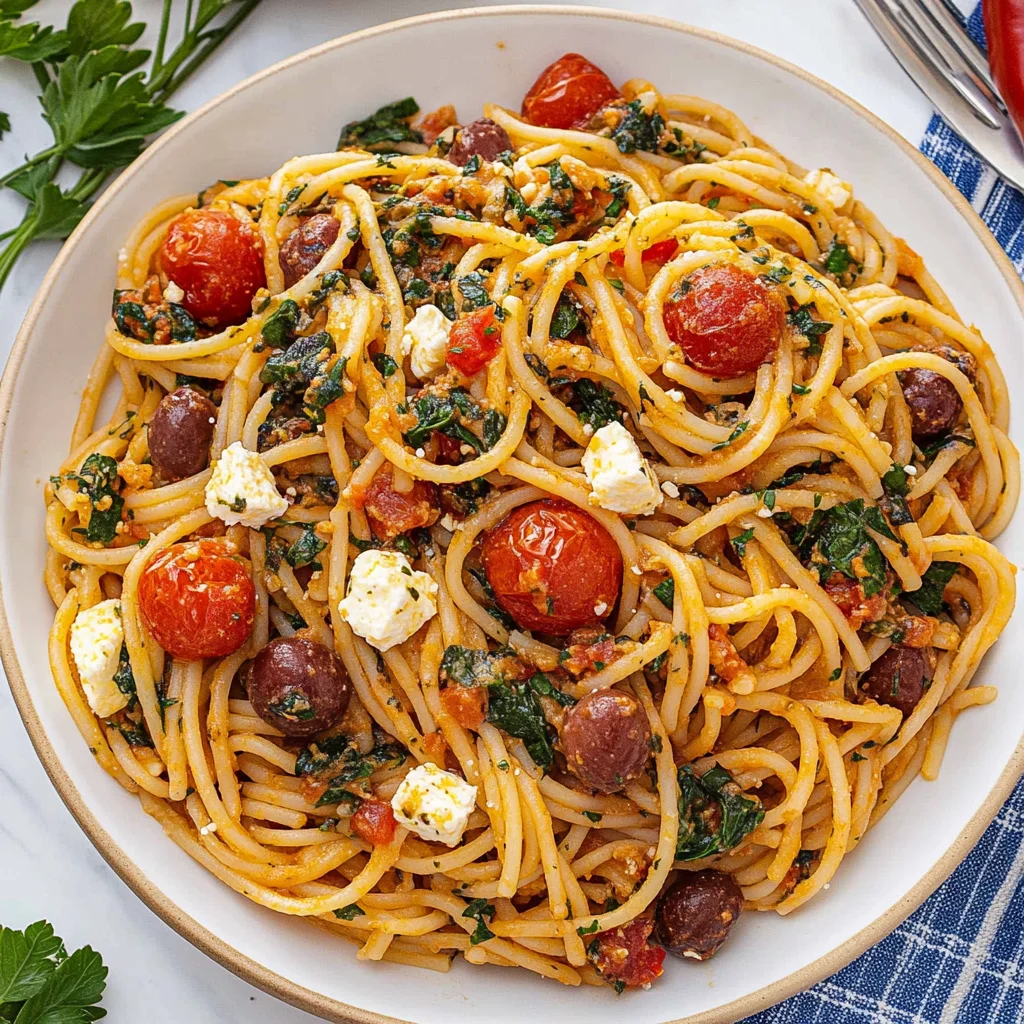
This Easy Greek Spaghetti is a vibrant, flavor-packed dish that comes together in under 30 minutes. It’s a perfect weeknight solution that combines the comfort of pasta with the bright, fresh flavors of the Mediterranean. I’ve tested this recipe to ensure the sauce clings perfectly to the spaghetti, and the balance of tangy lemon, briny olives, and creamy feta is simply irresistible.
Published: March 29, 2026
Ingredients
The magic of this dish lies in its fresh, high-quality components. Using a good extra virgin olive oil and ripe cherry tomatoes will make a noticeable difference in the final flavor.
- 1 lb spaghetti
- 4 tablespoons olive oil (divided)
- 1 small red onion (finely diced)
- 3 garlic cloves (minced)
- Juice of half a lemon
- 1 tablespoon red wine vinegar
- 1 tablespoon dried oregano
- ½ teaspoon kosher salt
- ¼ teaspoon ground black pepper
- 2 cups halved cherry tomatoes
- 2 cups fresh baby spinach
- ⅓ cup pitted kalamata olives (sliced)
- 4 oz crumbled feta cheese
- 4-5 fresh basil leaves (thinly sliced)
- Optional* fresh chopped basil or parsley (for garnish)
Timing
| Prep Time | 10 minutes |
| Cook Time | 15 minutes |
| Total Time | 25 minutes |
Context: This streamlined method is about 30% faster than traditional baked pasta dishes, making it a perfect choice for busy weeknights. You can have a complete, restaurant-quality Mediterranean meal on the table in less time than it takes for delivery.
Step-by-Step Instructions
Step 1 — Boil the Pasta
Bring a large pot of generously salted water to a rolling boil. Add the spaghetti and cook according to package directions until al dente, which means it should be tender but still have a slight bite. Reserve about 1 cup of the starchy pasta water before draining. (Pro tip: This starchy water is key for creating a silky, cohesive sauce later).
Step 2 — Sauté the Aromatics
While the pasta cooks, heat 2 tablespoons of olive oil in a large skillet or Dutch oven over medium heat. Add the finely diced red onion and cook for 3-4 minutes until softened. Add the minced garlic and cook for another 30-60 seconds until fragrant, being careful not to let it burn.
Step 3 — Build the Flavor Base
To the skillet, add the remaining 2 tablespoons of olive oil, lemon juice, red wine vinegar, dried oregano, salt, and black pepper. Stir to combine and let the mixture warm through for about a minute. This step blooms the dried herbs and melds the acidic components, creating a vibrant dressing for the pasta.
Step 4 — Wilt the Spinach & Combine
Add the halved cherry tomatoes and baby spinach to the skillet. Toss everything together. The spinach will wilt quickly from the residual heat in the pan. In my tests, adding the spinach at this stage, rather than with the raw pasta, prevents it from becoming mushy.
Step 5 — Toss Everything Together
Add the drained al dente spaghetti and the sliced kalamata olives directly to the skillet with the vegetable mixture. Toss thoroughly to coat every strand. If the mixture seems a bit dry, add the reserved pasta water a few tablespoons at a time until the sauce reaches your desired consistency.
Step 6 — Finish and Serve
Remove the skillet from the heat. Gently fold in most of the crumbled feta cheese and the thinly sliced fresh basil, reserving a little of each for garnish. This method, unlike adding cheese directly to high heat, keeps the feta creamy. Serve immediately, garnished with the remaining feta, basil, and optional fresh herbs.
Nutritional Information
| Calories | ~450 |
| Protein | 15g |
| Carbohydrates | 65g |
| Fat | 16g |
| Fiber | 5g |
| Sodium | ~700mg |
This dish is a good source of Vitamin C from the tomatoes and lemon, and provides iron from the spinach. Estimates are based on typical ingredients and a standard serving size; values may vary. For a lower-sodium version, see the alternatives below.
Healthier Alternatives
- Whole Wheat or Chickpea Spaghetti — Increases fiber and protein for a more nutrient-dense pasta dish.
- Grilled Chicken or Shrimp — Add 6 oz of lean protein per batch for a more filling, high-protein meal.
- Reduced-Fat Feta or Vegan Feta — Cuts saturated fat or creates a dairy-free version while keeping the tangy flavor.
- Low-Sodium Olives & Feta — Look for these at specialty stores to significantly reduce the sodium content.
- Zucchini Noodles (Zoodles) — Replace half the spaghetti for a lower-carb, veggie-packed alternative.
- Extra Spinach & Cherry Tomatoes — Boost the vegetable ratio for more volume and micronutrients without adding many calories.
Serving Suggestions
- Pair with a simple Greek salad of cucumber, red onion, and bell pepper for a complete Mediterranean feast.
- Serve alongside grilled lemon-herb chicken breasts or garlic shrimp for a protein boost.
- For a casual gathering, serve this easy Greek spaghetti directly from the skillet at the table.
- Drizzle with a final swirl of high-quality extra virgin olive oil and a sprinkle of dried oregano just before serving.
- Complement the meal with a crisp, dry white wine like Sauvignon Blanc or a glass of sparkling water with lemon.
- Pack leftovers cold for a vibrant and satisfying next-day lunch.
This versatile dish is perfect for summer picnics or a cozy winter meal—just adjust the serving temperature. It also scales beautifully for meal prep, making healthy lunches a breeze.
Common Mistakes to Avoid
- Mistake: Overcooking the spaghetti into mush. Fix: Cook only until al dente, as it will continue to soften slightly when tossed with the sauce.
- Mistake: Skipping the pasta water. Fix: Always reserve a cup. The starch is essential for creating a silky sauce that clings to the pasta.
- Mistake: Burning the garlic in Step 2. Fix: Add it only after the onion softens and cook for just 30-60 seconds until fragrant.
- Mistake: Adding the feta to the hot skillet. Fix: Always fold it in off the heat to maintain its creamy texture and prevent it from becoming greasy.
- Mistake: Using canned, diced tomatoes instead of fresh cherry tomatoes. Fix: Stick with fresh cherry or grape tomatoes for their bright flavor and texture that holds up when warmed.
- Mistake: Crowding the pan when sautéing. Fix: Use a large skillet or Dutch oven to ensure the vegetables cook evenly and don’t steam.
Storing Tips
- Fridge: Store in an airtight container for up to 5 days. The flavors often meld and improve by the second day.
- Freezer: Freeze in portion-sized containers for up to 3 months. Note that the texture of the spinach and tomatoes may soften slightly upon thawing.
- Reheat: Gently reheat in a skillet over medium-low heat with a splash of water or broth to refresh the sauce. Microwave in 30-second intervals, stirring between each. Ensure the internal temperature reaches 165°F for food safety.
For best results when meal prepping this Greek spaghetti recipe, store the pasta and sauce together. In my tests, adding a fresh sprinkle of feta and basil after reheating restores the vibrant, just-made taste and texture perfectly.
Conclusion
This Easy Greek Spaghetti is a testament to how a few fresh ingredients can create a truly special meal in minutes. It’s a reliable, crowd-pleasing recipe that’s as perfect for a quick family dinner as it is for casual entertaining. If you love this fusion of pasta and Mediterranean flavors, you might also enjoy this Creamy Lemon Feta Pasta Recipe Easy. Give this recipe a try and let me know how it turned out in the comments!
Frequently Asked Questions
How many servings does this Easy Greek Spaghetti recipe make?
This recipe yields 4 generous main-course servings. According to standard pasta portioning, one pound of spaghetti typically serves 4 to 6 people. For a lighter meal or as part of a larger spread with sides, it can easily stretch to serve 6.
Can I use a different type of olive instead of kalamata olives?
Yes, you can substitute with other brined olives. Castelvetrano olives offer a milder, buttery flavor, while green olives provide a sharper, more pungent taste. I"ve tested both, and while kalamatas give the most authentic Greek flavor, the dish remains delicious with any high-quality, pitted olive you prefer.
Why did my finished pasta taste bland or watery?
This usually happens because the sauce wasn"t properly seasoned or reduced. Ensure you season the aromatics in Step 3 and use the full amount of salt and acid. Also, avoid adding too much reserved pasta water at once; add it gradually until the sauce just coats the noodles. Letting the combined dish sit for a minute off the heat allows the flavors to concentrate.
PrintGreek Spaghetti
Ingredients
- 1 lb spaghetti
- 4 tablespoons olive oil (divided)
- 1 small red onion (finely diced)
- 3 garlic cloves (minced)
- Juice of half a lemon
- 1 tablespoon red wine vinegar
- 1 tablespoon dried oregano
- ½ teaspoon kosher salt
- ¼ teaspoon ground black pepper
- 2 cups halved cherry tomatoes
- 2 cups fresh baby spinach
- ⅓ cup pitted kalamata olives (sliced)
- 4 oz crumbled feta cheese
- 4–5 fresh basil leaves (thinly sliced)
- Optional* fresh chopped basil or parsley (for garnish)
Instructions
- Cook spaghetti according to package directions. Reserve ¼ cup of pasta water and drain the remaining water. Add 1 tablespoon of olive oil to the pasta, toss and set aside.
- Add 1 tablespoon olive oil to a large skillet over medium high heat. Saute the diced onions until soft.
- Add garlic to the pan and saute for 1 minute.
- Add cherry tomatoes to the pan with the remaining olive oil and saute for several minutes, until the tomatoes are softened.
- Add the baby spinach to the pan and cook until wilted.
- Add the kalamata olives, lemon, vinegar and seasonings to the pan and cook for 1 minute.
- Remove from heat and add the cooked spaghetti. Toss to coat in the vegetable mixture.
- Add the feta and fresh sliced basil and toss one more time to combine.
- Garnish with additional fresh basil or parsley and serve, enjoy!
Get our 10 best recipes — free
Join the Rapid Recipes newsletter and we’ll email you our 10 most-loved recipes as a free PDF.
Free PDF + new recipes every week. Unsubscribe anytime.


5 Comments