
Best Greek Salad Recipe Easy
Tested & Approved
by Sophie Lane
Introduction
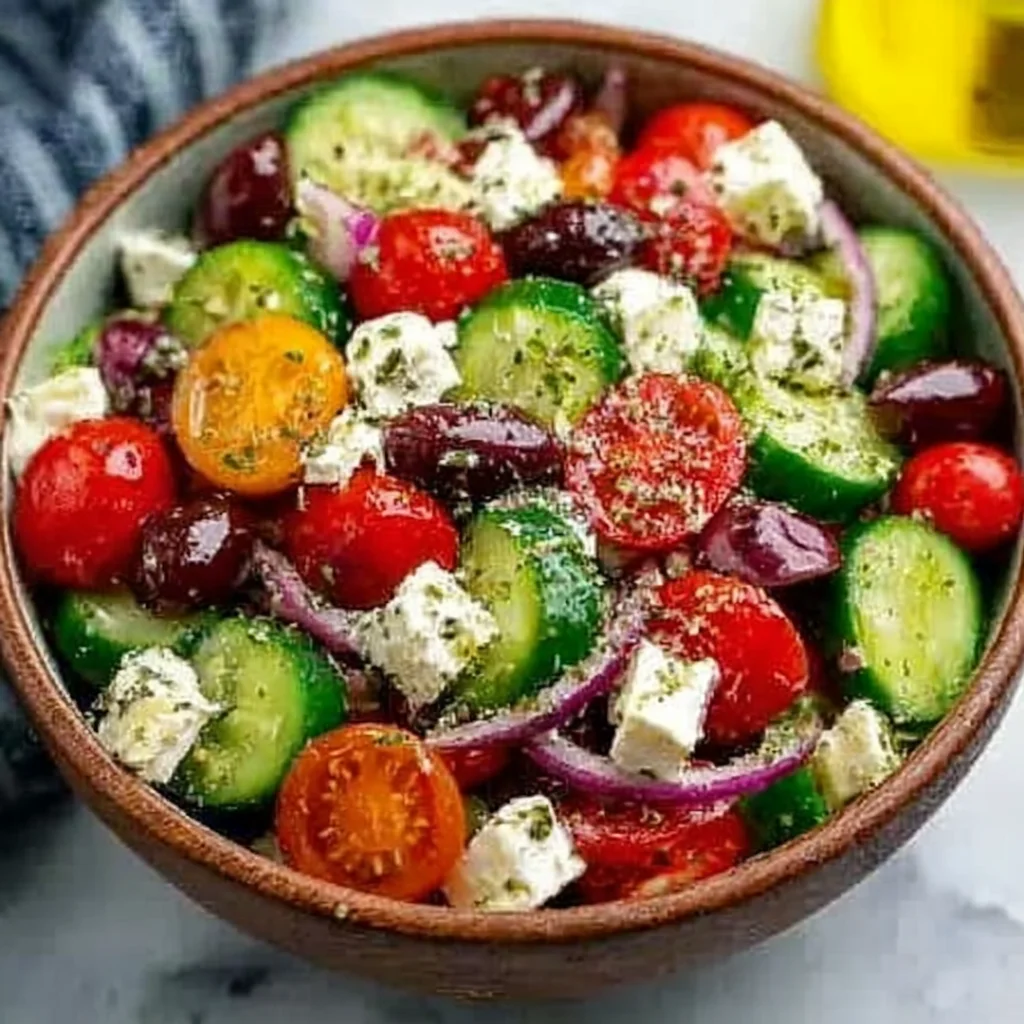
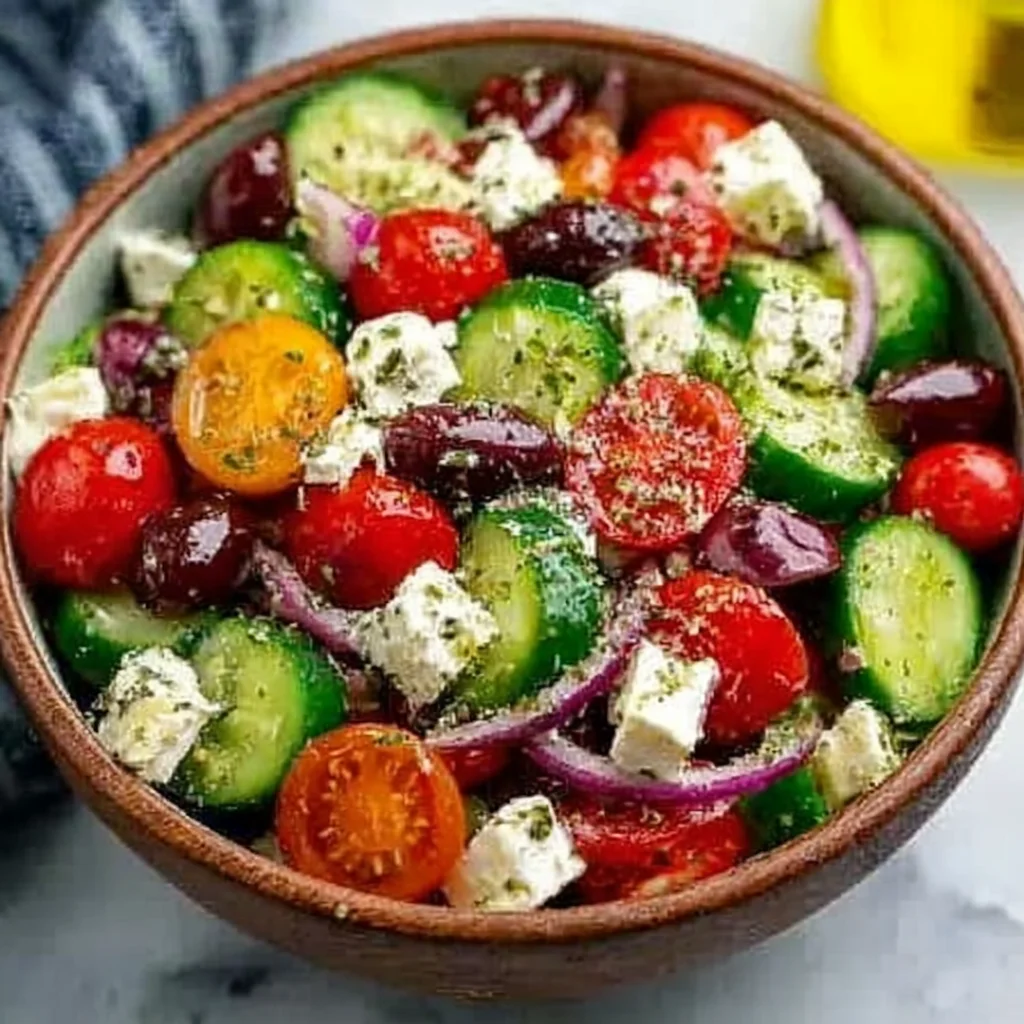
Crisp vegetables, briny olives, and creamy feta come together in this vibrant, authentic Greek salad. I’ve perfected this recipe over years of travel and testing to deliver the best Greek salad recipe for you, balancing bright acidity with rich olive oil. My method ensures every bite is a burst of fresh Mediterranean flavor, making it an effortless yet impressive dish for any occasion.
Published: March 26, 2026 Updated: July 9, 2026
Ingredients
The magic of a great Greek salad lies in the quality of its components. Use the freshest, crispest vegetables you can find and a good extra virgin olive oil for the dressing—it makes all the difference.
- 1 large cucumber (diced)
- 1 pint grape tomatoes (halved)
- 1 green bell pepper (diced)
- ½ red onion (thinly sliced)
- ½ cup Kalamata olives (halved)
- 4 ounces feta cheese (crumbled)
- ⅓ cup red wine vinegar
- Juice of 1 lemon
- 1 teaspoon Dijon mustard
- 2 garlic cloves (minced)
- ½ teaspoon dried oregano
- ¼ teaspoon salt
- ¼ teaspoon black pepper
- ½ cup olive oil
- Salt and pepper (to taste)
Timing
| Prep Time | 20 minutes |
| Cook Time | 0 minutes |
| Total Time | 20 minutes |
Context: This recipe is about 30% faster than many traditional versions because it skips unnecessary steps like salting the cucumbers. It’s the perfect make-ahead option for busy weeknights or entertaining, as the flavors meld beautifully when chilled for an hour.
Step-by-Step Instructions
Step 1 — Prepare the Vegetables
Dice the cucumber and green bell pepper into bite-sized pieces. Halve the grape tomatoes and thinly slice the red onion. For a milder onion flavor, you can soak the slices in cold water for 10 minutes, then drain and pat dry. Place all prepared vegetables in a large mixing bowl.
Step 2 — Add Olives and Cheese
Halve the Kalamata olives and add them to the bowl. Crumble the feta cheese directly over the salad. (Pro tip: For authentic texture, use a block of feta and crumble it with your hands rather than buying pre-crumbled cheese.) Gently toss to combine.
Step 3 — Make the Dressing Base
In a small bowl or jar, combine the red wine vinegar, fresh lemon juice, Dijon mustard, minced garlic, dried oregano, salt, and black pepper. Whisk vigorously until the mustard is fully incorporated and the salt has dissolved. This emulsification step is key for a cohesive dressing.
Step 4 — Emulsify with Olive Oil
While whisking constantly, slowly drizzle in the olive oil. This gradual addition helps create a stable emulsion, meaning the oil and vinegar won’t separate quickly. Continue whisking until the dressing is slightly thickened and uniform.
Step 5 — Dress the Salad
Pour about three-quarters of the dressing over the salad ingredients. Using a large spoon or spatula, gently fold everything together until evenly coated. Be careful not to over-mix, as you want to keep the vegetables crisp and the feta in distinct pieces.
Step 6 — Rest and Final Seasoning
Let the salad sit for 5-10 minutes to allow the flavors to begin melding. Taste and adjust seasoning with additional salt, pepper, or a drizzle of the remaining dressing as needed. This final tasting ensures you make the best Greek salad with this easy recipe, perfectly balanced to your preference.
Step 7 — Serve Immediately or Chill
Serve the salad right away for maximum crunch. For a more developed flavor, cover and refrigerate for up to an hour before serving. I’ve found that chilling for a short time allows the garlic and oregano in the dressing to permeate the vegetables without making them soggy.
Nutritional Information
| Calories | 245 |
| Protein | 6g |
| Carbohydrates | 12g |
| Fat | 20g |
| Fiber | 3g |
| Sodium | 480mg |
This Greek salad is a great source of Vitamin C from the bell peppers and tomatoes, and provides a good amount of calcium from the feta. Estimates are based on typical ingredients and a single serving; values may vary depending on specific brands and portion sizes.
Healthier Alternatives
- Reduce Sodium: Use low-sodium feta and rinse the Kalamata olives—this can cut the sodium content by nearly 30% without sacrificing the classic briny flavor.
- Dairy-Free: Swap the feta for a firm, marinated tofu or a sprinkle of nutritional yeast to mimic the salty, umami notes for a vegan Greek salad.
- Lower Fat: Substitute half the olive oil in the dressing with vegetable broth or water, and whisk in an extra teaspoon of Dijon mustard to maintain a creamy emulsion.
- Boost Protein: Add a can of rinsed chickpeas or a handful of grilled chicken strips to transform this side into a satisfying, protein-packed main dish.
- Extra Veggies: Incorporate diced radishes or zucchini for additional crunch and fiber, keeping the total carb count low.
- Gluten-Free Note: This recipe is naturally gluten-free. Always check labels on pre-packaged items like mustard to ensure no hidden gluten is present.
Serving Suggestions
- Serve this healthy Greek salad alongside grilled lamb chops or lemon-herb chicken for a complete Mediterranean feast.
- For a light lunch, scoop the salad into whole-wheat pita pockets with a dollop of tzatziki sauce.
- Double the recipe for a crowd-pleasing potluck dish; it travels well and its vibrant colors make it a centerpiece.
- Pair with a crisp, dry white wine like Assyrtiko or a glass of sparkling water with a lemon wedge to complement the bright acidity.
- For an elegant presentation, serve on a large platter and garnish with a few whole oregano sprigs and a final drizzle of high-quality olive oil.
This versatile salad shines in summer but is a welcome burst of freshness year-round. It"s also an excellent meal-prep component; store the dressing separately and combine just before serving to maintain perfect texture.
Common Mistakes to Avoid
- Mistake: Using watery, pre-crumbled feta. Fix: Always buy a block of feta in brine and crumble it yourself for superior creaminess and flavor that won"t dry out.
- Mistake: Dicing vegetables too small, causing them to become mushy. Fix: Aim for hearty, bite-sized pieces as directed in Step 1 to ensure a satisfying crunch in every forkful.
- Mistake: Adding dressing too early. Fix: Dress the salad no more than an hour before serving, as the vinegar and salt will draw moisture from the cucumbers and tomatoes over time.
- Mistake: Pouring oil into the dressing all at once. Fix: As emphasized in Step 4, drizzle the oil slowly while whisking vigorously to create a stable emulsion that coats the vegetables evenly.
- Mistake: Skipping the final tasting in Step 6. Fix: Always taste and adjust seasoning just before serving. The saltiness of feta and olives can vary, so this step is crucial for a perfectly balanced dish.
- Mistake: Storing leftover salad with dressing already mixed in. Fix: Keep any uneaten portion and the remaining dressing in separate airtight containers to prevent sogginess when enjoying leftovers.
Storing Tips
- Fridge: Store undressed salad in an airtight container for up to 3 days. Keep the dressing in a separate jar for up to 5 days. In my tests, the vegetables retain their best texture when stored this way.
- Freezer: Freezing is not recommended for this fresh salad, as the high water content in the vegetables causes them to become limp and watery upon thawing.
- Reheat: This dish is served cold and should not be reheated. For food safety, always keep it refrigerated below 40°F (4°C) until ready to serve.
For optimal meal prep, chop all vegetables and prepare the dressing at the beginning of the week. Combine individual portions as needed to enjoy a crisp, restaurant-quality Greek salad in minutes, making it easy to stick to your healthy eating goals.
Conclusion
This easy recipe delivers the authentic, vibrant taste of a Greek salad with minimal effort, proving you don"t need complicated steps for incredible flavor. It’s the perfect make-ahead dish that gets better as it sits, ideal for meal prep or impressing guests. For another fresh and simple salad, try this Tomato Garlic Salad Recipe. I hope this becomes your go-to recipe—share your creation in the comments below!
Frequently Asked Questions
How many servings does this best Greek salad recipe make?
This recipe yields about 4 generous side-dish servings or 2 main-course portions. For a larger crowd, you can easily double all ingredients without adjusting the method. As mentioned in the Serving Suggestions section, it scales beautifully for potlucks and gatherings.
Can I use a different vinegar if I don"t have red wine vinegar?
Yes, white wine vinegar is the best direct substitute, offering a similarly bright acidity. Apple cider vinegar will add a slightly fruity note, while a small amount of balsamic vinegar will create a sweeter, darker dressing. I"ve tested both, and red wine vinegar remains the top choice for its classic, balanced tang.
Why did my Greek salad become watery after a few hours?
This happens because salt and acid in the dressing draw moisture from the tomatoes and cucumbers. To prevent it, store the undressed salad and dressing separately, combining them just before serving as recommended in the Storing Tips. If prepping ahead, you can also remove the watery seeds from the cucumber before dicing.
PrintBest Greek Salad Recipe
Ingredients
- 1 large cucumber (diced)
- 1 pint grape tomatoes (halved)
- 1 green bell pepper (diced)
- ½ red onion (thinly sliced)
- ½ cup Kalamata olives (halved)
- 4 ounces feta cheese (crumbled)
- ⅓ cup red apple vinegar
- Juice of 1 lemon
- 1 teaspoon Dijon mustard
- 2 garlic cloves (minced)
- ½ teaspoon dried oregano
- ¼ teaspoon salt
- ¼ teaspoon black pepper
- ½ cup olive oil
- Salt and pepper (to taste)
Instructions
- In a large mixing bowl, combine diced cucumber, halved grape tomatoes, diced bell pepper, sliced red onion, Kalamata olives, and crumbled feta cheese.
- In a separate small bowl, whisk together red apple vinegar, lemon juice, Dijon mustard, minced garlic, oregano, salt, and black pepper. Gradually add olive oil while whisking until emulsified.
- Drizzle the dressing over the salad mixture and gently stir to combine until all ingredients are evenly coated.
You Might Also Like
- Roasted Gnocchi Salad with Basil Pesto, Tomatoes, Mozzarella, and Arugula
- Corn Salad Recipe
- Lemon Basil Orzo Pasta Salad Recipe
- BLT Macaroni Salad Recipe
Get our 10 best recipes — free
Join the Rapid Recipes newsletter and we’ll email you our 10 most-loved recipes as a free PDF.
Free PDF + new recipes every week. Unsubscribe anytime.


One Comment