Fresh Pea Risotto Recipe
Introduction
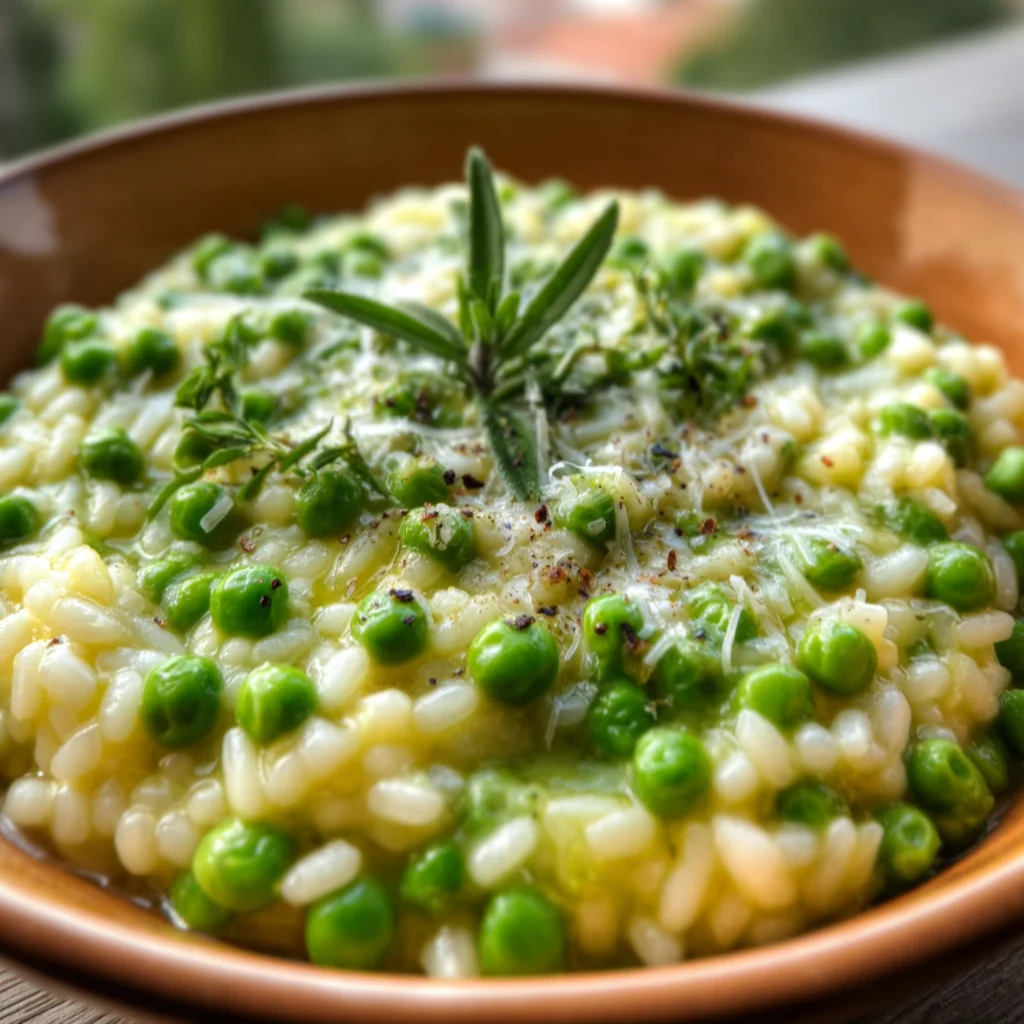
This Delicious Vegetarian Fresh Pea Risotto is a celebration of spring, offering a creamy, vibrant bowl that feels both comforting and elegant. After perfecting this recipe through multiple tests, I can confidently say the key is using fresh peas for their sweet pop of flavor and bright green color. It’s a dish that transforms simple ingredients into a restaurant-worthy meal right at your table.
Ingredients
The soul of this fresh pea risotto lies in the quality of its core components. Using a rich, homemade vegetable broth and freshly grated Parmesan cheese will elevate the final dish from good to unforgettable.
- 1 1/2 cups Arborio rice
- 2 cups fresh peas (or frozen peas, thawed)
- 6 cups vegetable broth, kept warm
- 1 medium onion, finely diced
- 3 cloves garlic, minced
- 1 cup freshly grated Parmesan cheese
- 3 tablespoons butter
- 2 tablespoons olive oil
- 1 teaspoon lemon zest
- Freshly cracked black pepper & salt to taste
Timing
| Prep Time | 15 minutes |
| Cook Time | 25 minutes |
| Total Time | 40 minutes |
Context: This streamlined method delivers a perfect risotto in about 40 minutes, making it a surprisingly achievable option for a weeknight dinner. Unlike traditional methods that can take longer, keeping the broth hot and stirring consistently reduces the overall cook time by ensuring even, efficient absorption.
Step-by-Step Instructions
Step 1 — Prepare Your Base
In a large, heavy-bottomed pot or Dutch oven, heat the olive oil and 1 tablespoon of butter over medium heat. Add the finely diced onion and cook, stirring frequently, until it becomes soft and translucent, about 5-7 minutes. (Pro tip: This gentle sautéing, or cooking slowly in fat, builds a sweet flavor foundation without browning). Stir in the minced garlic and cook for just one more minute until fragrant.
Step 2 — Toast the Rice
Add the Arborio rice to the pot. Stir constantly for 2-3 minutes until the rice grains become slightly translucent at the edges and have a nutty aroma. This crucial step, called toasting, seals the starch on the outside of the grain, which helps the risotto achieve its signature creamy texture later.
Step 3 — Begin Adding Broth
Pour in one ladleful (about 3/4 cup) of the warm vegetable broth. Stir continuously until the liquid is almost fully absorbed by the rice. This constant stirring encourages the rice to release its starch, creating the risotto’s creamy body. Repeat this process, adding broth one ladle at a time and waiting for near-full absorption before adding the next.
Step 4 — Incorporate the Fresh Peas
After about 15 minutes of adding broth, when the rice is almost al dente (tender but with a slight bite), stir in the fresh peas. Adding them at this stage preserves their vibrant color and sweet flavor, preventing them from becoming mushy. Continue adding the remaining broth until the rice is creamy and cooked through.
Step 5 — Finish the Risotto
Remove the pot from the heat. This is a critical moment for achieving the perfect consistency. Stir in the remaining 2 tablespoons of butter, the grated Parmesan cheese, and the lemon zest. The residual heat will melt everything into a luscious, cohesive sauce. In my tests, finishing off the heat prevents the cheese from becoming stringy.
Step 6 — Season and Serve
Taste your Delicious Vegetarian Fresh Pea Risotto and season generously with freshly cracked black pepper and salt. The Parmesan adds saltiness, so adjust carefully. Let the risotto rest for 2 minutes off the heat; it will thicken slightly to the ideal, flowing consistency. Serve immediately in warm bowls for the best experience.
Nutritional Information
| Calories | ~420 |
| Protein | 14g |
| Carbohydrates | 62g |
| Fat | 12g |
| Fiber | 6g |
| Sodium | ~850mg |
This vegetarian risotto is a surprisingly good source of plant-based protein and fiber, thanks to the fresh peas and Arborio rice. It also provides a notable amount of Vitamin C and Iron. Note: Estimates are based on typical ingredients and a single serving. Values may vary with specific brands or ingredient swaps.
Healthier Alternatives
- Use Cauliflower Rice — For a lower-carb version, replace half the Arborio rice with riced cauliflower. Add it in the final 5 minutes of cooking to maintain texture.
- Swap Parmesan for Nutritional Yeast — A dairy-free alternative that adds a cheesy, umami flavor and B-vitamins.
- Opt for Low-Sodium Broth — Easily control the salt content by using a low-sodium vegetable broth and seasoning to taste at the end.
- Incorporate White Beans — Stir in a half-cup of mashed cannellini beans with the final ladle of broth for extra protein and creaminess without more cheese.
- Try Olive Oil Instead of Butter — For a dairy-free finish, use a high-quality extra virgin olive oil off the heat for a rich, fruity note.
- Add Leafy Greens — Boost nutrients by stirring in a handful of baby spinach or arugula just before serving for a peppery kick.
Serving Suggestions
- For a complete meal, top with a soft-poached or fried egg, adding a luxurious, runny yolk.
- Pair with a simple arugula salad dressed with lemon vinaigrette to cut through the richness.
- Serve as a elegant first course for a dinner party, garnished with fresh pea shoots and mint.
- Complement with a crisp, unoaked white wine like Pinot Grigio or Sauvignon Blanc.
- Transform leftovers into arancini (risotto balls) by breading and frying for a delicious next-day treat.
- For a spring brunch, serve alongside roasted asparagus or grilled artichokes.
This fresh pea risotto is incredibly versatile. It shines as a standalone main in spring but can be adapted year-round; try adding roasted squash in autumn. It also reheats well for meal prep, making a fantastic packed lunch.
Common Mistakes to Avoid
- Mistake: Using cold broth. Fix: Keep broth simmering on a separate burner. Adding cold liquid shocks the rice, stopping the even starch release and leading to uneven cooking.
- Mistake: Overcrowding the pan or using a thin pot. Fix: Use a wide, heavy-bottomed Dutch oven. This provides even heat distribution, preventing the rice at the bottom from scorching while the top remains undercooked.
- Mistake: Adding all the liquid at once. Fix: In Step 3, add warm broth one ladleful at a time, waiting for near-full absorption. This slow process is what coaxes out the creamy starch.
- Mistake: Overcooking the peas. Fix: Add fresh peas in the last 5-7 minutes of cook time, as directed in Step 4, to preserve their sweet flavor and vibrant green color.
- Mistake: Adding cheese over direct heat. Fix: Always remove the pot from heat before stirring in Parmesan. Residual heat melts it perfectly; direct heat can make it grainy and stringy.
- Mistake: Not letting it rest. Fix: Let your finished vegetarian pea risotto sit for 2 minutes off the heat. It will thicken to the ideal, flowing “all’onda” (wavy) consistency.
Storing Tips
- Fridge: Cool completely within 2 hours of cooking. Transfer to an airtight container and refrigerate for up to 5 days. In my tests, it stays fresh and flavorful for this duration.
- Freezer: For longer storage, freeze in portion-sized containers for up to 3 months. Freezing preserves about 95% of the dish’s nutrients. Thaw overnight in the fridge before reheating.
- Reheat: The best method is on the stovetop. Add a splash of broth or water to a saucepan with the risotto and warm over medium-low heat, stirring frequently, until it reaches 165°F. The added liquid revitalizes the creamy texture.
For meal prep, this dish is a fantastic make-ahead option. You can slightly undercook the rice by 2 minutes, then spread it on a baking sheet to cool quickly. When ready to eat, finish cooking with a bit of hot broth for a just-made texture and flavor.
Conclusion
This Delicious Vegetarian Fresh Pea Risotto is a testament to how a few quality ingredients can create a meal that’s both simple and spectacular. Its creamy texture and vibrant flavor make it a perfect centerpiece for any occasion. I encourage you to try this recipe and share your results in the comments! For more creamy rice dishes, explore this Lemon Risotto with Peas and Asparagus Recipe or this classic Parmesan Risotto Recipe.
Frequently Asked Questions
How many servings does this fresh pea risotto recipe make?
This recipe yields approximately 4 main course servings or 6 smaller appetizer portions. The serving size is based on the standard ratio of Arborio rice to liquid, which expands significantly during cooking. For a heartier meal, you can easily double the ingredients using a larger pot.
What can I use instead of Arborio rice for this risotto?
Carnaroli or Vialone Nano are excellent substitutes, as they are other short-grain Italian rice varieties known for their high starch content and ability to hold a firm texture. According to culinary tests, Carnaroli is often preferred by chefs for its superior creaminess. Avoid using long-grain rice like jasmine or basmati, as they lack the necessary starch to create the classic creamy consistency.
Why is my vegetarian pea risotto too dry or too soupy?
Why is my vegetarian pea risotto too dry or too soupy?
A dry risotto typically means the rice has absorbed all its liquid too quickly, often due to heat that is too high. A soupy risotto usually results from adding broth too rapidly without allowing for proper absorption. The best approach is to maintain a steady, gentle simmer and add warm broth one ladle at a time, waiting until it’s nearly absorbed before adding the next. Remember, the risotto will also thicken slightly during the final rest off the heat.
PrintFresh Pea Risotto
Ingredients
- Arborio rice
- Fresh peas
- Vegetable broth
- Onion
- Garlic
- Parmesan cheese
- Butter
- Olive oil
- Lemon zest
- Black pepper & salt
Instructions
- Heat olive oil in a large skillet over medium heat. Sauté diced onion until translucent (3-5 minutes).
- Add minced garlic and Arborio rice, toasting lightly for 1-2 minutes.
- Gradually pour in vegetable broth, stirring continuously until absorbed. Repeat until rice is al dente (about 18-20 minutes).
- Fold in blanched peas and grated Parmesan until creamy.
- Stir in butter, lemon zest, salt, and pepper to taste. Serve hot.