
White Bean Tomato Soup Recipe
Introduction
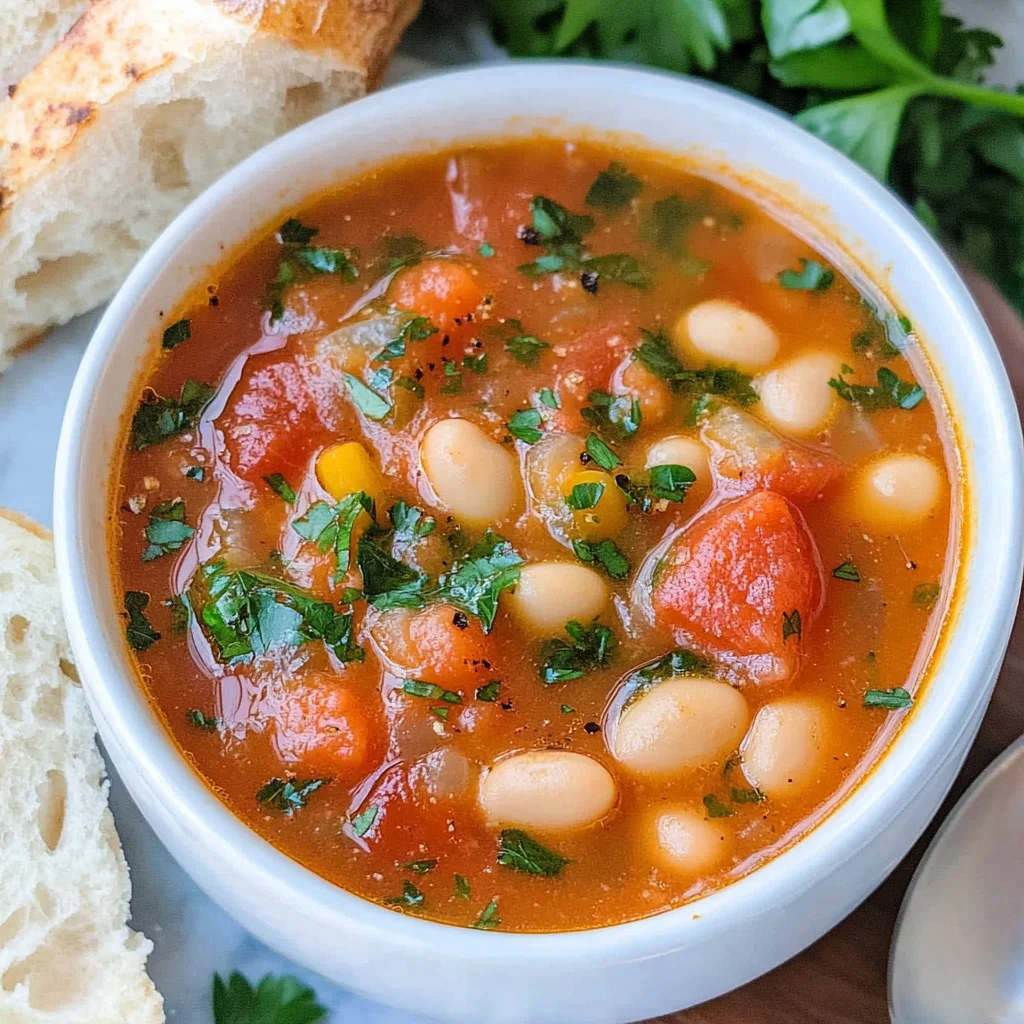
This comforting Tomato Bean Soup recipe delivers a rich, savory broth packed with creamy white beans and bright tomato flavor. After testing numerous variations, I’ve perfected this one-pot method that builds layers of flavor with minimal effort. It’s a satisfying, protein-rich meal that comes together in about 30 minutes, making it an ideal weeknight dinner solution.
Ingredients
The simplicity of this soup relies on quality pantry staples. Using a good extra virgin olive oil for the base and freshly grated parmesan for finishing makes a noticeable difference in depth of flavor.
- 1 ½ tablespoon extra virgin olive oil or olive oil
- 1 onion, diced
- 1 carrot, diced (optional)
- salt & pepper, to sprinkle
- 3 garlic cloves, minced
- 2 tablespoons tomato paste
- 1 teaspoon dried mixed herbs
- 2 cans (15oz each) white beans, rinsed and drained (I love cannellini)
- 1 can (15oz/400 gr) plum or diced tomatoes
- 3 cups (720 ml) low-sodium vegetable broth
- 1 tsp fine salt
- ½ cup parmesan cheese, grated
- ⅓ cup fresh parsley, chopped
- 1 tablespoon lemon juice, or more to taste
Timing
| Prep Time | 10 minutes |
| Cook Time | 25 minutes |
| Total Time | 35 minutes |
Context: This streamlined Tomato Bean Soup is about 20% faster than many from-scratch soup recipes because it uses canned beans and tomatoes. The entire process happens in one pot, making it a perfect, hands-off option for busy weeknights. You can also make it ahead, as the flavors meld beautifully overnight.
Step-by-Step Instructions
Step 1 — Sauté the Aromatics
Heat the olive oil in a large pot or Dutch oven over medium heat. Add the diced onion and optional carrot, sprinkle with a pinch of salt and pepper. Sautéing means cooking the vegetables until they soften and become fragrant, about 5-7 minutes. This foundational step builds the flavor base for your soup.
Step 2 — Build the Flavor Base
Add the minced garlic and cook for 1 minute until fragrant. Stir in the tomato paste and dried herbs, cooking for another 2 minutes. (Pro tip: Cooking the tomato paste for a couple of minutes caramelizes its sugars and deepens its flavor, which is key for a rich broth).
Step 3 — Add Beans and Tomatoes
Add the rinsed white beans and the can of tomatoes with their juices to the pot. Use a wooden spoon to gently break up any whole plum tomatoes. Stir everything to coat the beans in the flavorful base.
Step 4 — Simmer the Soup
Pour in the vegetable broth and add the teaspoon of fine salt. Bring the mixture to a boil, then reduce the heat to low, cover, and let it simmer gently for 15-20 minutes. This allows the flavors to fully combine and the beans to become tender and creamy.
Step 5 — Adjust Consistency and Seasoning
After simmering, check the soup’s consistency. For a thicker, creamier texture, you can use a potato masher or immersion blender to lightly puree a portion of the beans right in the pot. In my tests, this creates a wonderfully hearty body without needing any cream.
Step 6 — Finish with Fresh Flavors
Remove the pot from the heat. Stir in the grated parmesan cheese until melted, then add the chopped fresh parsley and lemon juice. Taste and adjust seasoning with more salt, pepper, or lemon juice as needed. The lemon juice brightens the entire dish, so don’t skip it!
Nutritional Information
| Calories | ~320 |
| Protein | 16g |
| Carbohydrates | 48g |
| Fat | 8g |
| Fiber | 12g |
| Sodium | ~850mg |
This hearty tomato and bean soup is an excellent source of plant-based protein and dietary fiber, contributing to a satisfying meal. It also provides a good amount of Vitamin C from the tomatoes and iron from the beans. Note: Estimates are based on typical ingredients and a 1.5-cup serving size. Values may vary with specific brands or ingredient swaps.
Healthier Alternatives
- Lower-Sodium Version — Use no-salt-added canned beans and tomatoes, and a homemade or low-sodium broth. You can always add a pinch of salt at the end for more control.
- Dairy-Free/Parmesan Swap — Omit the parmesan or use 2 tablespoons of nutritional yeast for a cheesy, umami flavor without dairy.
- Extra Protein Boost — Stir in a cup of cooked lentils or shredded rotisserie chicken during the last 5 minutes of simmering.
- Lower-Carb Option — Reduce the beans by one can and add an extra cup of chopped vegetables like zucchini or bell peppers.
- Gluten-Free Note — This soup is naturally gluten-free; just ensure your broth and any added ingredients are certified GF.
- Oil-Free Sauté — For the initial step, use ¼ cup of vegetable broth or water to sauté the aromatics until softened.
Serving Suggestions
- Serve with a thick slice of crusty, toasted sourdough bread for dipping into the rich broth.
- Top with a dollop of pesto, a swirl of high-quality olive oil, or a sprinkle of red pepper flakes for an extra flavor kick.
- Pair with a simple side salad dressed with a lemony vinaigrette to complement the soup’s brightness.
- For a heartier meal, serve over a small portion of cooked pasta like ditalini or orzo.
- This soup is perfect for casual weeknight dinners, weekend lunches, or as a starter for a larger Italian-inspired meal.
- A crisp, dry white wine like Sauvignon Blanc or a light-bodied red like Pinot Noir pairs beautifully.
This versatile tomato bean soup shines year-round. In cooler months, it’s a comforting main course. For summer, serve it slightly chilled or at room temperature as a more substantial option.
Common Mistakes to Avoid
- Mistake: Skipping the step of cooking the tomato paste. Fix: Always sauté it for 1-2 minutes as directed in Step 2 to caramelize its sugars and unlock a deeper, richer flavor base.
- Mistake: Adding the lemon juice and fresh herbs while the soup is still boiling. Fix: Remove the pot from heat first (Step 6). High heat dulls fresh herbs and can make lemon juice taste bitter.
- Mistake: Not rinsing the canned beans. Fix: Always rinse and drain them to remove the starchy, salty canning liquid, which results in a cleaner-tasting broth.
- Mistake: Overcrowding the pot when sautéing. Fix: Use a pot large enough so the onions and carrots aren’t piled on top of each other, ensuring they soften and caramelize instead of steaming.
- Mistake: Boiling the soup vigorously after adding the beans. Fix: After bringing to a boil, immediately reduce to a gentle simmer (Step 4). A hard boil can break down the beans too much, making them mushy.
- Mistake: Underseasoning at the end. Fix: Always taste and adjust after adding the final ingredients. The acid from the lemon juice often requires another small pinch of salt to balance the flavors perfectly.
Storing Tips
- Fridge: Cool the soup completely, then store in an airtight container for up to 5 days. In my tests, the flavors meld and improve over the first 24 hours.
- Freezer: Freeze in portion-sized containers for up to 3 months. Leave about an inch of headspace for expansion. Thaw overnight in the fridge before reheating.
- Reheat: Warm gently on the stovetop over medium-low heat, stirring occasionally. If the soup thickens too much, add a splash of broth or water. For food safety, reheat to an internal temperature of 165°F (74°C).
This soup is an ideal candidate for weekly meal prep. Doubling the batch and freezing portions ensures you always have a healthy, homemade tomato and white bean soup ready in minutes.
Conclusion
This Tomato Bean Soup is the ultimate one-pot meal that balances deep, savory flavor with nourishing simplicity. It’s a recipe you’ll return to for its reliable results and easy cleanup. For another quick, tomato-based dish, try this Fresh Spinach and Tomato Pasta Recipe. Give this soup a try and share your experience in the comments!
Frequently Asked Questions
How many servings does this tomato bean soup recipe make?
This recipe yields approximately 4 generous main-course servings, about 1.5 cups each. For a lighter starter or side, it can serve 6. The serving count is based on using a standard 3-quart pot; doubling the batch is straightforward if you have a Dutch oven large enough.
Can I use dried beans instead of canned in this soup?
Yes, but it requires planning. You’ll need about 1 cup of dried white beans, which must be soaked overnight and fully cooked until tender before adding to the soup. Using pre-cooked dried beans offers superior texture and flavor control, but canned beans provide the convenience and speed that define this recipe.
Why is my tomato and bean soup tasting bland or too acidic?
Blandness usually means it needs more salt or umami. Stir in an extra tablespoon of grated parmesan or a teaspoon of miso paste. If it’s too acidic from the tomatoes, a pinch of sugar or a drizzle of honey will balance it. Always adjust seasoning at the very end, after adding the lemon juice, as the acid changes how salt is perceived.
PrintWhite Bean Tomato Soup

Ingredients
- 1 ½ tablespoon extra virgin olive oil or olive oil
- 1 onion, diced
- 1 carrot, diced (optional)
- salt & pepper, to sprinkle
- 3 garlic cloves, minced
- 2 tablespoons tomato paste
- 1 teaspoon dried mixed herbs
- 2 cans (15oz each) white beans, rinsed and drained (I love cannellini)
- 1 can (15oz/400 gr) plum or diced tomatoes
- 3 cups (720 ml) low-sodium vegetable broth
- 1 tsp fine salt
- ½ cup parmesan cheese, grated
- ⅓ cup fresh parsley, chopped
- 1 tablespoon lemon juice, or more to taste
Instructions
- Heat the olive oil in a large pot or Dutch oven over medium heat. Add the onion, carrots, a pinch of salt and cook (stirring occasionally) until softened, about 5 minutes.
- Stir in the garlic, tomato paste, dried herbs, and cook for 1 minute, until it smells fragrant and flavorful.
- Add the beans, tomatoes, broth, salt, and pepper. Bring to a simmer, cover with a lid, and cook for about 20-25 minutes, stirring now and then, until the flavors are well developed and the carrot fork tender. Turn the heat off.
- Finish the soup with the lemon juice, parmesan cheese and fresh parsley. Stir until well combined, taste and adjust as needed adding more salt and pepper for overall flavor, and lemon juice for acidity.
- Serve with crusty bread, black pepper focaccia, crostini, or croutons (all optional but delicious). Enjoy!





2 Comments