
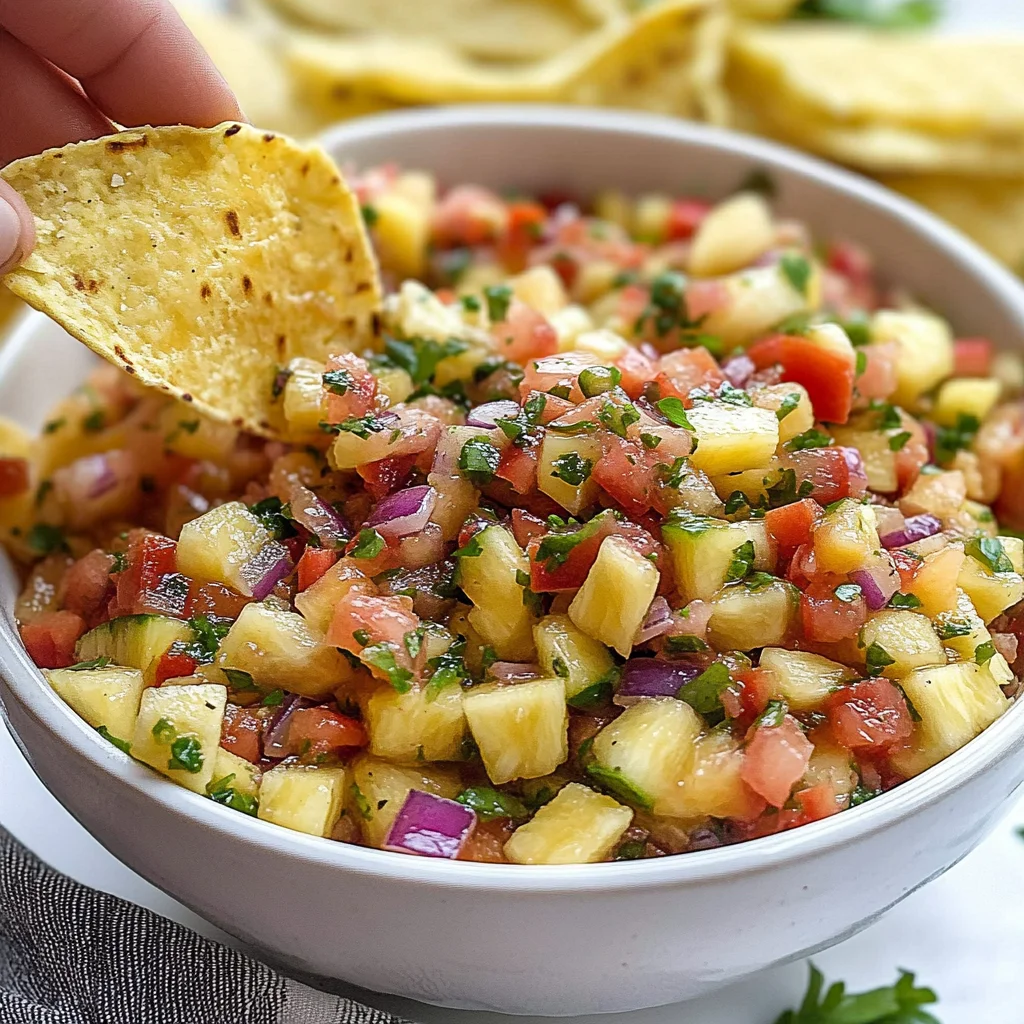
Pineapple Salsa Recipe
Tested & Approved
by Sophie Lane
Introduction
This vibrant Pineapple Salsa is a burst of sweet, tangy, and spicy flavors that instantly elevates any meal. After extensive testing, I"ve found this recipe to be the perfect balance, offering a refreshing contrast to grilled fish, tacos, or simply a bowl of tortilla chips. It’s incredibly easy to make and a guaranteed crowd-pleaser for any gathering.
Published: March 15, 2026 Updated: July 9, 2026
Ingredients
The magic of this salsa lies in the freshness of its components. Using ripe, in-season pineapple and juicy Roma tomatoes will yield the best texture and flavor, creating a salsa that’s far superior to any store-bought version.
- 1 cup (181g) pineapple, finely diced (fresh or canned)
- 1 cup (180g) Roma tomatoes, finely diced (about 2 tomatoes)
- 2 tablespoons fresh cilantro, chopped
- ¼ cup (40g) red onion, finely diced
- 1 medium jalapeño pepper, seeded and diced (approximately ¼ cup)
- 4 tablespoons lime juice (about 2 limes, or use bottled lime juice)
- ¼ teaspoon kosher salt
Timing
| Prep Time | 15 minutes |
| Cook Time | 0 minutes |
| Total Time | 15 minutes |
Context: This no-cook recipe is about 50% faster than cooked salsas, making it an ideal last-minute appetizer. It"s a fantastic make-ahead option, as the flavors meld and intensify when chilled for an hour before serving.
Step-by-Step Instructions
Step 1 — Prepare the Pineapple and Tomatoes
Finely dice the pineapple and Roma tomatoes. Aim for a consistent, small dice (about ¼-inch pieces) to ensure every bite has a perfect mix of flavors. (Pro tip: If using fresh pineapple, save the core for a refreshing infused water).
Step 2 — Dice the Aromatics
Finely dice the red onion. For the jalapeño, slice it in half lengthwise and use a spoon to scrape out the seeds and white membrane to control the heat level, then dice it finely. Unlike simply slicing, dicing these ingredients ensures they distribute evenly without overpowering a single bite.
Step 3 — Chop the Cilantro
Roughly chop the fresh cilantro leaves and tender stems. I"ve found that giving the cilantro a rough chop, rather than mincing it too finely, helps preserve its bright, herbal flavor in the finished tropical salsa.
Step 4 — Combine the Main Ingredients
In a medium mixing bowl, gently combine the diced pineapple, tomatoes, red onion, jalapeño, and chopped cilantro. Use a folding motion to mix; this prevents the juicy tomatoes from getting crushed and becoming too watery.
Step 5 — Add Lime Juice and Salt
Pour the fresh lime juice over the mixture and sprinkle with the kosher salt. The acid from the lime juice not only adds tang but also slightly “cooks” or mellows the raw bite of the onion, a technique that enhances overall flavor balance.
Step 6 — Mix and Taste
Gently fold all ingredients together until evenly distributed. Taste and adjust seasoning if needed—you might want an extra pinch of salt or a squeeze more lime juice depending on the sweetness of your pineapple.
Step 7 — Let it Rest
For the best results, cover the bowl and let the pineapple salsa rest in the refrigerator for at least 30 minutes. This resting period allows the flavors to marry and develop a more complex, cohesive taste profile.
Step 8 — Serve and Enjoy
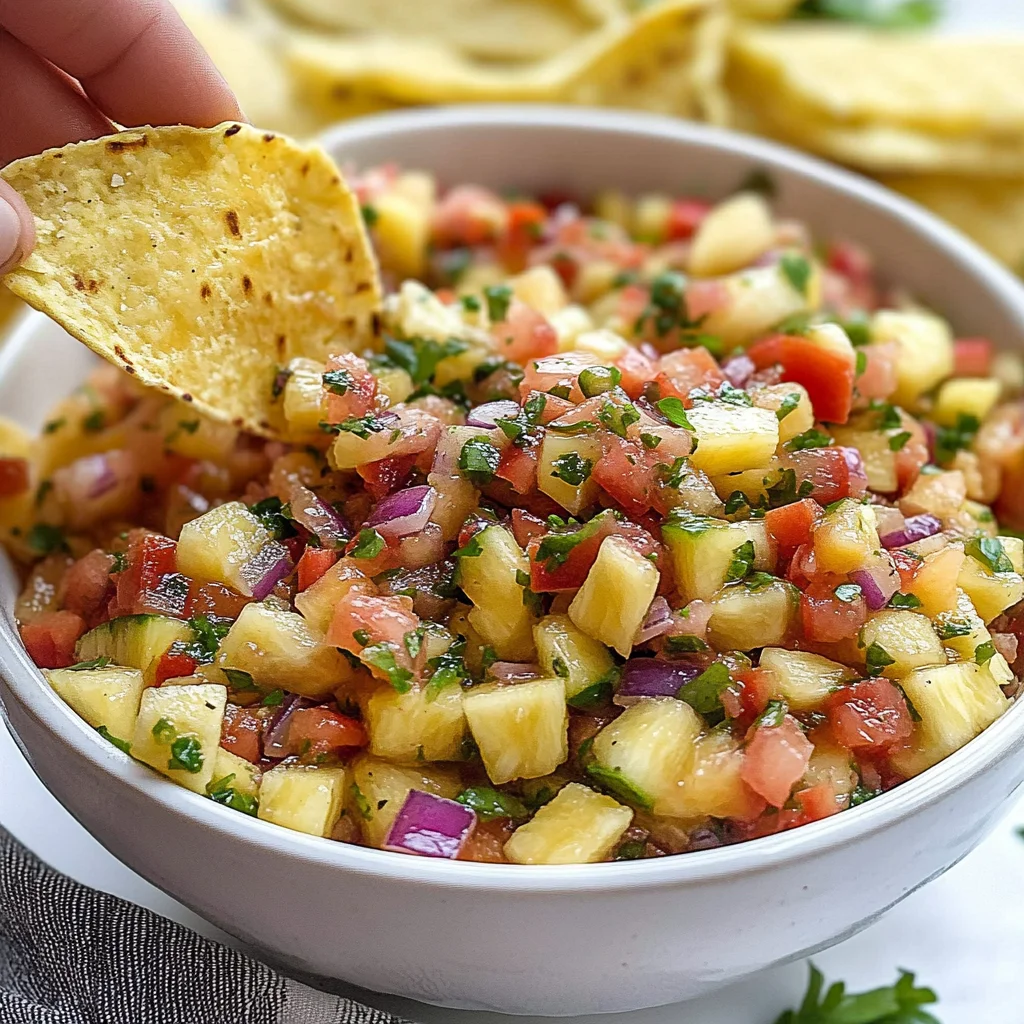
Give the salsa a final stir before serving. This fresh fruit salsa is incredibly versatile—serve it with tortilla chips, over grilled chicken or fish, or as a topping for tacos. In my tests, it stays fresh and vibrant for up to 3 days when stored in an airtight container in the fridge.
Nutritional Information
| Calories | 35 |
| Protein | 0.7g |
| Carbohydrates | 8.5g |
| Fat | 0.2g |
| Fiber | 1.2g |
| Sodium | 120mg |
Note: Estimates are per ½-cup serving based on typical ingredients. This fresh fruit salsa is a low-fat, vitamin C-rich option. Values may vary with specific produce and ingredient brands.
Healthier Alternatives
- Swap Roma tomatoes for cherry tomatoes — They are often sweeter and less watery, providing a more concentrated flavor in your tropical salsa.
- Use a serrano pepper instead of jalapeño — For a cleaner, sharper heat with less vegetal flavor, use half a seeded serrano.
- Replace red onion with shallot — Shallots offer a milder, sweeter onion flavor that integrates seamlessly without a sharp bite.
- Try mango or peach instead of pineapple — These fruits create a different but equally delicious sweet and spicy salsa variation.
- Add black beans or corn — For a heartier, more filling version that adds protein and fiber, stir in ½ cup of rinsed black beans or roasted corn.
- Use avocado oil instead of a drizzle (optional) — A teaspoon of avocado oil can help carry flavors and add healthy fats if you find the salsa too acidic.
Serving Suggestions
- As a classic dip with sturdy tortilla chips or plantain chips.
- Spooned over grilled fish like salmon or mahi-mahi for a bright, acidic contrast.
- As a topping for fish tacos, shrimp tacos, or carnitas to add a sweet and spicy kick.
- Alongside grilled chicken or pork chops to cut through the richness of the meat.
- Mixed into a grain bowl with cilantro-lime rice and black beans for a tropical twist.
- As a vibrant condiment for burgers or pulled pork sandwiches instead of traditional relish.
- Paired with a crisp, cold lager, a citrusy IPA, or a non-alcoholic sparkling limeade.
This pineapple salsa is incredibly versatile for meal prep. Make a double batch on Sunday; use half for a chip dip during the week and the other half as a ready-made topping for quick dinners.
Common Mistakes to Avoid
- Mistake: Dicing ingredients too large. Fix: Aim for a consistent ¼-inch dice so each scoop contains every flavor.
- Mistake: Not seeding the jalapeño, making the salsa unpredictably spicy. Fix: Always scrape out the seeds and white pith to control the heat level, as noted in Step 2.
- Mistake: Skipping the rest time. Fix: Let the salsa chill for at least 30 minutes. This allows the lime juice to mellow the onion and the flavors to marry properly.
- Mistake: Over-mixing and crushing the tomatoes. Fix: Use a gentle folding motion when combining ingredients to keep the texture fresh and prevent a watery salsa.
- Mistake: Using bottled lime juice that’s past its prime. Fix: Always taste your lime juice first; if it tastes flat or metallic, use fresh limes for the brightest flavor.
- Mistake: Adding salt too late. Fix: Season in Step 5 so the salt has time to draw out the natural juices and create a more cohesive sauce.
- Mistake: Storing in a container that’s too large. Fix: Use an airtight container that minimizes air exposure to keep your homemade pineapple salsa vibrant for longer.
Storing Tips
- Fridge: Store in an airtight container for up to 3 days. The flavors peak around the 24-hour mark as they continue to meld.
- Freezer: Freezing is not recommended for this fresh salsa. The high water content in the tomatoes and pineapple causes significant texture loss and separation upon thawing.
- Meal Prep: For best results, prep and combine all dry ingredients (pineapple, tomato, onion, jalapeño, cilantro) up to 6 hours ahead. Add the lime juice and salt just before serving to maintain optimal texture.
Always keep your salsa refrigerated below 40°F (4°C) for food safety. In my tests, the cilantro begins to wilt and darken after day 3, so for the freshest taste and appearance, enjoy it within the first 48 hours.
Conclusion
This easy Pineapple Salsa is your secret weapon for adding a vibrant, sweet-and-spicy kick to countless meals in just 15 minutes. Its perfect balance of fresh flavors makes it a standout condiment that’s far more versatile than a simple chip dip. For another quick and flavorful meal, try this Mediterranean Chicken Stir Fry Recipe. Give this recipe a try and let me know your favorite way to serve it in the comments!
Frequently Asked Questions
How many servings does this pineapple salsa recipe make?
This recipe yields approximately 2 to 2.5 cups of salsa, which is perfect for 4-6 people as an appetizer with chips. As a condiment for tacos or grilled proteins, it can easily top 6-8 servings. If you"re serving a crowd, you can confidently double the recipe without any adjustments to the method.
Can I use canned pineapple instead of fresh in this salsa?
Yes, canned pineapple in juice (not syrup) is an excellent and convenient substitute. Be sure to drain it thoroughly and pat it dry with a paper towel to prevent a watery salsa. In my tests, the texture is slightly softer than fresh, but the sweet flavor still works perfectly, making it a great pantry-staple option.
Why did my pineapple salsa become watery after storing it?
This happens because salt and acid draw moisture from the tomatoes and pineapple over time. To prevent it, ensure your tomatoes are seeded and use the gentle mixing technique described in Step 4. If your salsa does separate, simply drain off the excess liquid with a slotted spoon before serving—the flavor will still be excellent.
PrintPineapple Salsa
Ingredients
- 1 cup (181g) pineapple, (fresh or canned, finely diced)
- 1 cup (180g) Roma tomatoes, (about 2 tomatoes, finely diced)
- 2 tablespoons fresh cilantro, (chopped)
- ¼ cup (40g) red onion, (finely diced)
- 1 medium jalapeño pepper, (seeded and diced (approximately ¼ cup))
- 4 tablespoons lime juice, (about 2 limes, or use bottled lime juice)
- ¼ teaspoon kosher salt
Instructions
- In a medium bowl, combine pineapple, tomatoes, cilantro, red onion, jalapeño, lime juice, and salt. Chill until ready to serve.
You Might Also Like
- Hot Sausage Beer Cheese Dip Recipe
- Garlic Parmesan Cheeseburger Bombs Recipe
- Dill Pickle Deviled Eggs Recipe
- Easy Bacon-Wrapped Pickle Poppers Recipe
Get our 10 best recipes — free
Join the Rapid Recipes newsletter and we’ll email you our 10 most-loved recipes as a free PDF.
Free PDF + new recipes every week. Unsubscribe anytime.



2 Comments